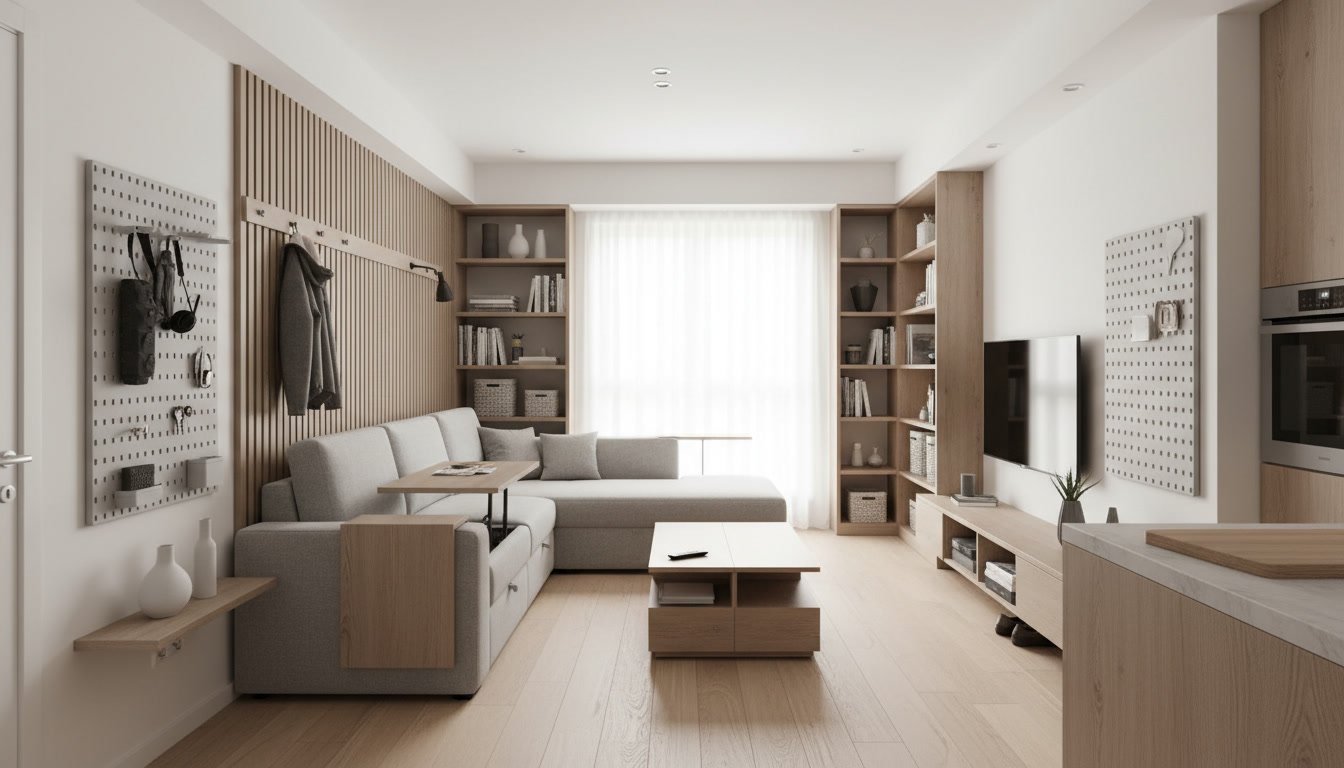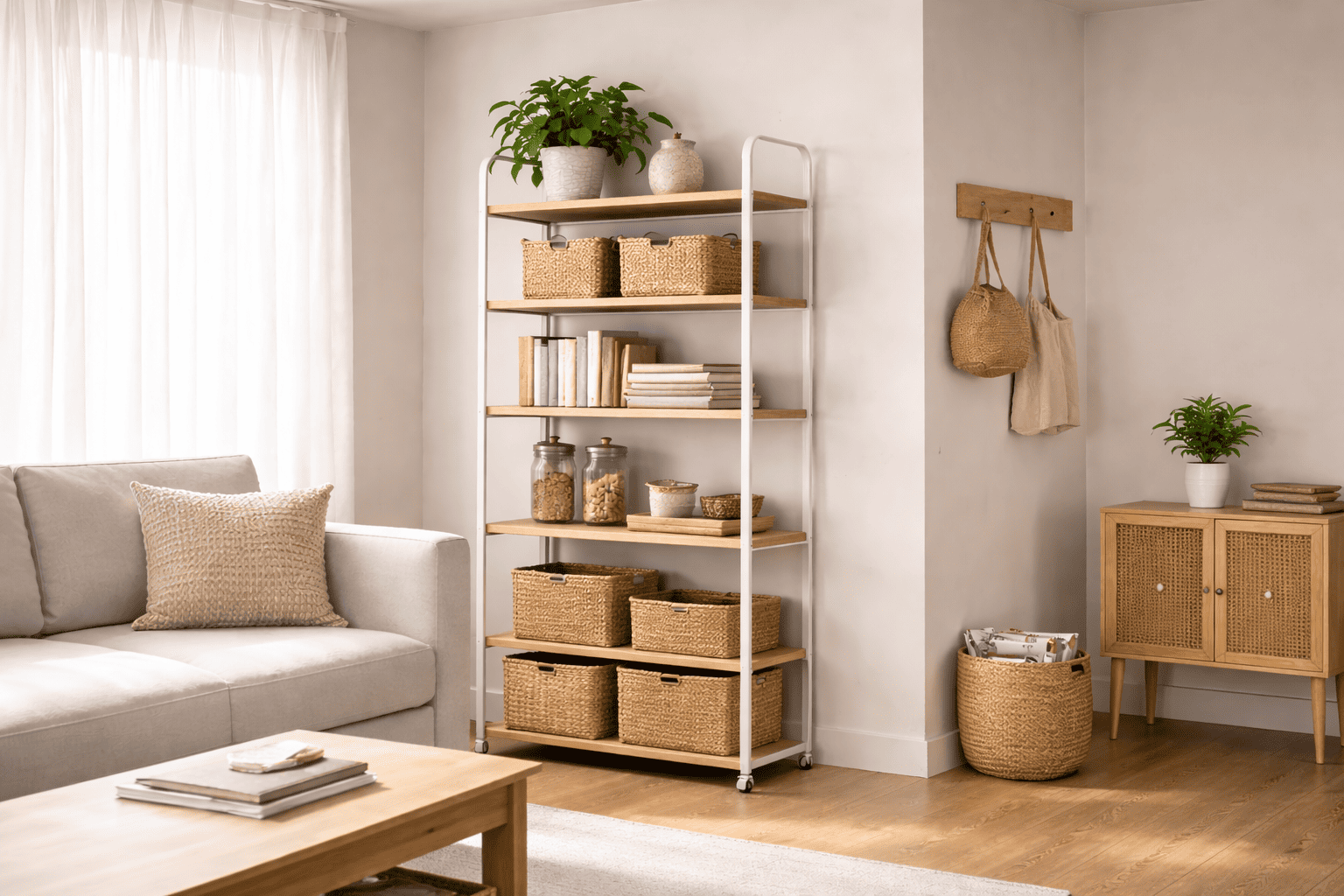

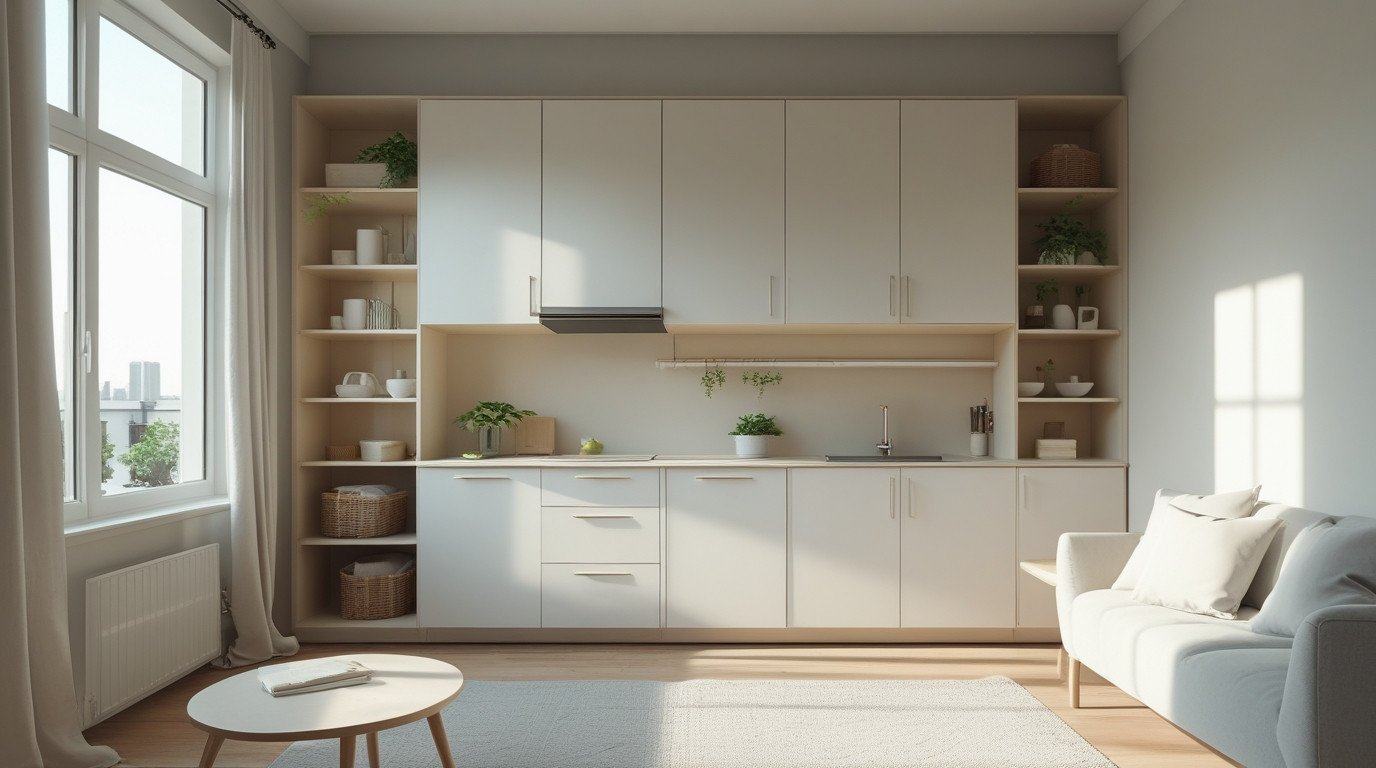
In small apartments, visible clutter creates the feeling of chaos even when the space is technically organized. Open shelves, exposed storage boxes, and stacked containers often solve storage problems but create visual overload.
Hidden storage focuses on keeping everyday items accessible while maintaining a clean, calm interior.
This article covers practical hidden storage ideas that work in real apartments.
Under-Furniture Storage
Unused space under beds, sofas, and benches is one of the most overlooked storage zones.
Well-designed under-furniture storage works for:
- seasonal clothing
- spare bedding
- luggage and rarely used items
The key is accessibility. Storage must be easy to reach, not buried or blocked.
Furniture With Built-In Storage
Hidden compartments inside furniture help reduce the number of separate storage units in a room.
Common examples include:
- beds with integrated storage
- benches with internal compartments
- ottomans with hidden space
This type of storage blends into the room and avoids visual clutter.
Closed Storage Instead of Open Shelving
Open shelves often look clean in photos but become messy in daily life. Closed storage keeps items out of sight and reduces visual noise.
Best uses for closed storage:
- everyday household items
- personal belongings
- irregularly shaped objects
Visual calm comes from what is not visible.
Storage Inside Existing Zones
Adding new storage furniture often makes rooms feel crowded. Integrating storage into existing zones is more effective.
Examples:
- storage in entry areas
- storage in seating zones
- storage in sleeping areas
The goal is consolidation, not expansion.
Vertical Hidden Storage
Not all vertical storage needs to be visible. Wall-mounted cabinets, high storage units, and closed shelving allow vertical expansion without visual overload.
This approach keeps:
- floor space open
- rooms visually lighter
- storage distributed logically
Limits-Based Storage
Unlimited storage encourages accumulation. Hidden storage works best when it has natural limits.
This helps with:
- controlling clutter growth
- avoiding overfilling
- maintaining long-term organization
Storage systems should define boundaries, not expand endlessly.
Conclusion
Hidden storage is not about storing more — it is about storing better. By integrating storage into furniture, using closed systems, and limiting visibility, small homes can stay organized without feeling crowded. The most effective storage solutions are the ones you stop noticing.