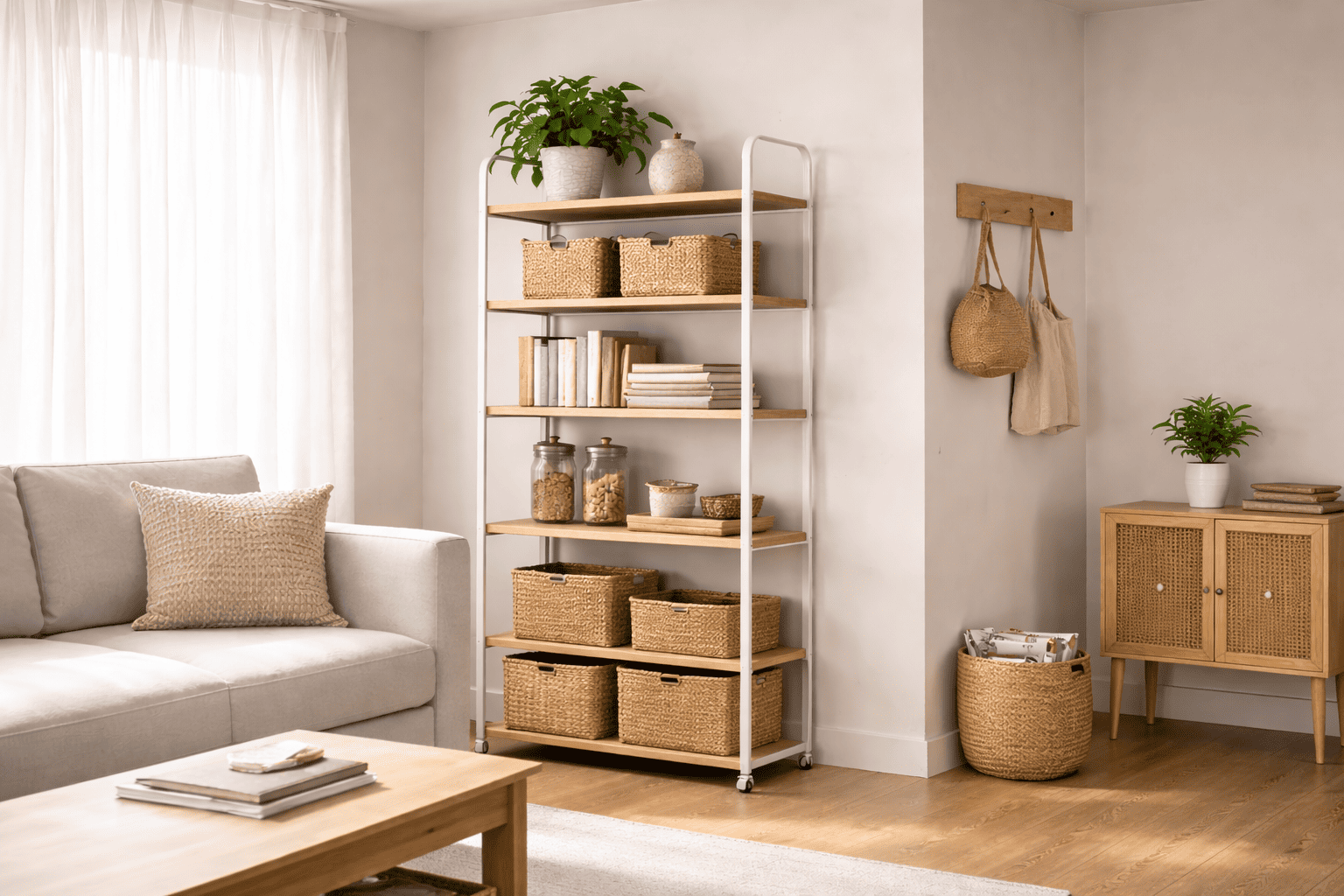


Most storage systems fail because they only hide clutter instead of changing how items are stored and used. Effective storage systems align with real behavior, not idealized organization.
This article explains storage principles that reduce clutter long-term.
Category-Based Storage Instead of Location-Based
People often store items based on available space rather than function.
Better approach:
- group items by category
- store them together even if locations differ
Example:
- all tech accessories in one system
- all seasonal items in one zone
Closed Storage for Irregular Items
Irregular shapes create visual chaos.
Examples:
- cables
- tools
- mixed household items
Closed storage reduces visual stress and decision fatigue.
Modular Storage Systems
Fixed systems become inefficient over time. Modular storage adapts to changing needs.
Benefits:
- flexibility
- scalability
- long-term usability
Storage With Natural Limits
Unlimited storage encourages accumulation.
Effective systems:
- medium-sized containers
- limited compartments
- defined boundaries
Conclusion
Smart storage is not about maximizing space, but about structuring it. Systems that categorize, limit, and adapt help small apartments stay organized without constant reorganization.