
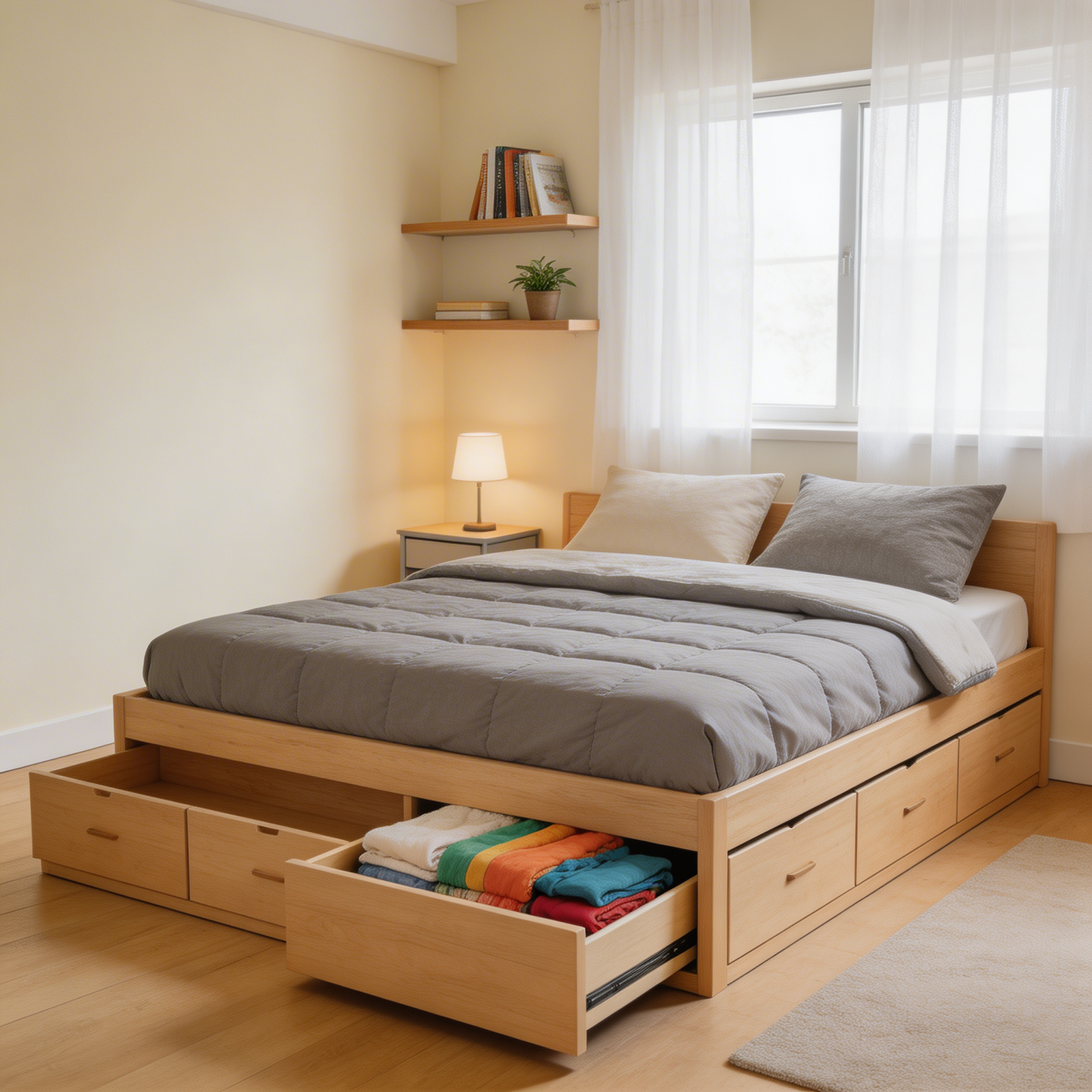
In a small apartment, the space under your bed is often the biggest untapped storage zone you have. Storage beds with drawers turn that “dead space” into organized, easy-access storage—without adding another dresser or bulky bins that steal walking room. For renters and city dwellers, they’re one of the most practical upgrades because they combine two essentials (a bed and storage) into a single footprint.
Why Storage Beds with Drawers Save Floor Space
Storage beds with drawers replace or reduce the need for extra furniture like dressers, storage cubes, and rolling carts. Instead of dedicating a wall to a chest of drawers, you store clothing, linens, or off-season items right under the mattress. That can free up enough space for a small desk, a reading chair, or simply a clearer path through the room.
They also make storage more usable than under-bed bins. Drawers pull out smoothly, so you don’t have to lift the mattress or crawl around on the floor to access your stuff. In a tight bedroom where you’re constantly navigating around corners, the “open a drawer, grab, close” workflow saves time and keeps clutter from migrating onto chairs and countertops.
There are trade-offs worth noting. Drawer beds can be heavier and harder to move than a simple frame, which matters for frequent relocations or walk-up buildings. They also need clearance to open—so they work best when you can leave at least one side accessible (or choose a model with drawers that open from the foot of the bed).
What to Look for in a Drawer Storage Bed
Drawer Layout, Access, and Room Clearance
Start with the drawer configuration: 2 large drawers, 4 medium drawers, or 6 smaller drawers. Large drawers are ideal for bedding, sweaters, and bulkier items; smaller drawers help keep categories separated (gym clothes, accessories, small linens). In a narrow room, consider whether drawers open on one side only or both sides—dual-side access is convenient, but only if you have walking space on both sides of the bed.
Measure your clearances before you buy. You’ll want enough room to fully extend a drawer without hitting a nightstand, radiator, or closet door. If your bed must sit close to a wall, a model with drawers on just the open side (or at the foot) can prevent daily frustration.
Also pay attention to drawer depth and usable interior height. Some beds look spacious but lose capacity to thick framing or shallow drawer boxes. Look for product photos that show the drawer interior, and confirm the internal measurements if you plan to store specific items like shoe boxes or filing folders.
Build Quality, Materials, and Weight Support
Storage beds take more structural stress than basic frames because they support both sleep weight and moving drawer loads. Look for sturdy joinery, solid slats or a strong platform, and a reputable weight rating that includes mattress and sleepers. If the listing is vague on capacity, that’s a red flag—especially for couples, heavier mattresses, or frequent use.
Materials affect longevity and feel. Solid wood tends to be more durable and repairable, while engineered wood can be stable and budget-friendly but varies widely in quality. If you’re renting, a well-finished surface that resists scratches (and is easy to wipe clean) matters more than you might expect—drawer fronts take constant contact.
Hardware is the hidden make-or-break factor. Metal drawer slides generally outperform basic wooden runners, especially when drawers are loaded with linens or jeans. Soft-close is nice, but smooth, sturdy travel and minimal wobble are more important for long-term usability in a small space.
Bedroom Fit, Style, and Real-Life Use Cases
Choose a height and style that match how you live. Higher beds often offer more storage volume, but may feel bulky in a low-ceiling room or studio. Low-profile options can look cleaner and more modern, but you’ll sacrifice drawer height—fine for T-shirts and sheets, not great for thick blankets.
Think about what you’ll store and how often you’ll access it. Daily-use clothing works best in easily reachable side drawers, while guest bedding, off-season items, and extra toiletries can go in deeper drawers you open less frequently. For studio apartments, drawer beds are especially useful as “secondary closet space” when your wardrobe is small or shared.
Finally, consider practical compatibility: mattress type (foam vs. hybrid), whether you need a headboard, and delivery/assembly constraints. Many drawer beds ship in heavy boxes and require time to build—so measure stairwells, check package sizes, and factor in whether you’ll assemble it yourself. The best choice is the one that fits your room’s geometry and your daily routine, not just the one with the most drawers.
Storage beds with drawers are one of the smartest small-apartment moves because they add storage without expanding your footprint. The key is matching the drawer layout to your room clearance, choosing solid construction that won’t wobble over time, and planning storage around what you actually reach for day to day. Pick the right design, and your bed becomes both your sleep setup and your most efficient “hidden dresser.”