
Working from home in a small apartment often means your “office” is a corner of the living room, a bedroom wall, or the end of a hallway. Wall-mounted desks are one of the simplest ways to carve out a dedicated workspace without sacrificing valuable floor space. They keep your setup functional and tidy, while still looking intentional—especially important in compact homes where every surface is visible. If you’re comparing options for a small home office, this guide breaks down why wall-mounted desks work so well and what specs actually matter before you buy.
Why Wall-Mounted Desks Work in Tight Offices
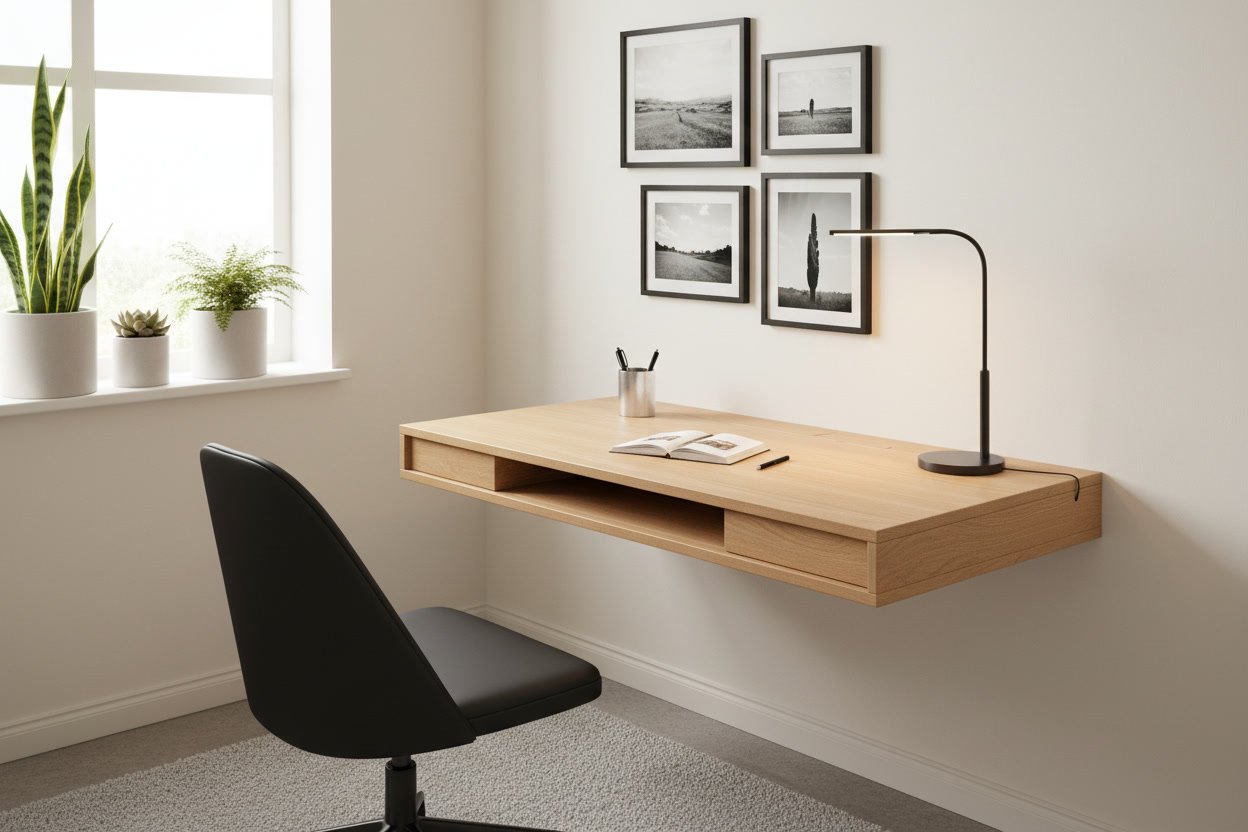
Wall-mounted desks solve the biggest small-space problem: floor-area bottlenecks. By lifting the work surface off the ground, you free up clearance for walking paths, chair storage, and multi-use rooms. This is especially useful in studio apartments or shared spaces where you can’t dedicate an entire room to an office.
Buy on Amazon:
👉 https://amzn.to/4m3idv8
They also help create a “work zone” without adding visual clutter. A slim desktop attached to the wall reads more like built-in furniture than a bulky standalone desk, which can make a room feel crowded. Many styles fold down or include low-profile brackets, so the desk can visually disappear when you’re not working—ideal for renters and anyone trying to keep a calm, minimal look.
There are trade-offs, and it’s smart to know them upfront. A wall-mounted desk typically can’t be dragged to another corner when you feel like rearranging, and installation takes some planning. But for ideal use cases—laptop work, studying, paying bills, light crafting, or a compact monitor setup—the space savings often outweigh the downsides.
What to Look for: Size, Storage, and Weight Limits
Start with size and ergonomics, not just “will it fit on the wall.” Measure your available wall width and the depth you can spare without blocking doors, closet access, or circulation. For most small home offices, a depth around 16–20 inches works well for a laptop and notebook, while 20–24 inches is more comfortable for a keyboard-and-monitor setup (especially if you want your screen a bit farther back).
Buy on Amazon:
👉 https://amzn.to/4s5BYDL
Next, consider storage—because the desk itself may be your only office furniture. Some wall-mounted desks include a top shelf, cubbies, or a small drawer, which helps you avoid buying a separate filing cabinet. If your home office overlaps with a living area, look for designs that hide clutter: fold-out models, secretary-style fronts, or shelves with doors can keep chargers, pens, and paperwork out of sight.
Finally, pay close attention to weight limits and mounting requirements. Many wall desks are designed for light-duty use, and the limit can vary widely depending on the bracket design and whether you’re mounting into studs or using heavy-duty anchors. A good rule: if you plan to use a monitor arm, store books, or lean on the desk while writing, choose a sturdier, stud-mounted model and keep the load well below the advertised maximum. Pros include stability and a cleaner footprint; cons include less flexibility and the need for careful installation—especially in rentals where wall repairs matter.
Wall-mounted desks are a practical, modern answer to the reality of small home offices: you need a real workspace, but you can’t afford to waste floor space. If you choose the right size for your tasks, prioritize storage that reduces clutter, and respect weight limits with a safe mounting setup, you’ll get a desk that feels purposeful without taking over the room. For renters and compact-home dwellers, it’s one of the most effective upgrades you can make to create a functional office in the space you already have.