
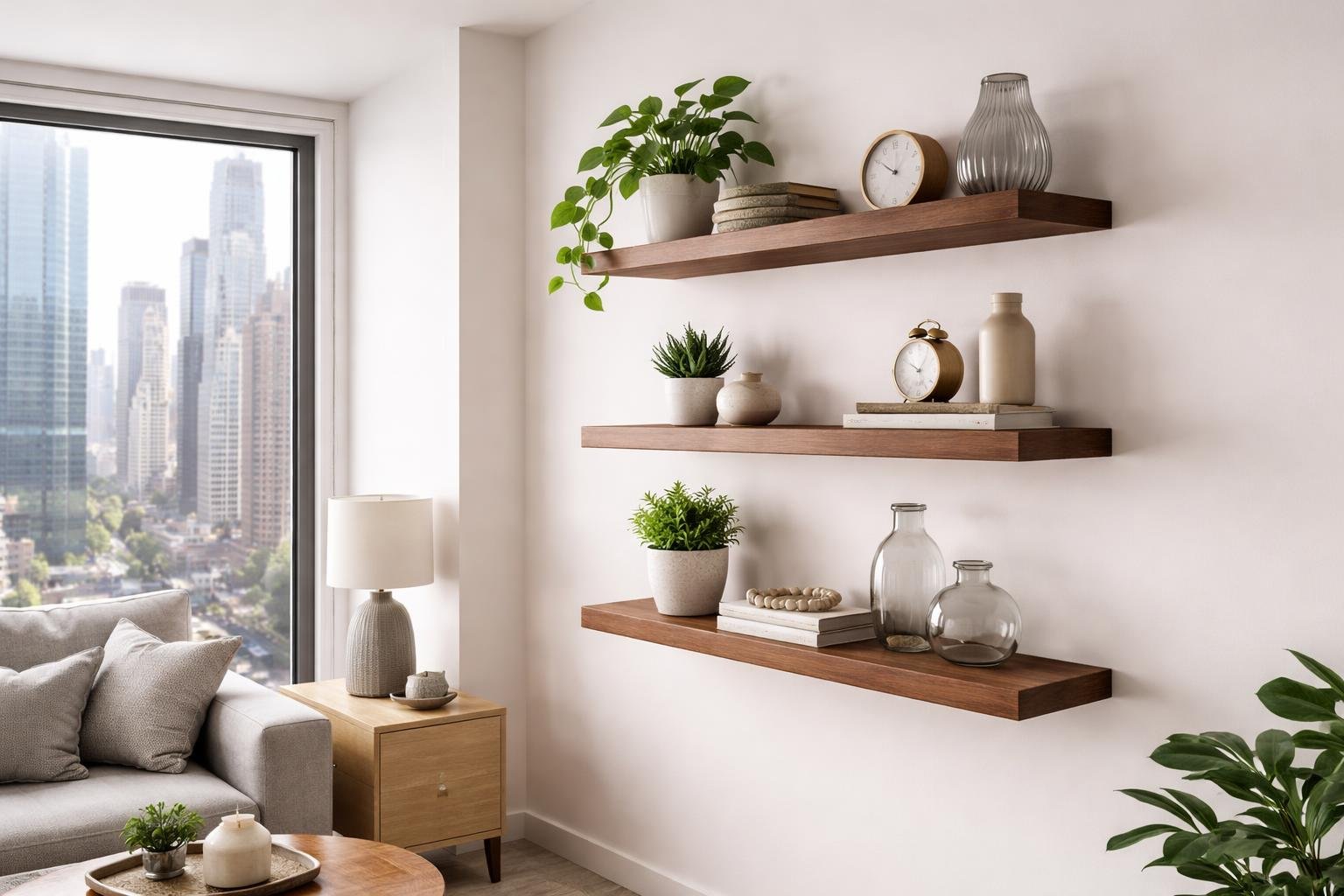
Floating shelves are one of the simplest upgrades you can make in a small apartment: they add storage without consuming floor space, and they can look built-in even in a rental. The challenge is buying the right shelves—ones that match your walls, hold real weight, and don’t turn into a wobbly hazard. This practical guide breaks down how floating shelves help in tight layouts and what to check before you click “buy.”
How Floating Shelves Save Space in Small Apartments
Floating shelves free up precious floor area by moving storage onto unused wall space. In a studio or compact one-bedroom, that can mean skipping an extra bookcase, side table, or bulky media unit. The “floating” look also keeps sightlines open, which makes small rooms feel less crowded than tall, heavy furniture.
They’re especially useful for turning awkward dead zones into functional storage. Think: above a desk, over a toilet tank, beside a bed where a nightstand won’t fit, or in a narrow entryway where you only have a few inches to work with. Even one shelf can add a drop-zone for keys and mail; a short row of shelves can replace a cabinet.
Buy on Amazon:
👉 https://amzn.to/4tiBGdD
There are trade-offs, though, and it’s worth knowing them before you commit. Pros: big space savings, flexible placement, and a clean modern look. Cons: limited weight capacity compared to floor-standing furniture, dependence on wall type and studs, and the need to keep them organized (clutter is more visible on open shelves). Ideal use cases include lightweight décor, books (in moderation), small plants, spices, bathroom supplies, and tech accessories.
What to Look for: Weight Limits, Materials, Mounting
Weight Limits: Real-World Capacity vs. Marketing Numbers
Start with the shelf’s stated weight limit, but treat it as a best-case scenario. Many listings quote maximum capacity under ideal installation (into studs, perfect hardware, evenly distributed load). In real apartments—especially with drywall and imperfect stud placement—you’ll want a safety margin and a plan for how you’ll load the shelf.
Match shelf capacity to what you’ll actually store. For example, paperbacks and small décor are easy; stacks of textbooks, a cast-iron Dutch oven, or a heavy speaker are not. If you’re building a “mini library,” look for deeper shelves, more robust brackets, and installation into studs whenever possible.
Buy on Amazon:
👉 https://amzn.to/4cmjmKY
A practical approach: decide the heaviest items first, then buy shelves designed for that load. If the shelf is for display and daily grab-and-go items, prioritize stability over maximum capacity—nothing is more annoying than a shelf that shifts when you reach for something. When comparing options (Amazon-style listings), look for detailed specs, hardware included, and installation notes that clearly state wall requirements.
Materials: Durability, Looks, and Maintenance in Small Homes
Material affects not just style, but long-term durability in tight spaces where shelves get used hard. Solid wood and quality plywood tend to hold screws and fasteners better over time than low-density particleboard, especially if you’ll take shelves down and reinstall them during a move. MDF and particleboard can work for light loads, but edges are more prone to chipping and sagging.
Consider your room conditions. Kitchens and bathrooms need materials that handle humidity—sealed wood, metal, or moisture-resistant finishes are safer than untreated wood composites. In living rooms and bedrooms, you can lean more into aesthetics: warm wood tones to soften a modern space, matte white for a clean built-in look, or black metal/wood combos for an industrial feel.
Also check the shelf depth and thickness, which are often overlooked in online shopping. Shallow shelves (4–6 inches) are great for tight hallways and above desks; deeper shelves (8–12 inches) handle baskets, larger books, and small appliances but can feel visually heavy in a narrow room. Thicker shelves can hide mounting hardware better, but they may intrude more into walking paths—important in small apartments where every inch counts.
Mounting and Wall Type: Studs, Drywall Anchors, and Rental-Friendly Choices
Mounting is where floating shelves either become a smart space saver—or a wall repair project. The strongest installs hit studs, especially for long shelves or heavier loads. If stud placement doesn’t align with your ideal layout, choose a shelf system with brackets that allow some horizontal adjustment, or opt for shorter shelves you can mount securely where studs exist.
If you must mount into drywall, use the right anchors and respect lower weight limits. Toggle bolts and high-quality drywall anchors generally outperform basic plastic plugs, but they still have limits, especially with repeated loading and unloading. For renters, it’s also worth considering how much wall damage you’re willing to patch later; a few small holes are manageable, while heavy anchors can leave larger openings.
Pay attention to bracket design and installation complexity. True “invisible” bracket systems look great but can be less forgiving if your walls aren’t perfectly straight. Shelves with a slight lip or rail can prevent items from sliding off—handy in entryways and above beds. Before buying, check: hardware included, drill bit requirements, whether a level is necessary, and whether the shelf can be removed without dismantling the entire bracket (useful for painting or moving).
Floating shelves solve a real small-apartment problem: not enough storage and not enough floor space to add furniture. The best choice comes down to matching weight limits to real use, picking materials that hold up in your environment, and choosing a mounting method that suits your wall type and renter/owner needs. Buy with your heaviest items and your installation constraints in mind, and floating shelves can become one of the most practical, space-efficient upgrades in your home.