
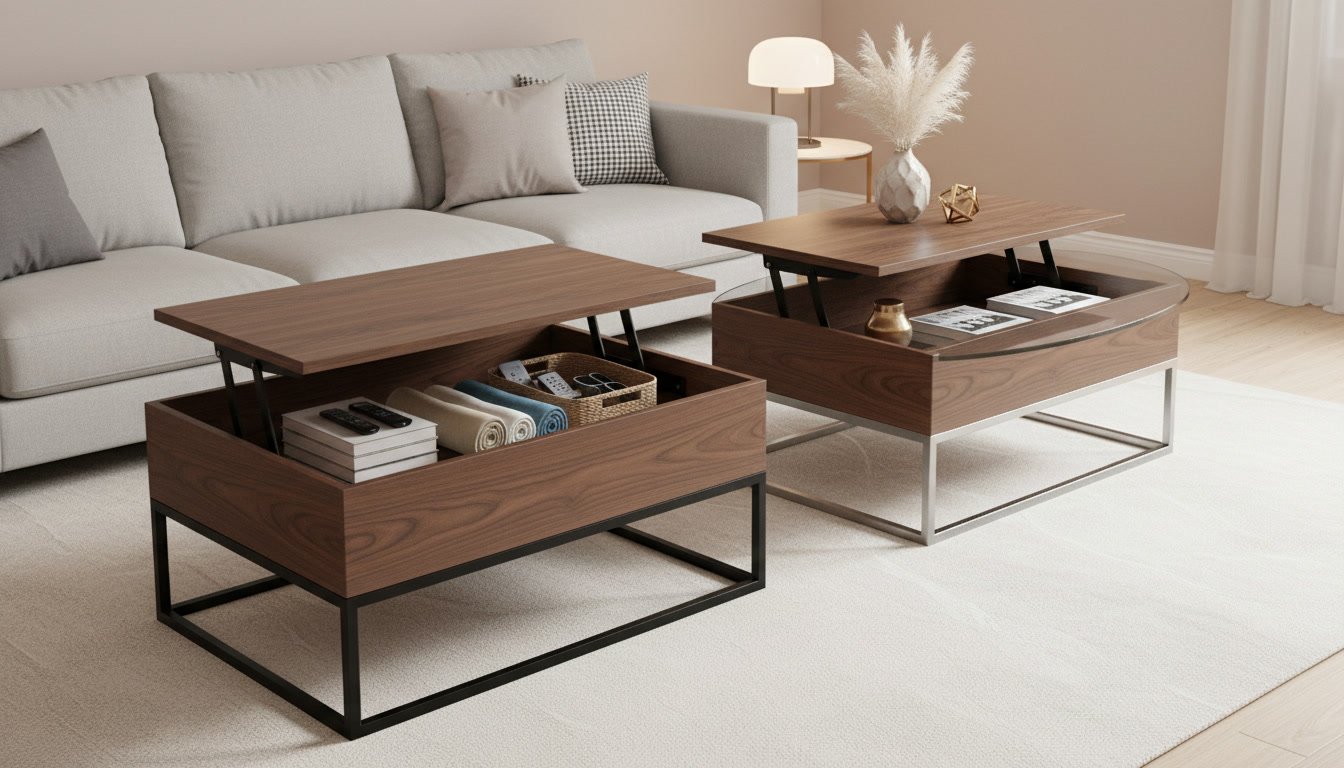
Lift-top coffee tables with hidden storage are one of those rare small-space upgrades that feel “too practical to be stylish” until you live with one. In a compact apartment, the coffee table is prime real estate: it sits in the center of your living area, collects daily clutter, and often doubles as a dining spot or work surface. A lift-top design turns that same footprint into a flexible workstation and a concealed storage hub—without adding another bulky cabinet to the room.
Why Lift-Top Coffee Tables Solve Small-Space Clutter
Lift-top coffee tables tackle the most common small-home issue: nowhere to put the everyday stuff you need close by. Remotes, chargers, coasters, notebooks, game controllers, and mail tend to pile up because they’re used constantly but don’t have a “home.” Hidden compartments let you clear the surface in seconds while keeping those items within arm’s reach.
They also reduce the need for extra furniture, which is a big deal in rentals and studio layouts. When the tabletop lifts, it becomes a comfortable height for laptop work, casual dining, or crafting—so you’re less tempted to buy a separate desk or side table. In a living room that also functions as an office, this one piece can replace two or three.
There are trade-offs, and it’s worth knowing them before you buy. Lift-top mechanisms add weight and moving parts, so cheap models can wobble or feel stiff over time. The hidden storage is fantastic for visual calm, but it can also become a “junk drawer” if you don’t set basic rules (like using small bins inside). Still, for renters and small-space dwellers who need flexible function from every square foot, it’s one of the most space-efficient upgrades you can make.
Best use cases for lift-top storage tables
In a studio apartment, a lift-top table can be your dining table at night and your laptop station during the day. If you work from the couch, the raised surface prevents hunching and brings your keyboard closer to ergonomic height. For couples in small living rooms, it’s a simple way to share a surface for snacks and devices without spreading clutter across the entire room.
They’re also ideal for homes with limited closed storage, like apartments without linen closets or with minimal built-ins. A table with a large hidden compartment can store a small throw blanket, handheld vacuum attachments, board games, or a laptop sleeve. If you entertain, the “stash space” is perfect for quickly hiding chargers, candles, and random items before guests arrive.
For families and pet owners, the benefits are practical too. Kids’ small toys, coloring supplies, and puzzle pieces can be tucked away fast. Pet leashes, wipes, and grooming tools stay accessible without being on display. The key is picking a table where the storage matches what you actually need to hide—not just what looks good in photos.
Pros and cons in real apartment life
Pros: You get double-duty function (table + desk/dining surface) without increasing the furniture footprint. The hidden compartment keeps the room looking tidy, which matters more in small spaces where visual clutter makes rooms feel cramped. Many models also include additional features like drawers or lower shelves, creating organized zones for different items.
Cons: Lift-top tables can be heavier and harder to move for cleaning or rearranging. The lifting lid can reduce styling options on top—you may need to keep decor minimal so you’re not constantly removing items to use the lift function. And if the hinge system is low quality, you’ll notice wobble, misalignment, or noisy operation quickly.
A smart way to avoid disappointment is to treat the lift mechanism like you would a sofa frame: it’s the part you’ll feel every day. Prioritize stable hinges (spring-assisted or hydraulic styles), solid mounting, and a tabletop that doesn’t flex when you lean on it. In small apartments, durability isn’t “extra”—it’s what keeps a multi-use piece from becoming annoying.
Key Features to Compare: Storage, Lift, and Style
When shopping for the best lift-top coffee table with hidden storage, start with the interior layout. Some tables offer one big compartment, while others combine a compartment with drawers, side cubbies, or a lower shelf. If your clutter is mostly small items (remotes, cords, pens), a divided layout or drawers prevents everything from turning into a messy pile. If you need to store bulkier items (blankets, board games), a single deep compartment may be better.
Next, evaluate lift performance and stability—this is where “looks good online” can fall apart in real life. A good lift-top should rise smoothly, stay steady at full height, and feel safe when you rest your forearms on it. Pay attention to how far the top lifts toward you (helpful for couch work) versus straight up (better if you sit on floor cushions). Also check whether the lid opens in a way that blocks access from one side—important if your sofa layout is tight.
Finally, style matters, but it should support your space goals. In compact homes, lighter finishes and slimmer legs can make the room feel more open, while chunky closed bases can look heavy (even if they’re great for storage). Consider the “visual footprint” along with the physical one: a table that visually blends can make a small room feel larger, while still giving you hidden function.
Storage design: what actually fits inside
Hidden storage works best when the depth matches your real items. Measure what you want to store—laptop thickness, board game box dimensions, the height of a folded throw—then compare that to the listed interior dimensions (not just overall table size). Many people buy based on the exterior measurements and end up with a compartment that’s surprisingly shallow due to the lift hardware.
Look for practical details that improve everyday use: a lip around the compartment that prevents items from sliding into hinge areas, interior panels that feel sturdy, and finishes that won’t snag fabric. If the table includes drawers, check whether they open fully and whether they’re accessible when the lift top is raised. In tight layouts, drawers that open toward your sofa can be annoying.
A good rule for small spaces: choose a storage layout that matches your “frequency of use.” Daily-use items should go in the easiest-to-reach spot (top compartment or front drawers). Occasional items can live on a lower shelf or deeper compartment area. This keeps the table from becoming a catch-all that’s hard to maintain.
Lift mechanism: stability, safety, and comfort
The lift mechanism is the difference between “useful every day” and “why did I buy this.” Spring-assisted and hydraulic systems tend to feel smoother and safer than simple hinge lifts, especially if you’ll raise and lower it often. Stability matters most when the top is raised: you don’t want a wobbly surface when typing, eating, or setting down drinks.
Also consider how much weight the lifted top can handle. In real use, you might place a laptop, a plate, a mug, and lean on it slightly—all at once. If weight limits are listed, treat them seriously. If they aren’t listed, read reviews for mentions of flexing, uneven lifting, or the top drifting down over time.
Safety is part of comfort, especially in small homes where people pass close by furniture. Soft-close or controlled descent reduces finger-pinching risk and noisy slams. If you have kids, pets, or roommates, a slower, controlled close can make a noticeable difference in daily living.
Style and footprint: fitting the room you actually have
In a compact living room, the “right” coffee table is often smaller than you think. Aim for enough surface to function, but leave clear walking paths—especially if the lift top will extend toward seating. A table that’s too long or too wide can make the room feel blocked, and the lift function may become awkward if it bumps knees or nearby furniture.
Material choices affect both style and maintenance. Laminate and engineered wood are common (and often renter-friendly), but look for scratch resistance and easy cleaning if you eat at the table. Solid wood and metal accents can feel more premium but may be heavier. If you move often, weight and durability during transport matter as much as looks.
Choose a finish that plays well with your existing storage pieces so the room feels cohesive rather than crowded. If your apartment already has dark furniture, a lighter coffee table can reduce the “heavy” feeling; if your space is mostly light tones, a warm wood finish can add contrast without visual clutter. The best lift-top coffee tables with hidden storage are the ones that disappear into your room’s style—until you need them to do more.
A lift-top coffee table with hidden storage is a small-space workhorse: it clears clutter fast, adds a comfortable raised surface for daily tasks, and helps you avoid buying extra furniture that eats up floor area. Focus your comparison on storage layout, lift stability, and footprint—not just exterior style—and you’ll end up with a table that genuinely improves your day-to-day living. For compact homes, the best choice is the one that makes your living room feel calmer while quietly doing double (or triple) duty.