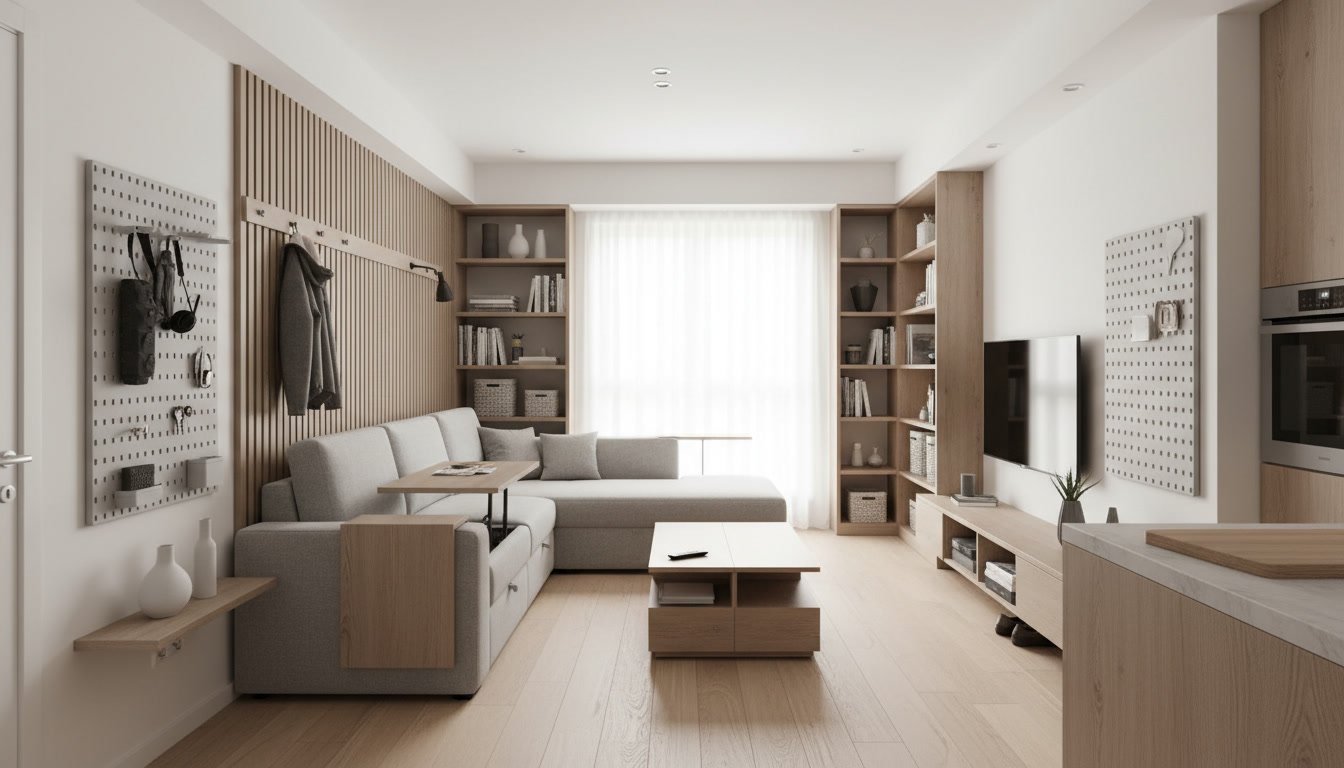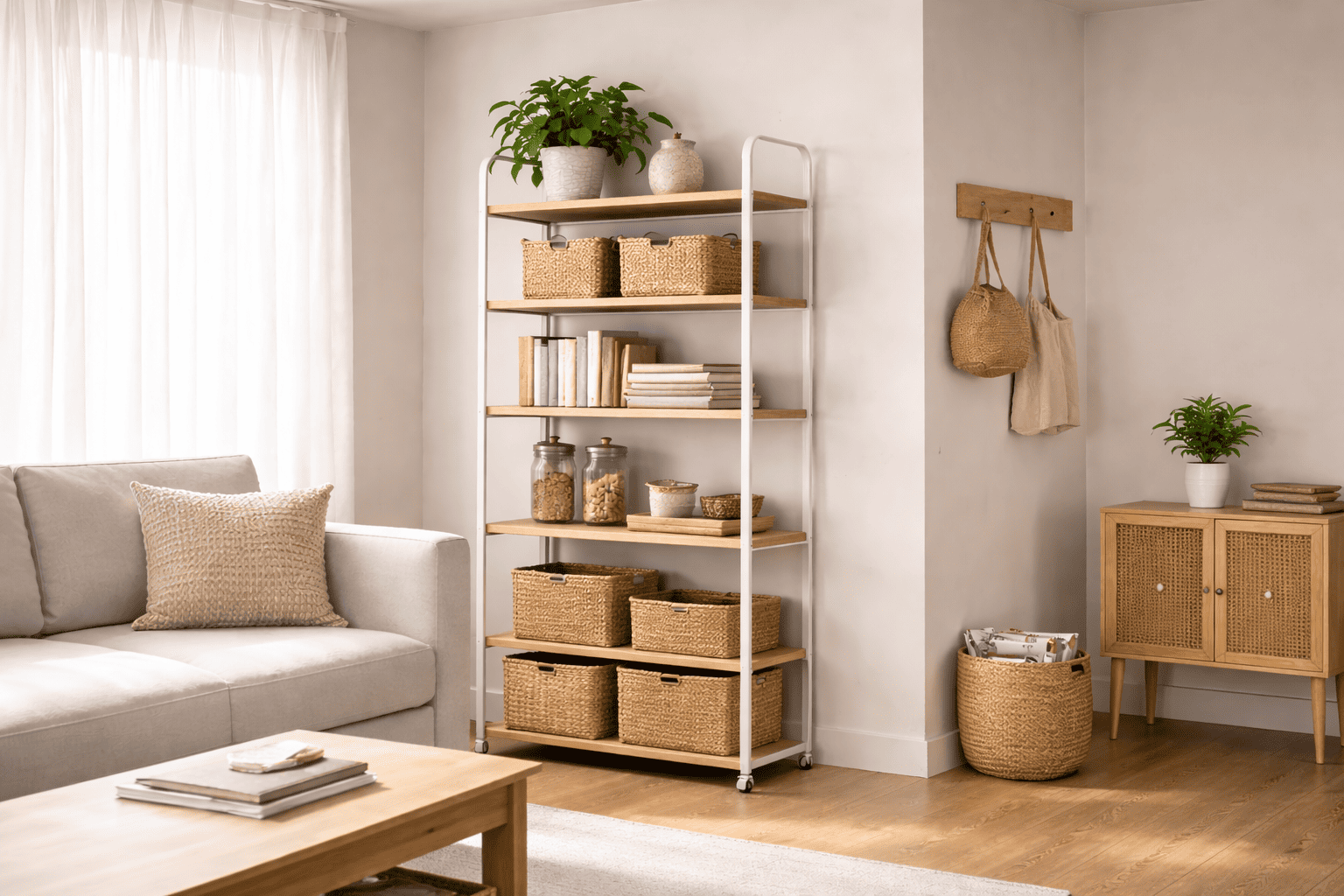

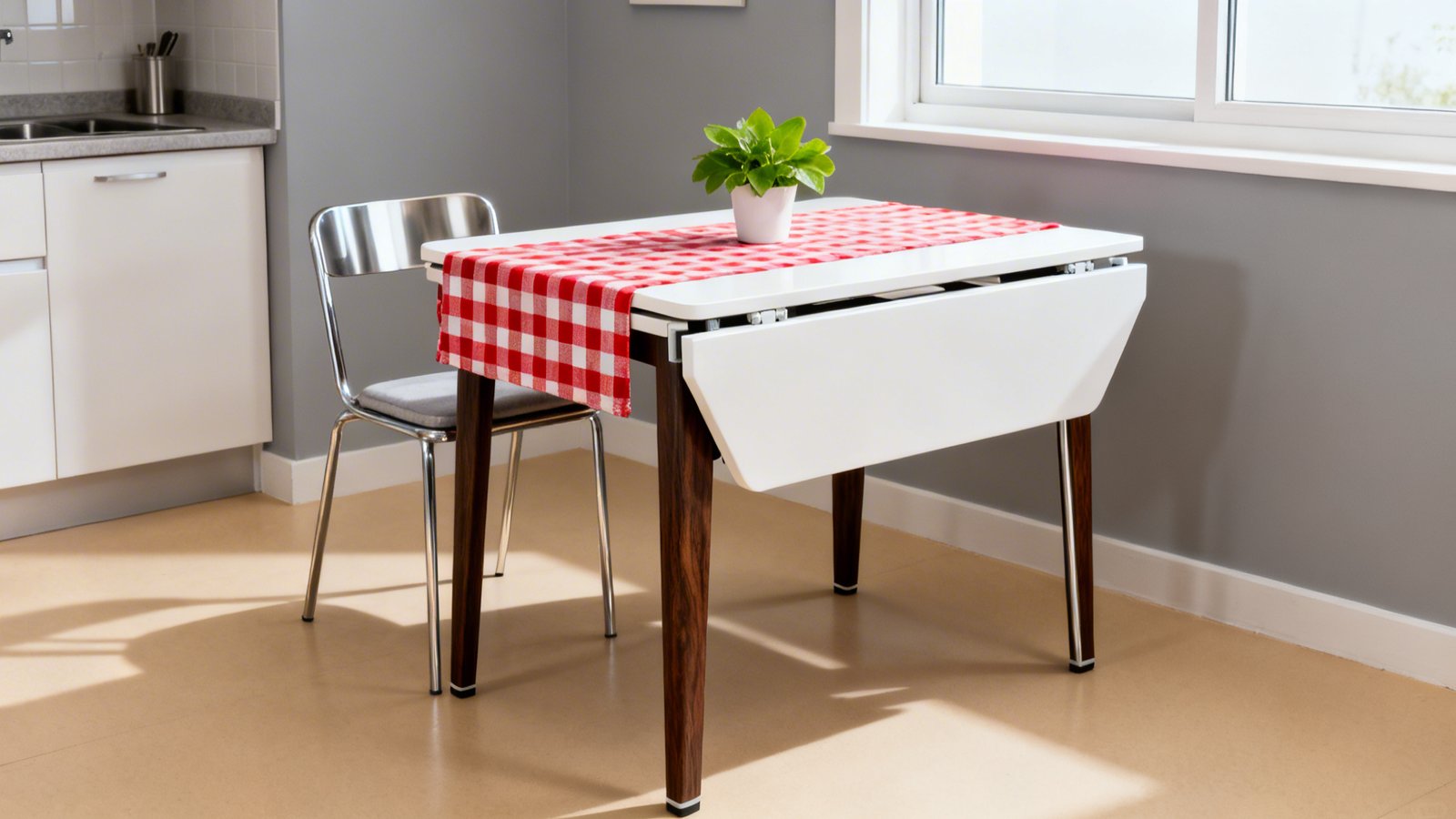
Tiny kitchens make everyday routines feel like a puzzle—especially when you want a real place to eat, work, or host without permanently giving up floor space. Foldable dining tables solve that problem by giving you a full-size surface only when you need it, then tucking away so your kitchen can function normally. If you’re furnishing a small apartment or compact home, the right folding table can be one of the highest-impact upgrades for comfort and layout.
Why Foldable Dining Tables Work in Tiny Kitchens
Foldable dining tables are designed around the core small-space challenge: you need a table sometimes, but you can’t afford to dedicate space to it all the time. A well-chosen fold-down or drop-leaf table can live against a wall, beside a fridge, or near a window and still open up quickly for meals. That flexibility is ideal for renters who can’t remodel but still want a usable dining area.
They also improve “traffic flow,” which matters more in a tiny kitchen than in any other room. When a fixed table blocks the path between the sink, stove, and fridge, cooking becomes frustrating and unsafe. Folding designs let you reclaim clearance for moving, opening cabinets, and carrying dishes—then expand for dinner without dragging furniture around.
There are tradeoffs worth knowing. Pros: major space savings, multi-use functionality (dining + prep + work-from-home), and easier cleaning access compared to permanent bulky tables. Cons: some models wobble if the hinges or legs are lightweight, smaller tops can feel cramped for four adults, and frequent folding can wear hardware over time. The best use cases are studio apartments, galley kitchens, and combined kitchen-living areas where you need a “sometimes table” rather than a full-time dining setup.
Key Features to Look for Before You Buy
Start with the folding style, because it determines how the table will live in your kitchen day to day. Drop-leaf tables are great if you want multiple sizes—one leaf for solo meals, two leaves for guests. Wall-mounted fold-down tables (sometimes called Murphy-style) are the most space-efficient, but require drilling and solid wall support, which may not suit all renters. Gateleg and folding console tables can work in open-plan spaces because they store slim and expand dramatically, but you’ll want enough clearance to open them comfortably.
Next, prioritize stability and durability—this is where cheap folding tables often disappoint. Look for strong hinges, locking supports, and legs that don’t flex when you lean or cut food. Materials matter: solid wood and quality plywood tend to feel more stable than thin particleboard, while metal frames can be excellent if the joints are reinforced. Also check weight capacity, especially if you’ll use it as a prep surface or occasional home office desk with a monitor.
Finally, measure with real-life use in mind, not just “does it fit.” Note the open size (seats 2 vs. 4), the closed depth (how far it sticks out when stored), and chair strategy—folding chairs, backless stools, or stackable seating often complete the setup. Useful extras include built-in storage shelves, wheels with locks (helpful but not mandatory), and finishes that resist moisture and heat—important for kitchens. A quick checklist before buying: open clearance for walkways, legroom for seated comfort, and whether the table height matches your preferred seating.
Foldable dining tables make tiny kitchens more livable by adding a real eating and work surface without permanently stealing valuable floor space. Choose a folding style that matches your layout, pay close attention to stability and hardware quality, and measure for both “open” and “stored” modes so it fits your daily routine. With the right pick, you’ll get a table that feels like it was built for your space—because in a small home, furniture should earn its footprint.