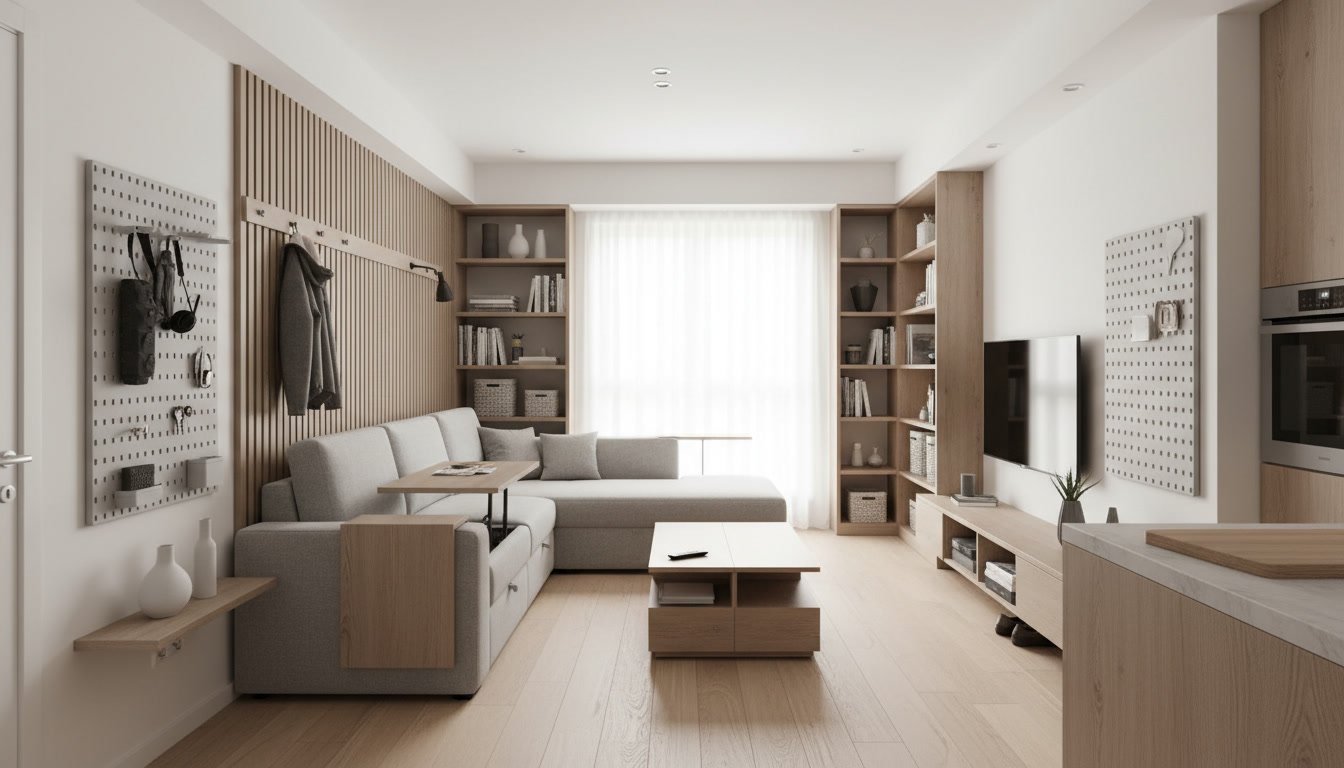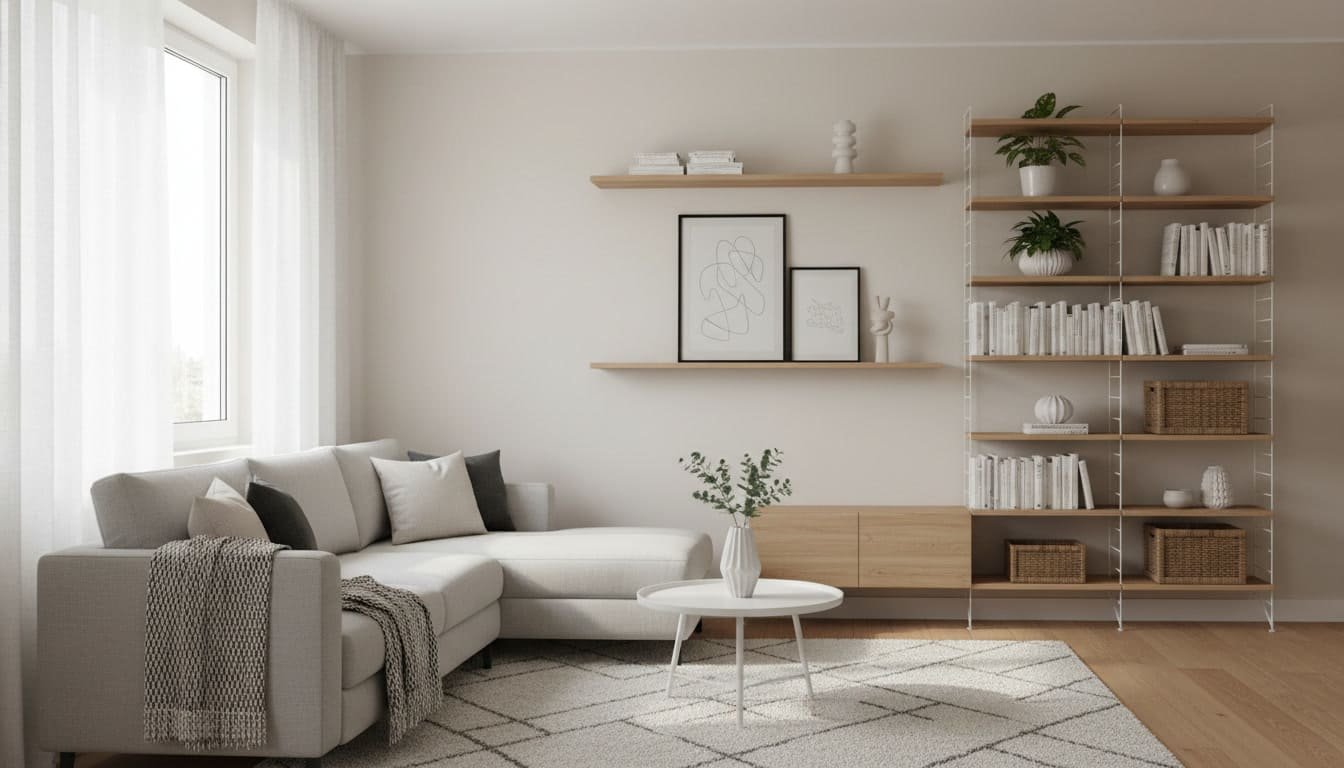

Corners are often wasted in small apartments. People either leave them empty or fill them with bulky furniture that disrupts the layout. In reality, corners can become some of the most functional areas when used thoughtfully.
This article explains how to use corners without overloading the space.
Corner Seating Areas
A small chair or compact sofa in a corner can create a quiet reading or relaxation zone.
Why it works:
- uses space that is often ignored
- does not block central pathways
- creates visual balance
Best practice:
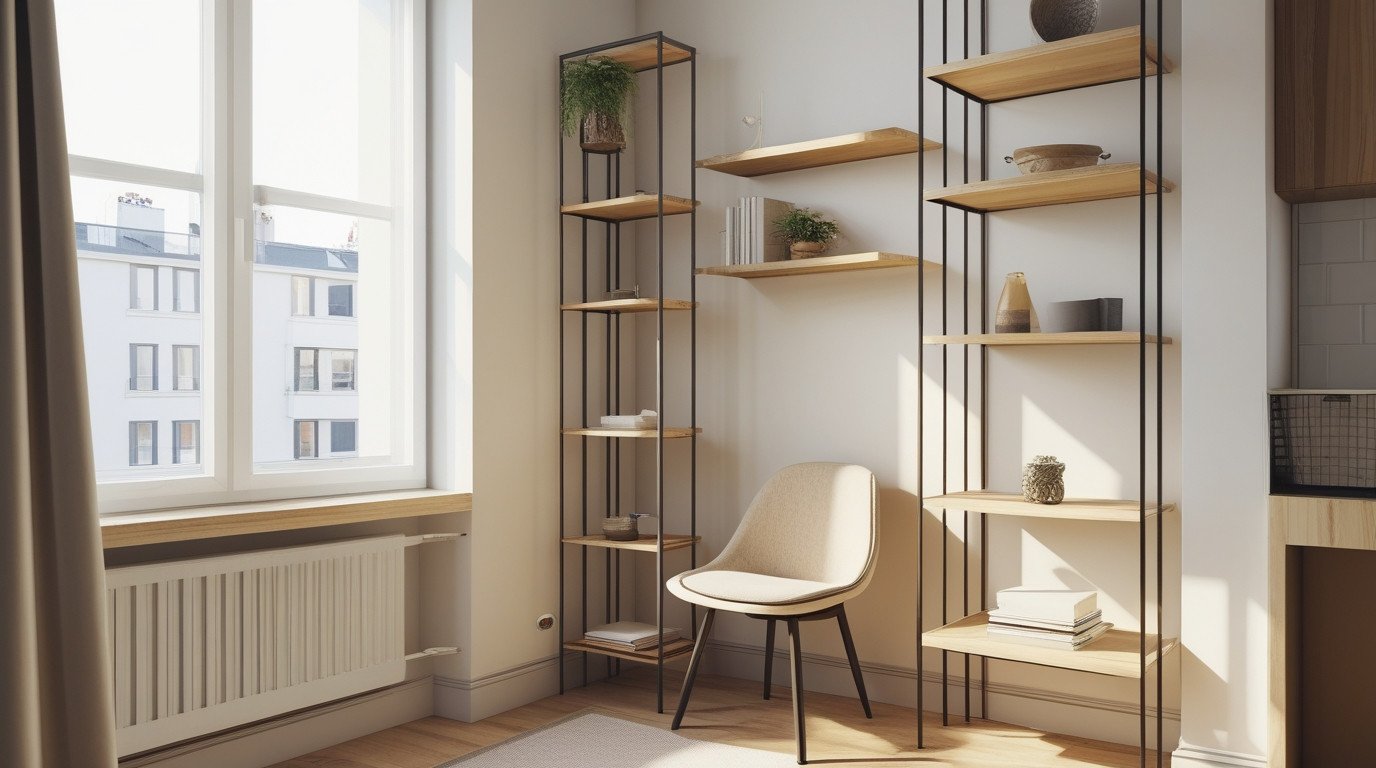
choose lightweight furniture with open legs.
Corner Storage Without Visual Overload
Corners are ideal for vertical storage, but only if it remains visually light.
Effective solutions:
- tall narrow shelving
- corner shelves
- slim vertical cabinets
Avoid:
- bulky wardrobes
- deep cabinets
Corner Workspaces
Corners can function as compact work zones without occupying the center of the room.
Good use cases:
- laptop desk
- floating shelves above workspace
- minimal lighting
Key principle:
keep the workspace visually minimal.
Decorative vs Functional Corners
Not every corner should be filled with storage. Some corners work better as visual breathing space.
Examples:
- floor lamp
- plant
- empty space with wall art
Balance is more important than maximum use.
Conclusion
Corners in small apartments should be used selectively. The most effective corner solutions combine light furniture, vertical storage, and minimal visual weight. Overfilling corners often makes spaces feel smaller, not larger.