
Living in a small home or apartment doesn’t mean you have to sacrifice comfort, style, or functionality. With smart space-saving solutions, thoughtful design, and a little creativity, you can make every square foot work harder for you. This article explores practical tips, modern ideas, and real-life examples to help you optimize storage and create a more livable, organized space.
Whether you’re dealing with a compact studio, a narrow townhouse, or a tiny apartment, these strategies focus on maximizing vertical space, choosing multifunctional furniture, concealing storage, and building routines that prevent clutter from returning. Read on for actionable advice you can implement this weekend to reclaim room and reduce stress in your home.
Maximizing Vertical Space: Shelves, Hooks, Ladders
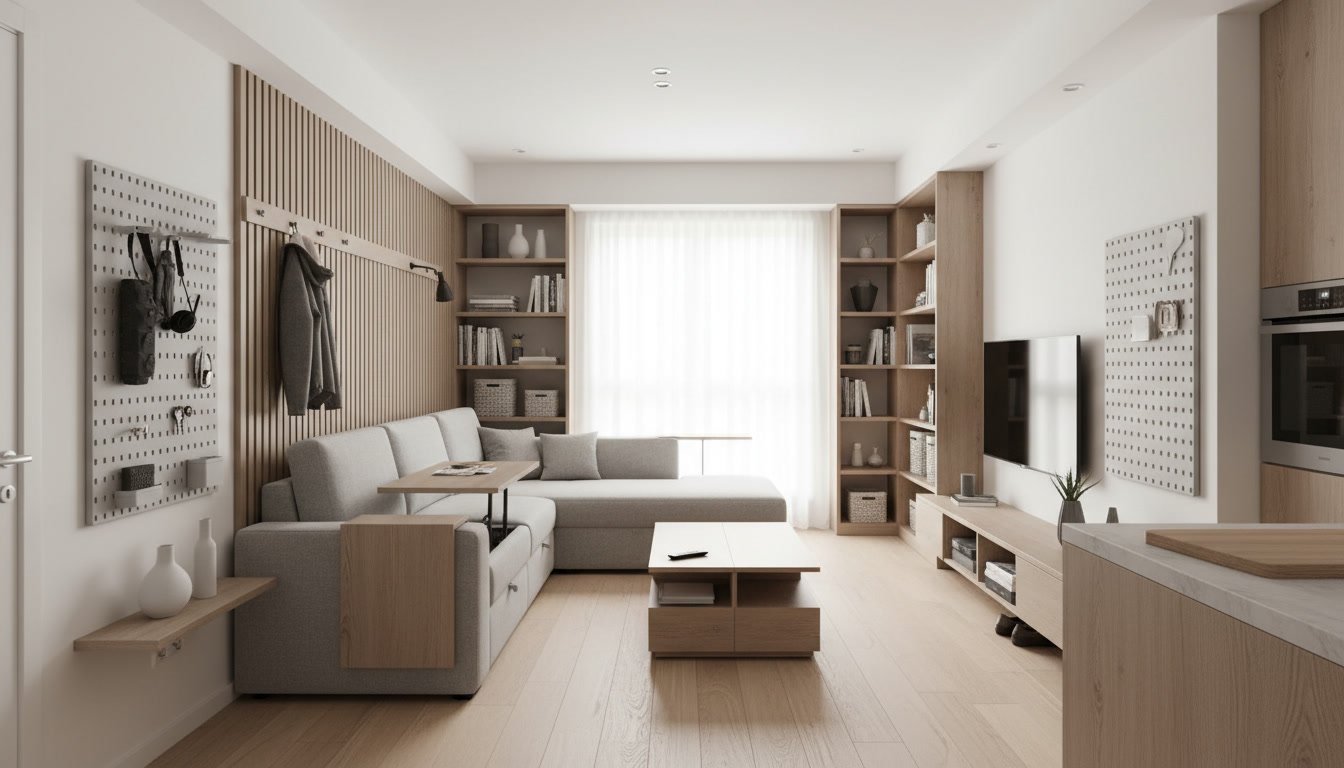
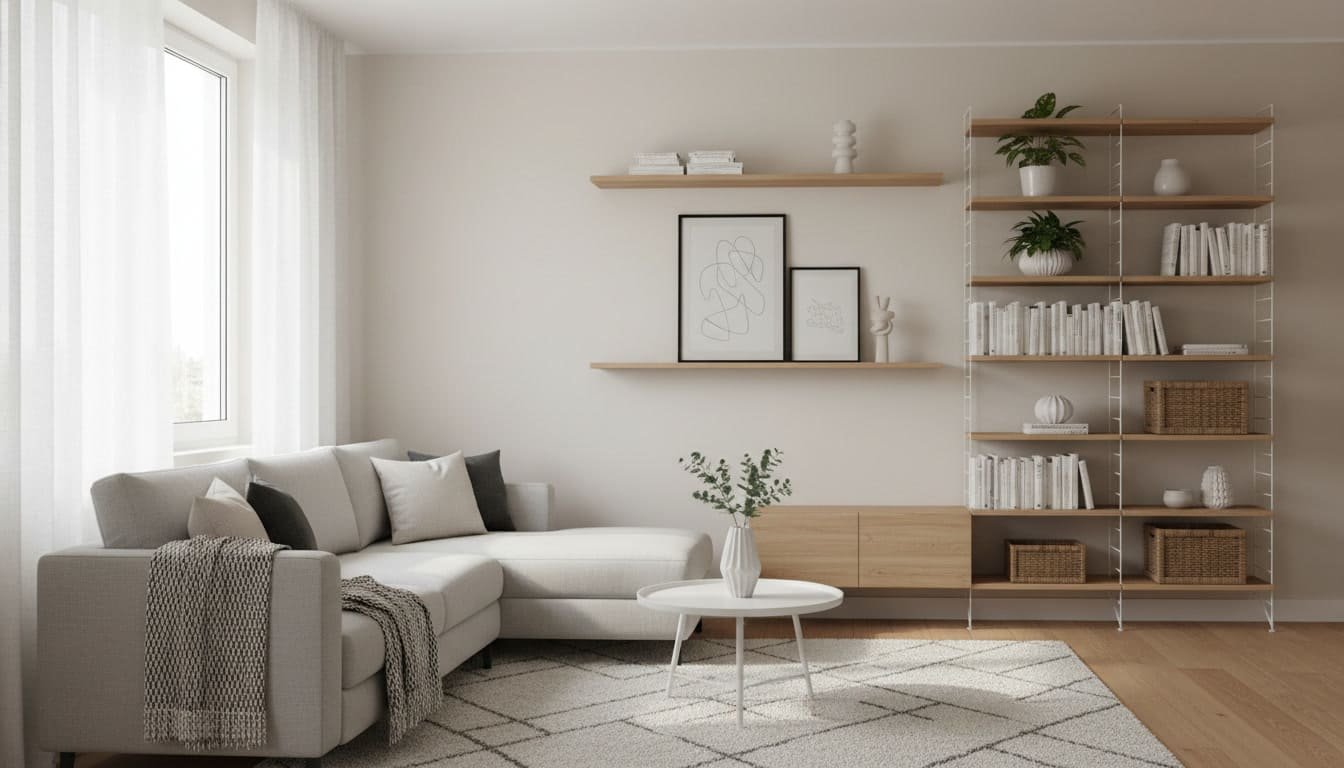
Tall walls are one of the biggest untapped assets in small homes and apartments. Install floating shelves, high-mounted cupboards, and ladder-style shelving to move storage off the floor and create visual height. Stagger shelves at different depths to store books, baskets, and decorative items while keeping frequently used things within reach.
Hooks and pegboards transform blank wall space into organized zones for coats, bags, kitchen tools, and accessories. Use heavy-duty wall hooks near entryways for keys and jackets, and magnetic strips in the kitchen for knives and metal utensils. For a flexible solution in living areas, ladder shelves or leaning bookcases provide vertical storage without permanent installation—they’re great for rented spaces.
When planning vertical storage, measure wall studs and consider weight distribution: anchor heavy items to studs or use drywall anchors rated for the load. Make vertical storage part of your design by combining open shelving with closed cabinets to balance display and concealment. Adding LED strip lighting under shelves can visually expand the space and highlight stored items.
Multifunctional Furniture That Doubles Living Space
Multifunctional furniture is the cornerstone of small-space living—pieces that serve two or more purposes free up floor area and cut down on clutter. Popular options include sofa beds and daybeds for sleeping guests, extendable dining tables that collapse for daily use, and nesting tables that separate when needed and tuck away when not. Look for designs with clean lines and built-in storage to keep small spaces feeling airy.
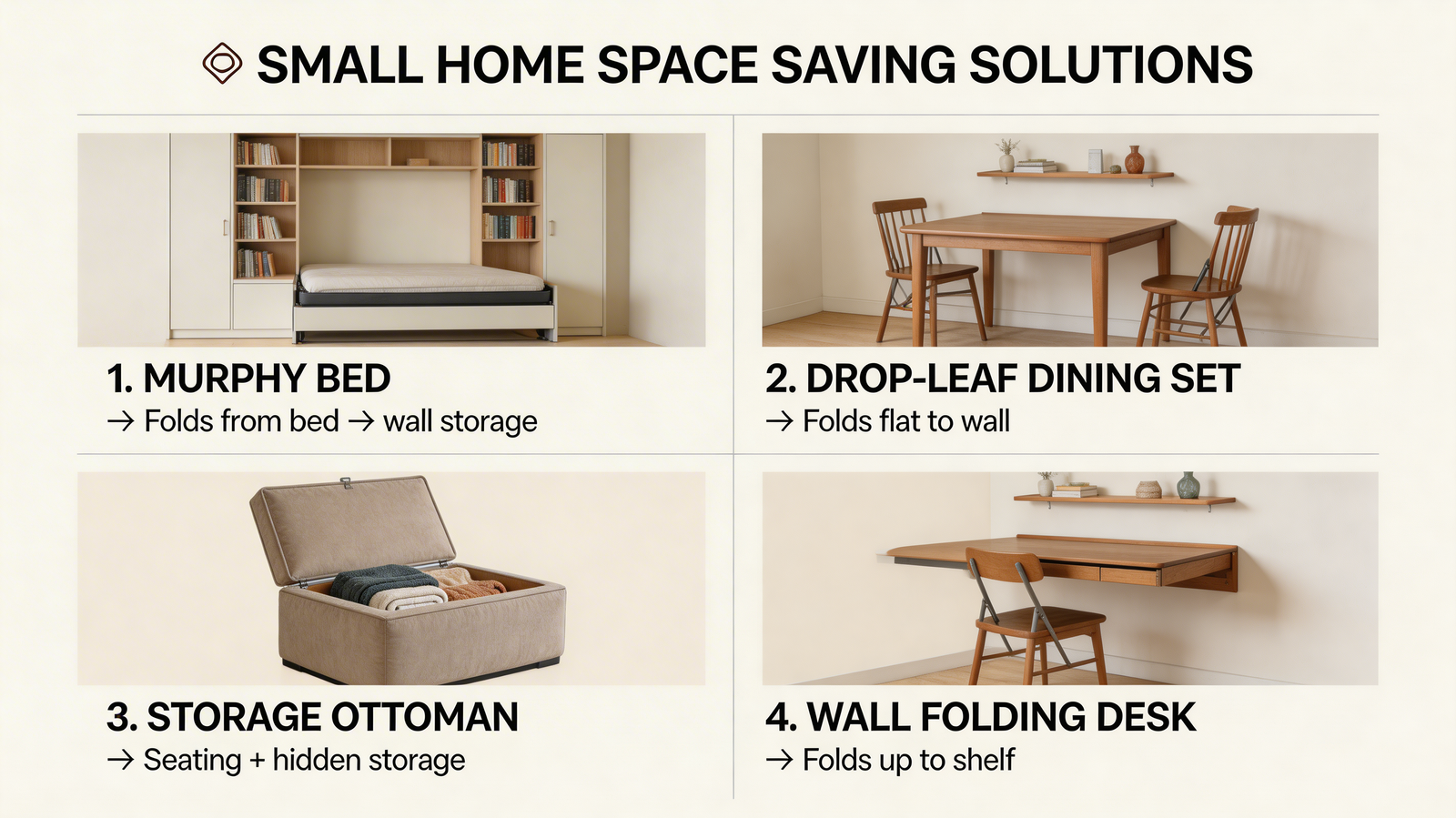
Consider pieces like storage ottomans that act as seat, coffee table, and hidden-bin all in one, or desks that fold into wall cabinets to create a home office that disappears at night. Invest in modular furniture systems—such as sectional units with removable components—so you can reconfigure seating or storage as needs change. Murphy beds with integrated desks or shelving are an excellent investment when you need full-floor space by day and sleeping space by night.
When choosing multifunctional furniture, prioritize quality hardware and smooth mechanisms (hinges, slides, gas lifts) because these components determine durability and usability. Measure your space and doorways before purchasing and plan circulation paths, so transformed pieces won’t block windows or doors when deployed. Real-life example: a studio tenant who installed a fold-down dining table attached to a wall cabinet now uses the same footprint as a workspace, eating area, and extra prep space.
Hidden Storage Ideas: Beds, Stairs, and Nooks
Hidden storage turns overlooked areas into functional assets. Under-bed storage is one of the easiest wins—use low-profile rolling bins, built-in drawers, or platform beds with integrated compartments to store seasonal clothing, linens, or shoes. For a more permanent solution, platform beds can raise mattress height and create substantial concealed storage without looking bulky.
If your home has multiple levels, convert the area beneath stairs into drawers, cabinets, or a compact bookshelf. Built-in staircase storage is ideal for family homes where every closet is precious; drawers in each riser or door-front compartments maximize otherwise dead space. For apartments without stairs, turn awkward nooks—under eaves, behind sofas, or above closets—into cubbies or custom shelving using tailor-made inserts or modular cubes.
Small details matter: install toe-kick drawers in kitchens, add pull-out trays inside lower cabinets, and use false-bottom drawers for valuables or paperwork. Real-life example: a family in a narrow rowhouse replaced a plain hallway closet with a wall of shallow, labeled cubbies and reclaimed floor space while creating a drop zone for backpacks and shoes. Hidden storage keeps clutter out of sight, making compact homes feel larger and more serene.
Organizing Systems and Decluttering Routines That Work
Good storage only works if you adopt routines to maintain it. Start with a declutter session—use the “keep, donate, toss” method or the KonMari principle and be ruthless about duplicates and items you no longer use. Set up a simple system of labeled bins and zones (daily, seasonal, sentimental) so everything has a logical home and is easy to find.
Create small, repeatable habits: a five-minute nightly tidy, a weekly reset for shared surfaces, and a quarterly purge for clothes and gear. Use clear or labeled containers for visibility and quick inventory checks; for closets, use uniform slimline hangers to save space and keep garments aligned. In multi-person households, assign responsibilities and common drop zones to prevent items from migrating across rooms.
Leverage digital tools too—keep an inventory list on your phone for stored boxes or use a whiteboard to track upcoming donation pickups and maintenance tasks. Real-life routine: a couple in a one-bedroom apartment swears by a cleaning playlist and a 20-minute Saturday “kitchen and closet reset” that prevents mess from snowballing, and they never feel buried under laundry or mail.
Small Kitchen and Bathroom Hacks
Kitchens and bathrooms are often the most challenging spaces in small homes, but smart solutions can make them highly functional. In the kitchen, install pull-out pantry shelves, vertical dividers for cutting boards and baking sheets, and a slim rolling cart that tucks beside appliances. Over-the-sink or over-the-stove shelving adds prep space and storage without adding footprint.
Bathrooms benefit from over-the-toilet shelving, recessed medicine cabinets, and narrow ladder shelves for towels and toiletries. Tension rods under sinks can hang spray bottles, while adhesive hooks inside cabinets store hair tools and brushes. Magnetic strips mounted on cabinet doors are ideal for small metal items like tweezers and nail clippers, keeping counters clear.
Real-life example: a renter converted a tiny galley kitchen by adding wall-mounted rails for pots and a magnetic spice rack, which freed up counter and cabinet space for frequently used appliances. Similarly, a micro-bathroom gained a hidden laundry hamper inside a custom vanity drawer, keeping floors clear and organizing laundry flow.
Flexible Layouts and Zoning for Multipurpose Rooms
Designing flexible layouts lets one room serve multiple functions without feeling cluttered. Use rugs, furniture placement, and lighting to create distinct zones for sleeping, working, dining, and lounging. For example, position a sofa to act as a visual divider between a living area and a sleeping nook in a studio apartment.
Invest in lightweight, mobile furniture—rolling desks, folding chairs, screen dividers, and compact shelving—that can be reconfigured quickly for guests or different activities. Wall-mounted lighting and sconces free up floor space and allow you to define zones without bulky floor lamps. Consider transparent or open-back furniture to maintain sightlines and make the space feel larger.
A practical approach is to plan “primary” and “secondary” functions for each area (e.g., primary: bedroom; secondary: home office) and select furniture and storage that support both. A real-life example: a WFH professional uses a fold-down desk mounted on a wall behind a sofa; during the day it’s an office, and in the evening it closes to return the room to pure living space.
Small homes and apartments can be powerful examples of efficient living when you combine vertical thinking, multifunctional furniture, hidden compartments, and consistent organizing habits. Start small—measure, prioritize, and implement one change at a time, whether it’s adding a floating shelf, swapping to storage-capable furniture, or instituting a 10-minute nightly tidy. With thoughtful solutions and a few strategic purchases, you’ll unlock usable space, reduce stress, and make your compact home both beautiful and highly functional.