
In small apartments, the living room often serves multiple purposes: relaxing, working, hosting guests, and sometimes dining. Without a thoughtful layout, even well-chosen furniture can make the space feel crowded and inefficient.
This article presents practical layout ideas that help small living rooms feel more open, functional, and balanced.
Create Clear Functional Zones
A small living room feels chaotic when all activities overlap in one undefined area. Even without walls, zones can be created visually.
Effective zones include:
- seating area
- work or reading corner
- storage zone
Clear zoning improves flow and usability without reducing space.
Use Compact, Low-Profile Furniture
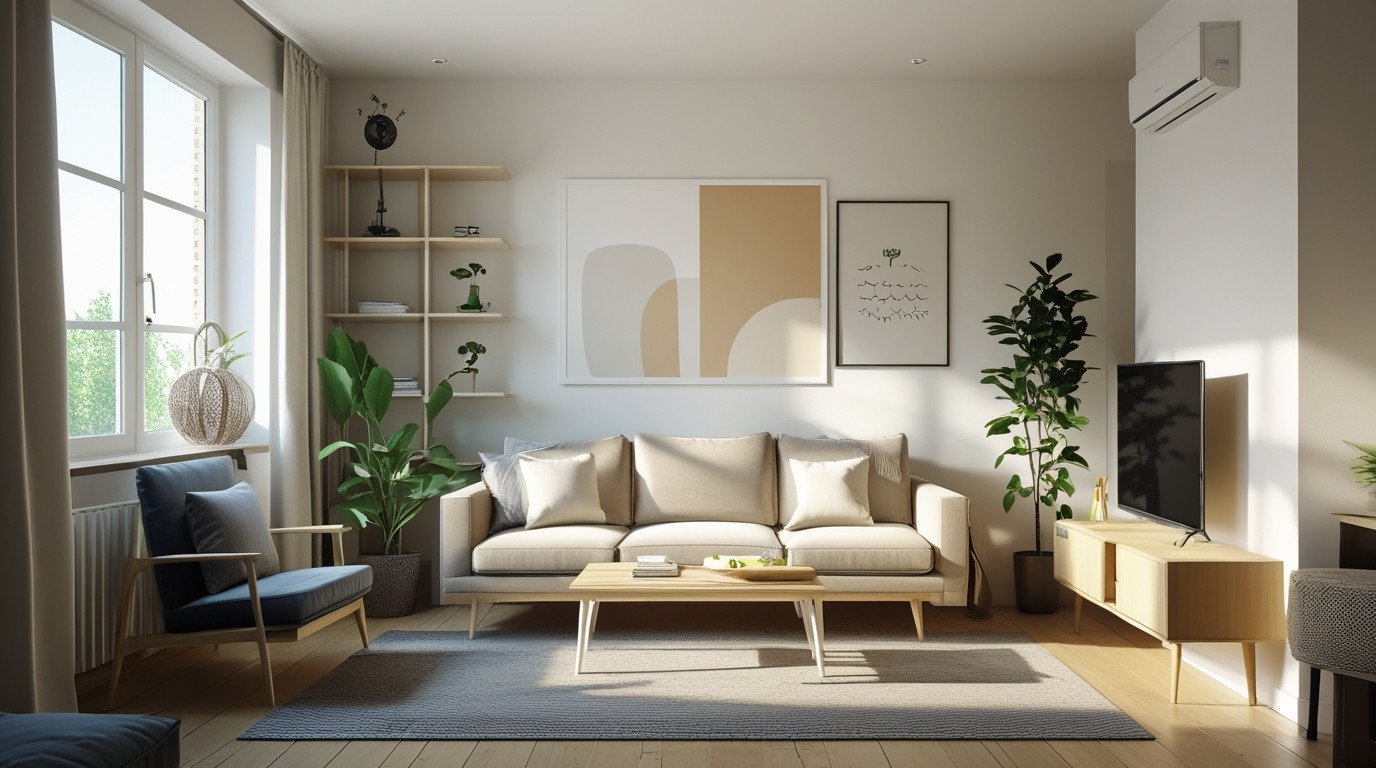
Bulky furniture visually shrinks a room. Low-profile pieces keep sightlines open and make ceilings appear higher.
Best suited items:
- low sofas
- compact armchairs
- slim coffee tables
This approach makes the living room feel lighter and more spacious.
Arrange Furniture Away From Walls
Contrary to common belief, pushing all furniture against walls does not always save space. Slightly floating furniture can create more balanced layouts and better circulation.
Small gaps between furniture and walls improve visual structure without wasting space.
Prioritize Vertical Balance
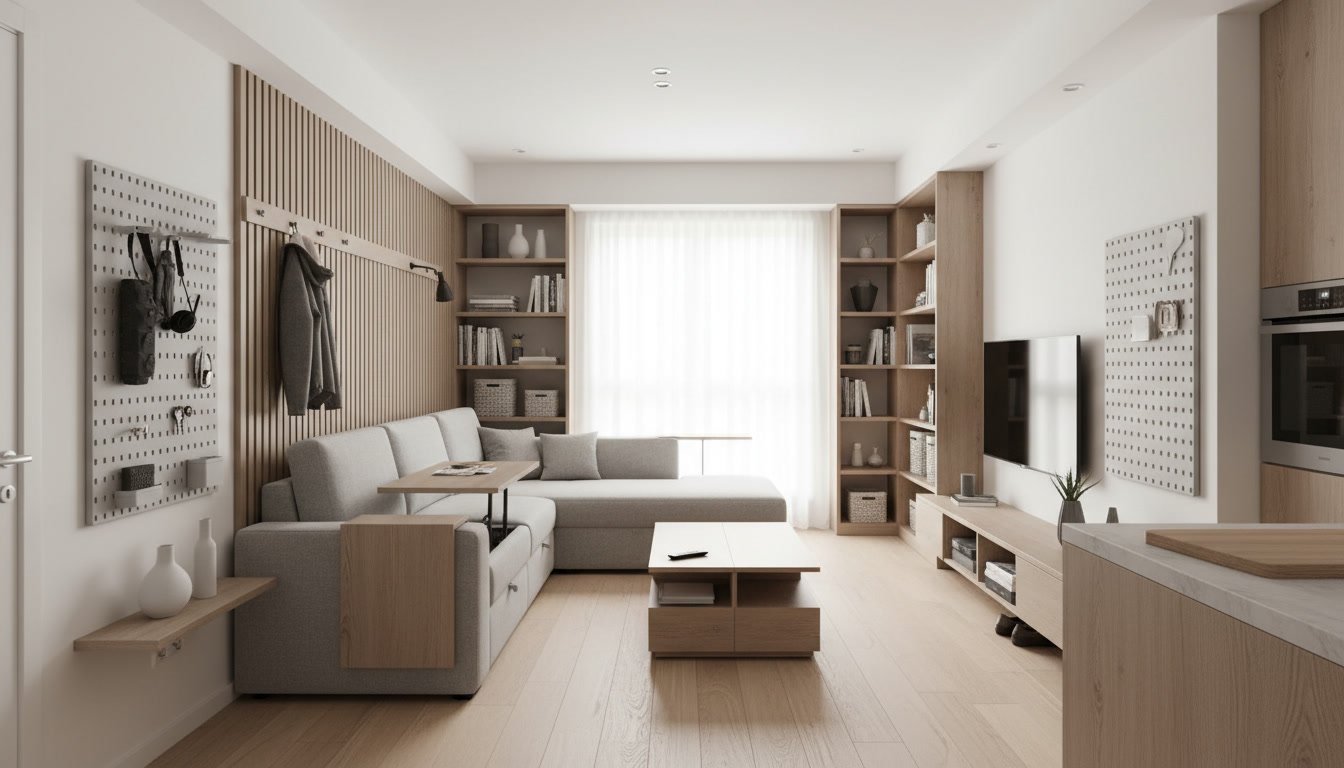
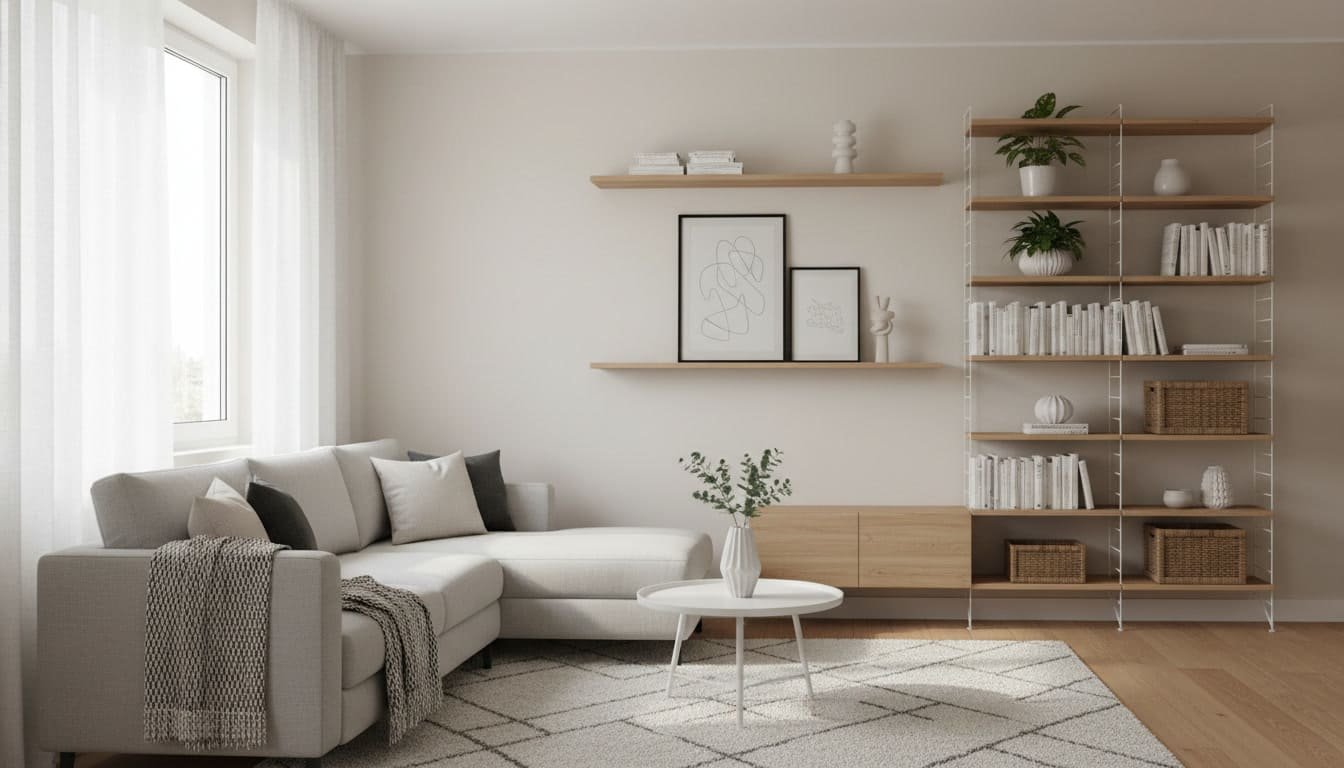
Horizontal overcrowding often occurs when all storage is placed at floor level. Adding vertical elements balances the composition of the room.
Examples:
- tall shelving units
- wall-mounted cabinets
- vertical decor elements
Vertical balance reduces floor clutter and improves spatial perception.
Choose Multifunctional Layout Elements
Instead of adding more furniture, integrate pieces that serve multiple roles.
Examples:
- coffee tables with storage
- benches that work as seating and storage
- shelving used as room dividers
Multifunctional elements reduce the need for additional items.
Maintain Visual Simplicity
A space-saving layout is not about filling every corner. Leaving some areas intentionally empty improves movement and visual calm.
Minimalism in layout often feels more spacious than maximal storage.
Conclusion
A successful living room layout in a small apartment is defined by balance, not density. By creating zones, choosing low-profile furniture, and maintaining visual simplicity, even compact living rooms can feel open and comfortable without structural changes.