
Under-bed storage is one of the few “free” square footage upgrades you can make in a small apartment. That empty space under your bed can hold off-season clothing, extra linens, shoes, or even pantry overflow—without adding another bulky cabinet to your living area. The key is choosing solutions that fit your bed height, your cleaning routine, and the way you actually use your stuff. This guide breaks down why under-bed storage works so well and how to pick bins, drawers, or rolling carts for maximum space.
Why Under-Bed Storage Is a Small-Space Game-Changer
Under-bed storage solves a common small-home problem: you need more capacity, but you don’t have room for more furniture. By using the footprint you already “own” (your bed), you turn dead space into organized storage without shrinking walkways or crowding your living room. For renters, it’s also a low-commitment upgrade—no drilling, no permanent installations, and easy to take with you when you move.
It’s especially effective because it centralizes bulky, infrequently used items. Think spare bedding, seasonal jackets, holiday décor, or backup toiletries—things you want accessible but not on display. In studio apartments where closets are limited, under-bed storage can function like a second closet and reduce visual clutter, which makes the entire space feel calmer and larger.
There are trade-offs to consider. Pros: it’s space-efficient, budget-friendly, and often hidden from view. Cons: access can be inconvenient if you store daily-use items, and low-clearance beds limit your options. Dust buildup is also real—under-bed containers should ideally be sealed or easy to wipe down, especially if you have pets or allergies.
Ideal Use Cases for Under-Bed Storage
Under-bed storage shines for seasonal rotation: swap summer clothes for winter sweaters, rotate shoes, or store extra blankets when it’s warm. It’s also great for category-based organization, like one container for gym gear, one for gift wrap, and one for travel items—so you’re not hunting through closets every time you need something.
For families in compact homes, it can become a “hidden zone” for kids’ items like puzzles, craft supplies, or extra diapers—organized but not taking over the main living area. In shared apartments, it’s a practical way to claim personal storage without needing more closet space.
If you work from home in a small space, under-bed storage can even support a modular setup: tuck away a laptop stand, cables, or a folding keyboard tray at night. The goal is to store items you use weekly or monthly—not things you need multiple times a day.
Common Mistakes That Waste Under-Bed Space
The biggest mistake is buying containers before measuring. Bed frames vary widely, and even a 1-inch mismatch can make bins unusable or hard to slide out. Measure clearance height, usable depth (legs and center supports reduce space), and whether you’ll need clearance to pull storage out from the side or foot of the bed.
Another common issue is choosing containers that don’t match your habits. If you hate moving the bed skirt, lifting lids, or dragging heavy boxes, you’ll stop using the system. In that case, drawers or rolling options are usually better than soft zip bags.
Finally, avoid storing items loosely without categories or labels. Under-bed storage becomes a “black hole” fast. A simple label system (“Linens,” “Winter,” “Shoes”) and consistent container sizes makes it easier to keep the space functional long-term.
How to Choose Bins, Drawers, or Rolling Carts
Start with three practical questions: How much bed clearance do you have? How often will you access the items? How important is dust protection? Low-clearance beds (generally under ~6 inches) usually require slim fabric bags or low-profile boxes, while higher frames can handle rigid bins, drawers, or even stacking systems.
Then think about your floor type. On carpet, small wheels can snag—look for larger casters or smooth-bottom sliders. On hardwood, wheels roll well but can scratch; rubberized casters and soft edges matter. If you’re aiming for a clean look in a minimalist apartment, matching container materials (all fabric or all clear plastic) helps the setup feel intentional instead of cluttered.
Buying advice that pays off: prioritize access over maximum capacity. A slightly smaller bin that glides easily and opens cleanly is more useful than a huge box you dread pulling out. Also consider whether you want visibility—clear bins help you find items quickly, while opaque containers look calmer and hide visual noise.
Under-Bed Bins: Best for Flexible, Budget-Friendly Storage
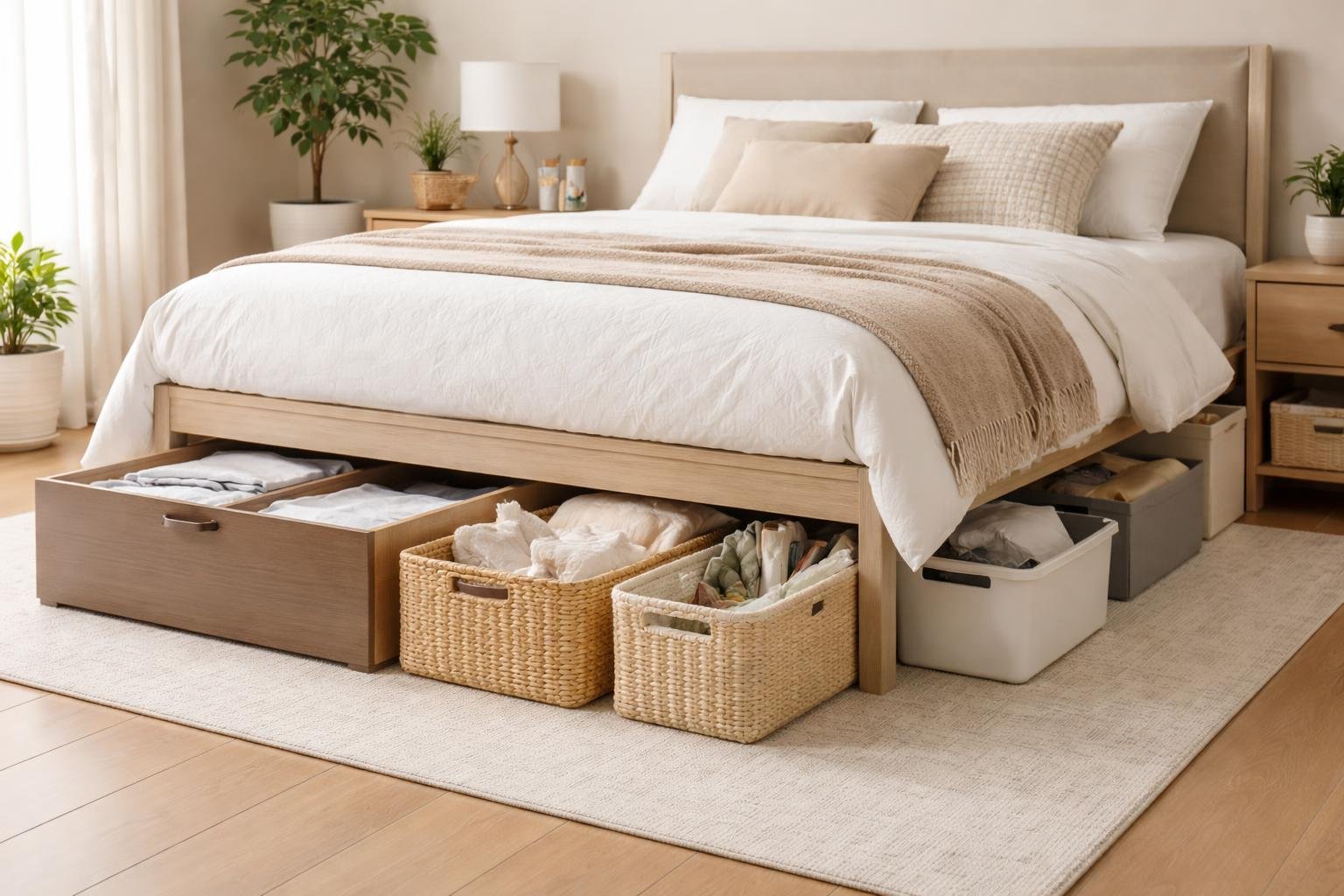
Bins are the most common option because they’re simple and widely available. Clear plastic bins are great for visibility and dust protection, making them ideal for linens, off-season clothes, or spare toiletries. Look for sturdy lids, reinforced corners, and a low profile that won’t catch on bed slats or frame supports.
Fabric zippered bags are lighter and easier to squish into odd gaps, which is useful if your bed frame has uneven clearance. They’re a strong choice for soft items like sweaters, pillows, or extra towels. The downside is durability: fabric can sag, zippers can fail, and thin material won’t protect against moisture as well as plastic.
Pros: affordable, easy to swap and rearrange, lots of sizes. Cons: lid-lifting can be annoying, and some bins are awkward to pull out without built-in handles. If you’ll access items often, choose bins with front handles or a clamshell opening instead of a fully removable lid.
Under-Bed Drawers: Best for Frequent Access and a Clean Look
Under-bed drawers work like a dresser extension. They’re ideal if you’ll reach for items regularly—think workout clothes, pajamas, spare sheets, or shoes you rotate weekly. Many drawer systems have structured sides that keep items from collapsing into a pile, which makes them easier to maintain than soft bags.
Look for smooth-glide wheels or rails, a drawer front that’s easy to grab, and a height that clears your bed frame with room to spare. If you’re in a rental, standalone rolling drawers can deliver the “built-in” feel without modifying furniture—especially helpful in apartments with tiny closets.
Pros: fast access, tidier day-to-day, often more aesthetic. Cons: usually pricier and can waste a bit of space due to drawer structure. Also, very lightweight wheels may struggle on thick rugs, so confirm the drawer is designed for your floor type.
Rolling Carts and Low-Profile Platforms: Best for Heavy or Awkward Items
Rolling under-bed carts (or low platforms with casters) are a smart pick for heavier loads: bulk pantry items, tool kits, camera gear, or stacks of books. Because they roll out as a single unit, you’re not lifting weight from the floor—useful if you’re storing things that would make a bin too heavy to handle comfortably.
For buying, prioritize wheel quality and handle design. A cart that’s hard to grip or has tiny casters will be frustrating, especially in tight bedrooms. Also check for raised edges or sidewalls so items don’t shift when you pull the cart out from under the bed.
Pros: great for heavy items, easy pull-out access, strong weight capacity. Cons: less dust-proof unless paired with lidded containers, and can look utilitarian if stored partially visible. These are best when function matters most—like in a compact home with limited pantry or utility storage.
Under-bed storage is one of the most practical ways to gain space in a small apartment without adding visual clutter or sacrificing floor area. Measure your clearance, be honest about how often you’ll access what you store, and choose a format—bins, drawers, or rolling carts—that matches your daily routine. When the containers fit well, glide easily, and are organized by category, under-bed storage stops being a last-resort hiding place and becomes a reliable, high-capacity extension of your home.