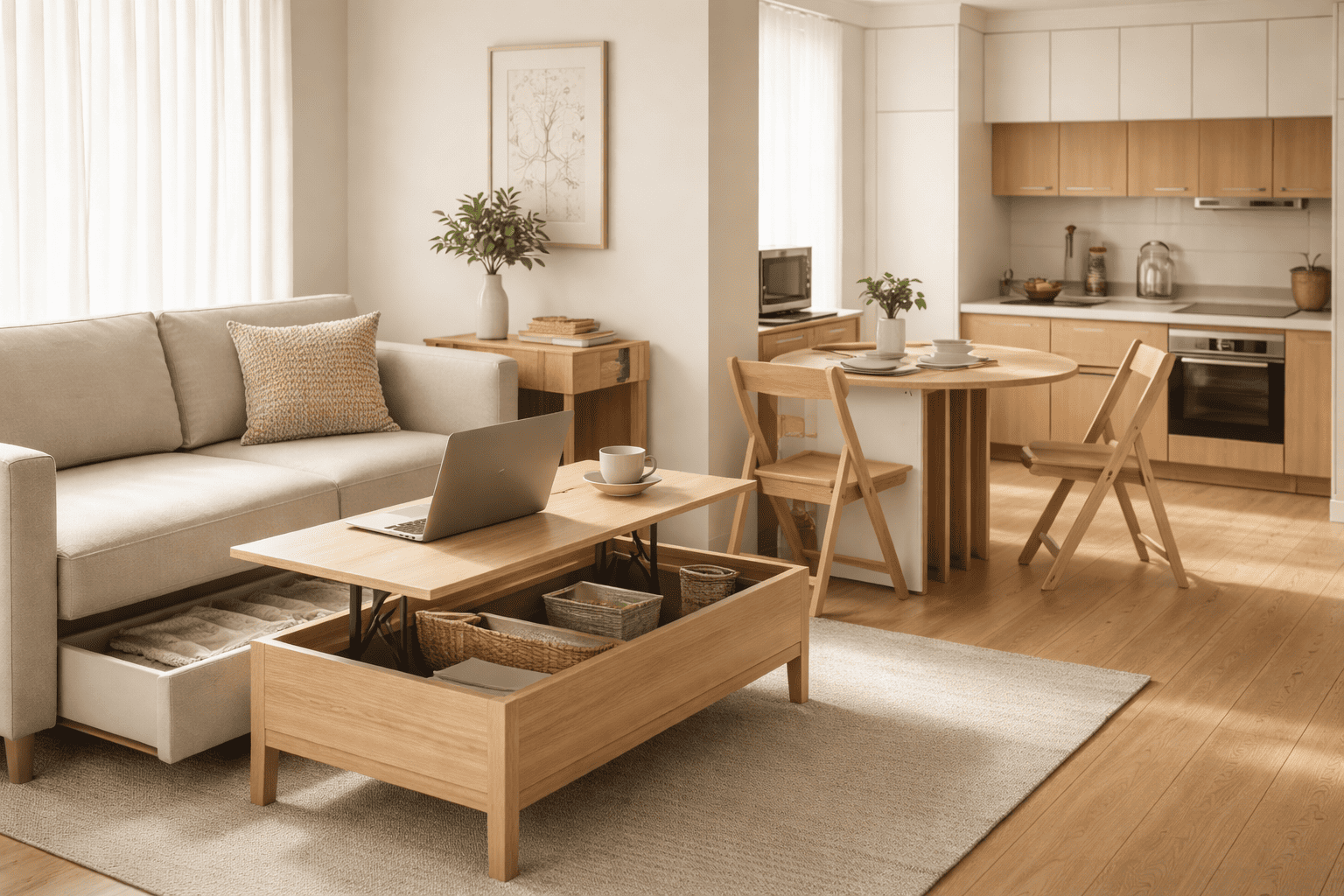

In a small home, the dining area often has to do double duty—workspace by day, dinner spot by night, and sometimes extra counter space in between. Expandable dining tables solve that problem by staying compact when you don’t need them, then scaling up quickly for guests. For renters and apartment dwellers, they’re one of the most practical “buy once, use every day” furniture upgrades because they reduce clutter without sacrificing functionality.
How Expandable Tables Maximize Small Dining Areas
Expandable dining tables let you reclaim floor space during everyday life. Kept in their smallest configuration, they can sit close to a wall, tuck into a corner, or pair with a bench to reduce chair clearance. When you need more surface area—like hosting friends or setting out a buffet—you extend the tabletop instead of dragging in a folding table from a closet.
They also make small rooms feel calmer and less crowded. A table that’s “right-sized” most of the time improves walking paths and keeps the room flexible for other uses (yoga mat, kids’ play area, rolling cart). In open-plan studios, a compact table can even act like a soft room divider without dominating the space.
Buy on Amazon:
👉 https://amzn.to/4v4osmu
There are real trade-offs to consider, and it helps to be honest about how you’ll use it. Pros: adaptable seating capacity, better daily circulation, and fewer “extra” furniture pieces to store. Cons: extension mechanisms add weight, some designs have a seam you’ll feel when writing, and cheaper models can wobble when fully extended. Ideal use cases include small households that host occasionally, work-from-home setups that need a bigger surface only sometimes, and kitchens that can’t fit a permanent 6-person table.
What to Look for When Buying an Extendable Table
Start with sizing—both closed and open. Measure your available footprint and your clearances: aim for roughly 30–36 inches of walkway on the traffic side if possible, and confirm how far chairs will pull out when someone sits. Also check the extended length against your room shape; a long extension might block a doorway or collide with a sofa in an apartment’s main living area.
Buy on Amazon:
👉 https://amzn.to/4bNpbkx
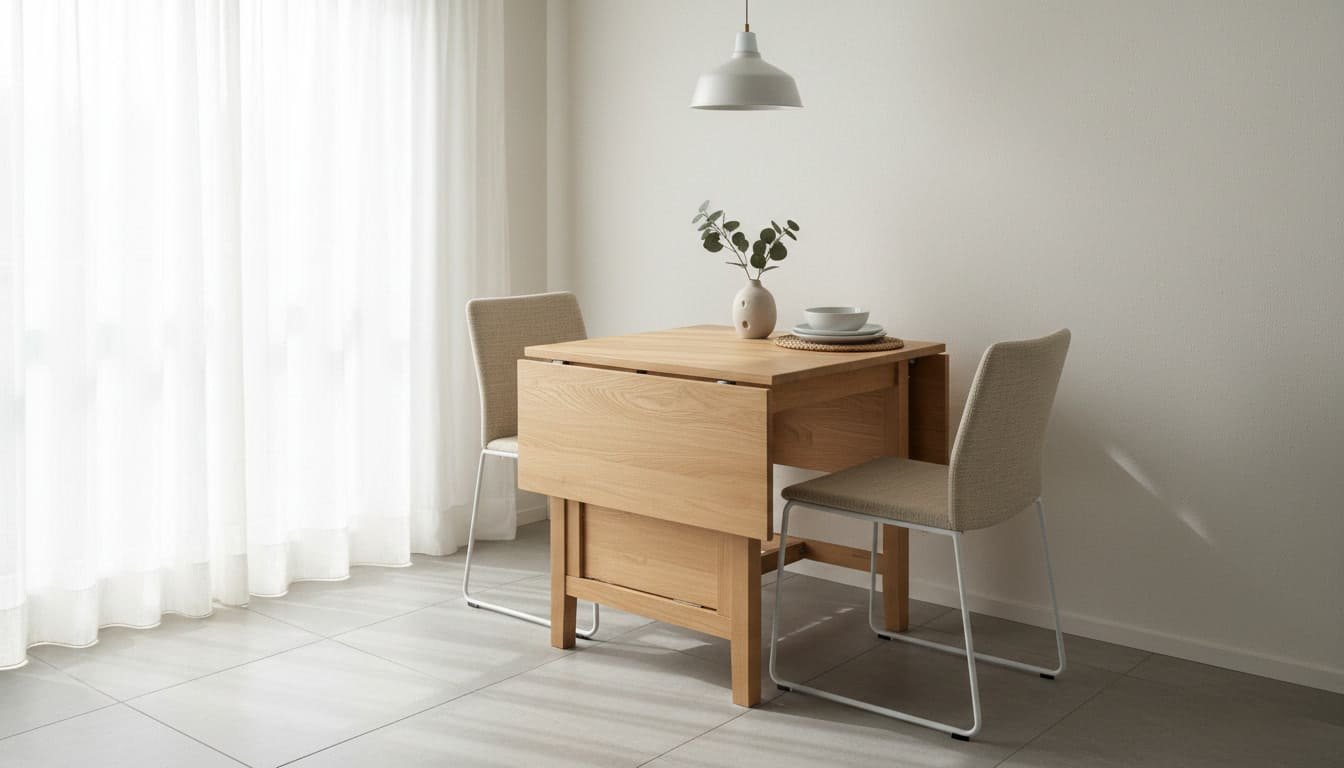
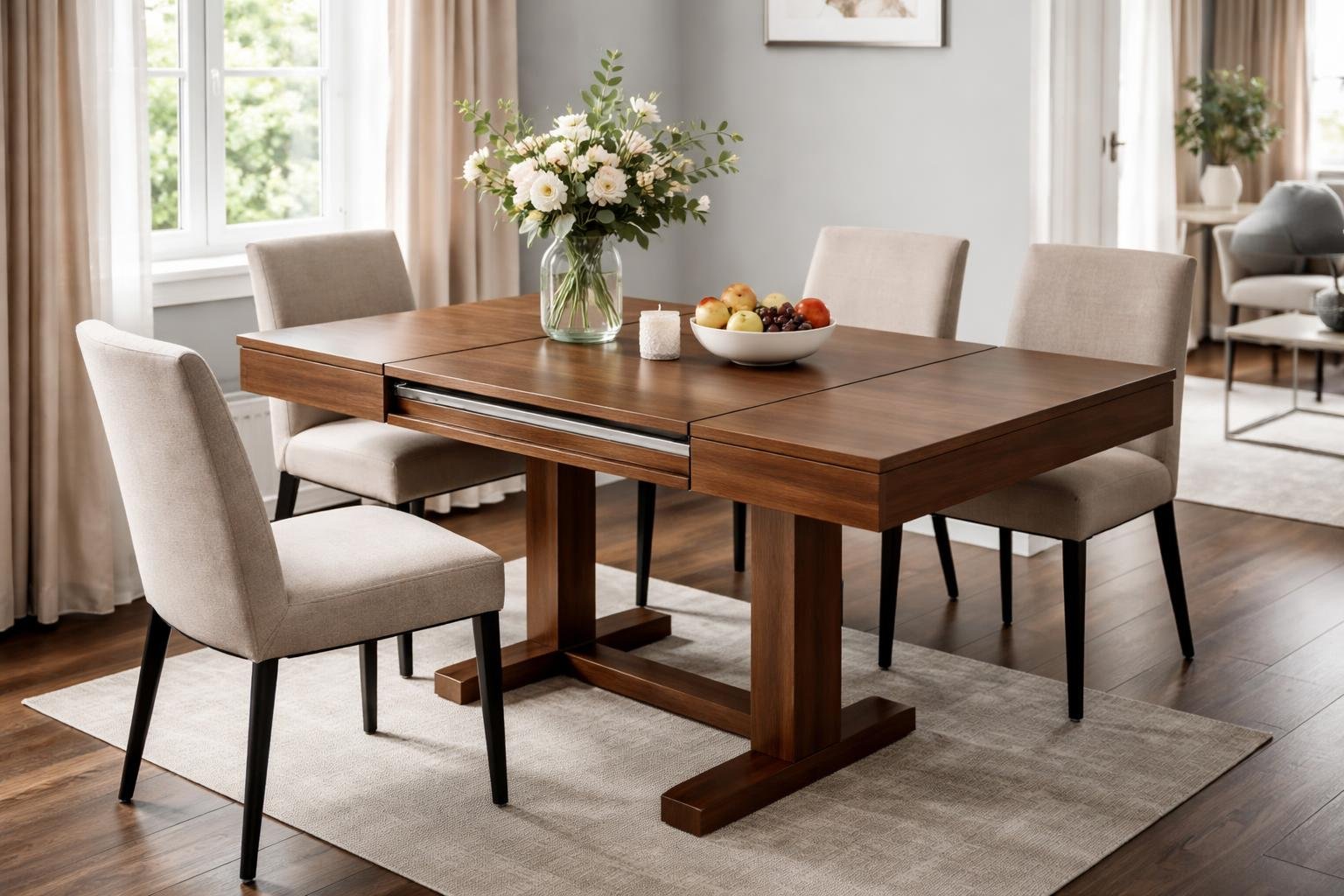
Next, choose the extension style that matches your habits. Butterfly/self-storing leaves are renter-friendly because the leaf lives inside the table—no storage problem, faster setup. Drop-leaf tables are great against a wall and can function like a console when folded, but they’re usually narrower and may not feel as stable at full size. Separate leaves can offer the most flexibility and solid feel, but only if you have somewhere clean and safe to store the leaf (under a bed, behind a wardrobe, or in a vertical storage bag).
Finally, pay attention to stability, materials, and day-to-day usability. Look for sturdy leg placement that won’t steal knee space when extended (pedestal bases can be great, but only if the base isn’t a toe-stubber). Check the mechanism quality: smooth metal tracks, secure locks, and a level surface with minimal flex. For finishes, durable laminates and sealed woods handle spills well; if you’re using it as a desk, prioritize a surface that won’t show every scratch and consider rounded corners for tight walkways.
Expandable dining tables are one of the simplest ways to make a small home feel more functional without adding furniture you don’t have room to store. The best choice comes down to measurements, extension type, and how you actually live—daily compact use with occasional full-size hosting. With the right mechanism and a stable build, an extendable table can be a long-term small-space solution that looks intentional, not improvised.