
Storage benches are one of those rare small-space wins that feel “too simple” until you actually live with one. In a compact apartment, the entryway and bedroom tend to collect clutter fast—shoes, bags, spare linens, laundry, and all the little daily essentials. A well-chosen storage bench solves two problems at once: it gives you a place to sit and it hides the mess in a controlled, easy-to-access way. The trick is picking the right style and size for how you really use your space.
How Storage Benches Save Space in Tight Homes
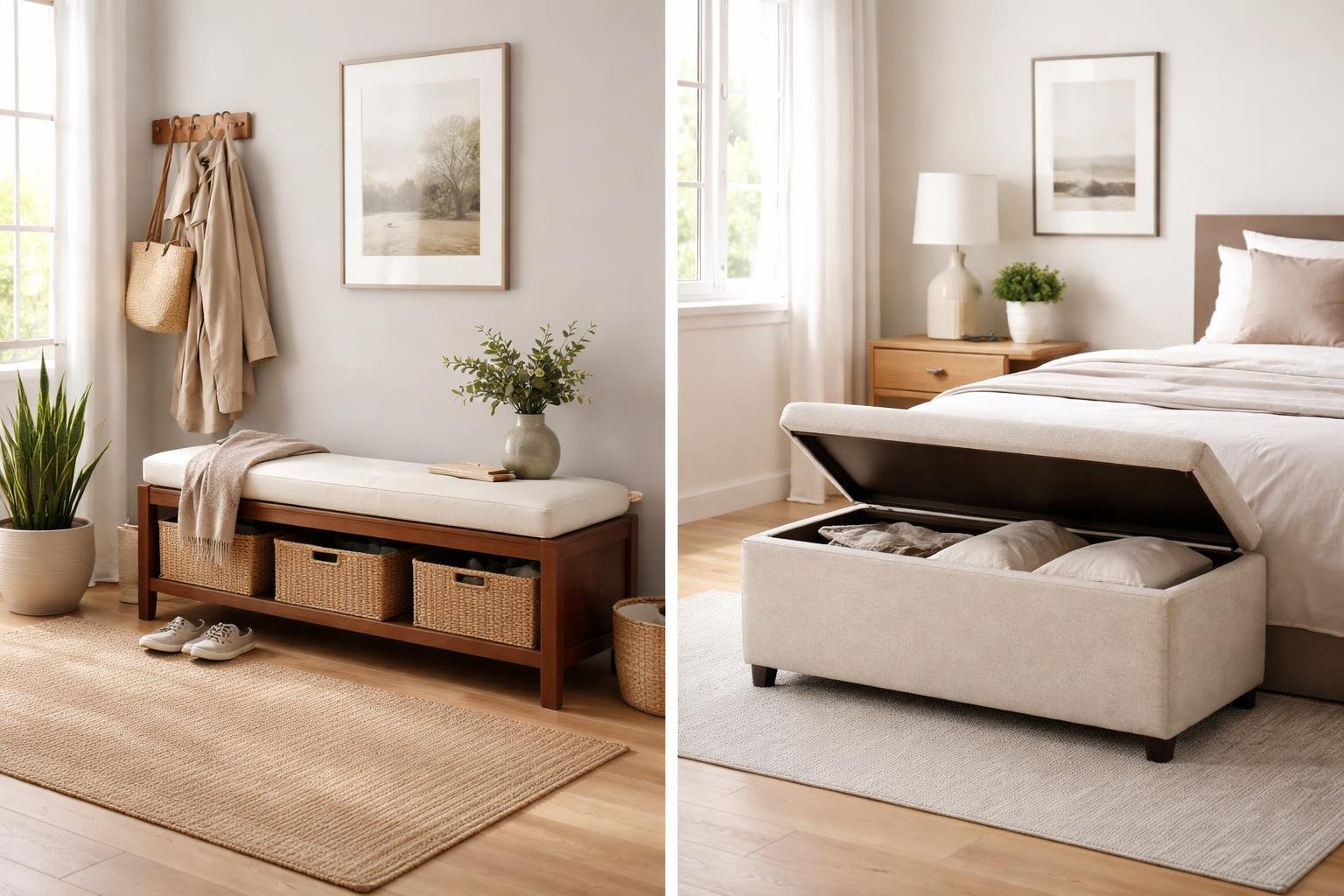
A storage bench replaces multiple pieces of furniture with one footprint. In an entryway, it can take the place of a standalone shoe rack and a chair, while also acting as a drop zone for backpacks, umbrellas, or dog-walking gear. In a bedroom, it can reduce the need for extra dressers or bulky bins by storing off-season clothes, bedding, or workout equipment right where you dress and unwind.
They also help “contain” clutter so small homes feel calmer. Open piles—shoes by the door, blankets on a chair, bags on the floor—make a room look smaller than it is. A bench with lift-top storage, cubbies, or drawers turns those visual messes into closed storage, which instantly improves how tidy the space feels without requiring more square footage.
That said, there are trade-offs worth noting. Pros: dual-purpose seating + storage, improved organization, easy access for daily routines, and often a more polished look than plastic bins. Cons: some lift-top benches can be awkward in tight hallways, drawers may need clearance space to open, and cheap hinges or weak bottoms can sag under heavy loads. The best space-saving payoff comes from matching the storage style to your room layout and habits.
What to Look for in Entryway and Bedroom Benches
Start with measurements and clearance, not aesthetics. For narrow entryways, prioritize a slim depth (often around 12–15 inches) so the bench doesn’t choke the walkway. For bedrooms—especially at the foot of a bed—measure how much space you need to pass comfortably, and leave enough room for drawers or lids if the bench opens upward. If you rent, look for lighter-weight benches that are easier to move and won’t gouge floors.
Next, choose the storage format that fits how you’ll use it. Cubbies are great for shoes and baskets (fast access, easy sorting), while drawers hide clutter best but require extra opening space. Lift-top benches can hold bulky items like spare pillows and comforters, but they’re most convenient when you can fully open the lid without bumping a wall or coat rack. For entryways with lots of wet shoes, slatted or ventilated compartments help reduce odor and moisture buildup.
Finally, pay attention to materials, comfort, and load rating. Upholstered benches look cozy in bedrooms and make getting dressed easier, but they can stain—removable covers or wipeable fabrics are renter-friendly. In entryways, wood or metal frames tend to handle daily wear better, especially with kids or pets. Check the maximum weight capacity if you plan to use it as primary seating, and look for practical extras like soft-close hinges, a sturdy center support, and adjustable feet for uneven apartment floors.
Storage benches for entryways and bedrooms work so well in small homes because they solve a real everyday problem: too many essentials and not enough dedicated storage. The right bench creates an intentional landing spot at the door or a functional zone at the foot of the bed—without adding another bulky piece of furniture. Measure carefully, pick a storage style that matches your routine, and prioritize durability where the bench will see the most daily traffic.