
Small apartments rarely have enough counter space, and that’s exactly where a good rolling kitchen cart earns its keep. Unlike a fixed island, a cart can act as prep space, pantry overflow, coffee station, or bar—then roll out of the way when you need your floor back. For renters, it’s also a rare “kitchen upgrade” that doesn’t require drilling, remodeling, or losing a security deposit.
The best rolling kitchen carts for small apartments balance three things: usable surface area, smart storage, and a footprint that won’t clog your walkway. Details like locking casters, drop-leaf tops, and vertical shelving matter more in a studio than they do in a full-size home. A cart that’s too deep or wobbly quickly becomes clutter on wheels.
This guide focuses on carts that solve real small-space pain points: limited prep space, awkward corners, tiny pantries, and kitchens that double as dining rooms. Think of it as a practical shortlist of what to look for and which cart styles tend to work best in tight layouts.
Key Features That Matter in a Small-Space Cart
A small-apartment cart should feel like “extra kitchen” without eating your entire kitchen. Start with size: measure your tightest pass-through (often between counters and a wall or table) and aim for a cart that stays comfortably narrower than that path. In many apartments, a slim profile (roughly 15–18 inches deep) is easier to live with than a bulky island-style cart.
Buy on Amazon:
👉 https://amzn.to/3OjjMIZ
Mobility is non-negotiable, but not all wheels are equal. Look for smooth-rolling casters and at least two locking wheels so the cart doesn’t drift while you’re chopping or using a stand mixer. If you have hard floors, softer rubber-style casters tend to roll quieter and help prevent scuffs—an underrated win in rentals.
Storage design is where small spaces either shine or fail. Open shelves are great for grab-and-go items (mixing bowls, baskets, small appliances), while drawers and closed cabinets hide visual clutter in a studio. A drop-leaf or extendable top is especially useful for tiny kitchens: you get extra prep space when needed, and a compact footprint the rest of the time.
Quick Buying Checklist (Small-Apartment Friendly)
When comparing options online, these details usually separate a “good in photos” cart from a cart you’ll actually keep:
- Locking casters (at least two; four is ideal if you’ll use it as a workstation)
- Depth under ~18 inches if your kitchen is a narrow galley
- Drop-leaf/extendable top for flexible counter space
- Weight capacity that matches your use (heavier if storing appliances)
- Materials that match your lifestyle: metal for easy cleaning, wood for warmth, sealed tops for stain resistance
Top Rolling Kitchen Carts for Tiny Apartment Layouts
1) Slim Metal Utility Cart (3-tier “bar cart” style)
A slim, three-shelf metal cart is one of the safest picks for very tight apartments because it’s narrow, lightweight, and easy to reposition. It’s ideal if you need vertical storage more than you need a thick butcher-block worktop. Many people use it as a coffee station, microwave stand (check weight limits), or “extra pantry” for snacks and dry goods in bins.
Buy on Amazon:
👉 https://amzn.to/4v5vNCn
Pros: usually affordable, easy to clean, fits tight gaps, quick assembly.
Cons: less stable for heavy chopping, open shelves show clutter, smaller top surface.
Ideal use case: studio kitchens, narrow galley layouts, renters who want flexible storage that can move between kitchen and living area.
2) Drop-Leaf Kitchen Cart (folding side panel for extra prep space)
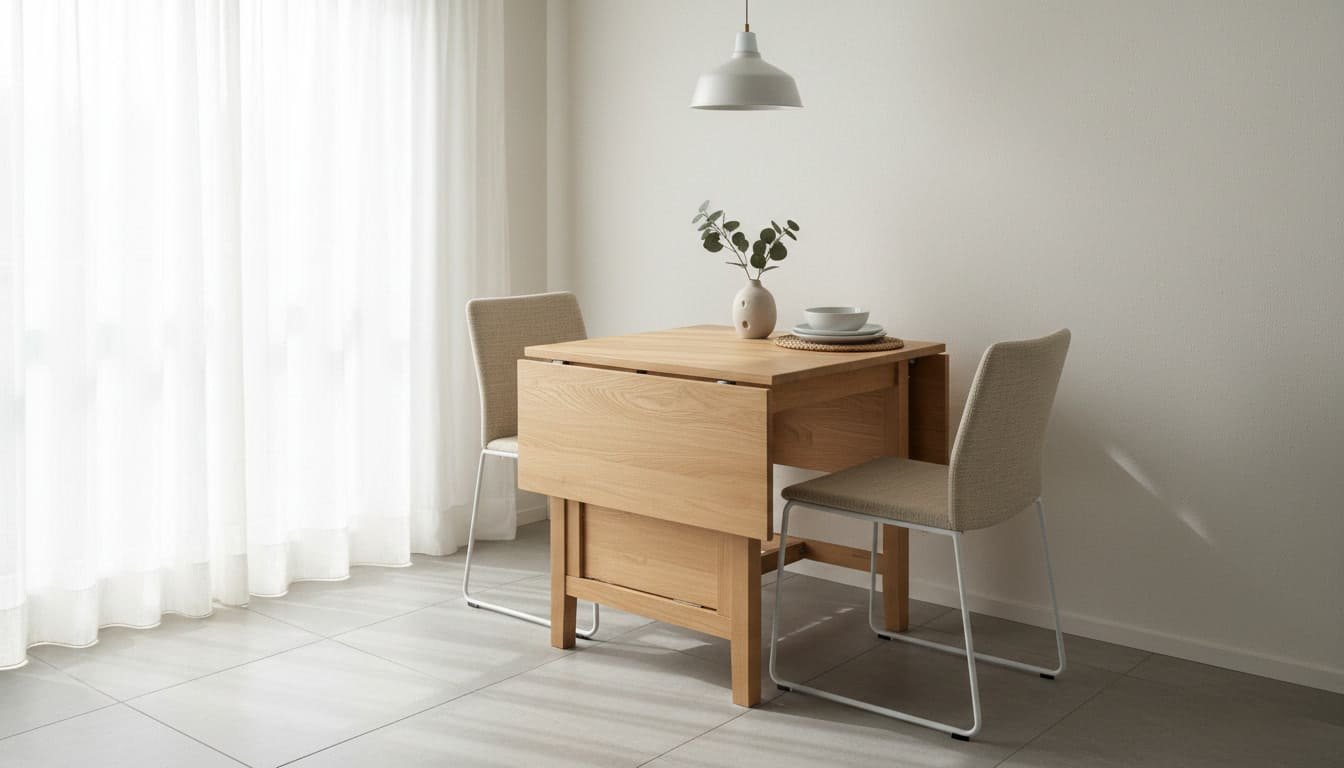
Drop-leaf carts are great when your biggest issue is not having enough counter space. You can fold the leaf down for daily living, then pop it up for meal prep, baking, or serving guests. This style often includes a mix of shelves and drawers, which helps keep a small kitchen from looking messy.
Pros: expandable work surface, more “kitchen-like” function, often includes drawers for tools.
Cons: can be heavier, needs a bit of clearance to open the leaf, assembly can take longer.
Ideal use case: renters who cook often, small apartments where the dining table doubles as a desk and can’t always be used for prep.
3) Narrow Cart with Pull-Out Basket or Wire Drawers
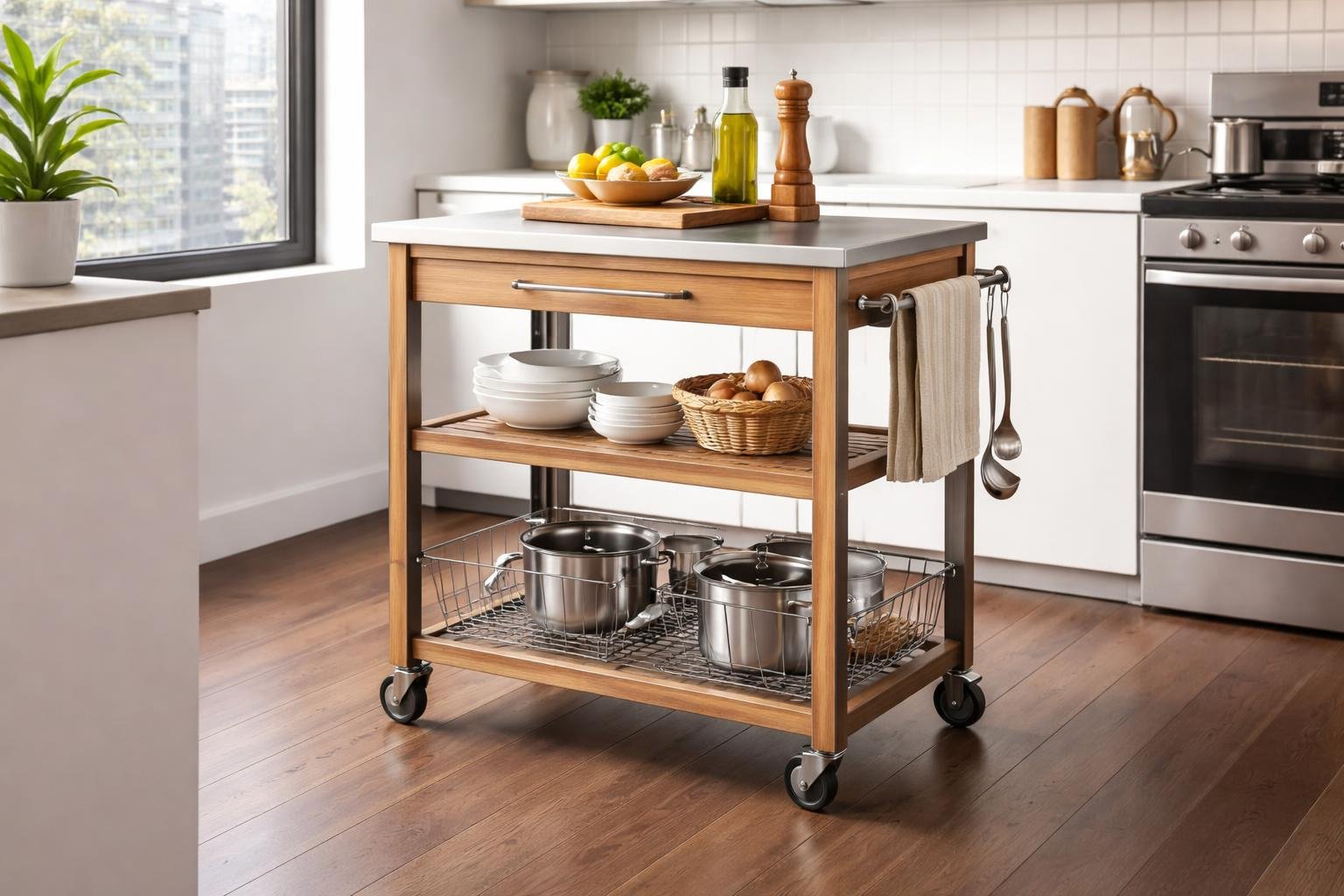
If you’re short on pantry space, choose a cart that behaves like a mobile pantry: tall-ish, slim, and built around pull-out baskets. Wire drawers make it easy to see what you have (and avoid buying duplicates), and airflow helps with items like onions or potatoes if you store them properly.
Pros: excellent organization for dry goods, efficient use of vertical space, easy access.
Cons: wire baskets can snag packaging, not ideal for heavy appliances, can look busy if overfilled.
Ideal use case: apartments with tiny cabinets, cooks who want a “snack and staples” zone near the fridge or dining area.
4) Butcher-Block-Top Cart with Cabinet Storage (compact version)
For people who want a sturdier prep surface, a compact butcher-block-top cart can feel like adding a mini island—without the commitment. The key is choosing a smaller model with a sealed top (or one you’re willing to maintain) and enough enclosed storage to hide the everyday chaos: oils, small appliances, and cleaning supplies.
Pros: stable surface for prep, warmer furniture look, enclosed cabinet reduces visual clutter.
Cons: takes more floor space, wood requires care, heavier to roll (even with good casters).
Ideal use case: small apartments where the kitchen is visible from the living room and you want the cart to look like real furniture.
5) Multi-Use Cart for Kitchen + Dining (serving cart with storage)
In small apartments, one item often needs to do two jobs. A serving-style cart can move from kitchen to dining area, acting as a buffet for guests, a beverage station, or extra plating space when your counters are full. Look for raised edges on shelves (to prevent spills) and locks on the wheels.
Pros: flexible for entertaining, easy to roll where needed, often stylish and compact.
Cons: not always built for heavy-duty cooking tasks, limited enclosed storage.
Ideal use case: small-space hosts, people who eat in the living room or at a small dining nook and need a mobile “staging” surface.
A rolling kitchen cart is one of the simplest ways to gain counter space and storage in a small apartment without making your kitchen feel cramped. Prioritize a slim footprint, locking casters, and the right storage mix (open for convenience, closed for a cleaner look). If you cook often, a drop-leaf cart is usually the best space-to-function upgrade; if you need organization, a narrow basket-style cart works like a mini pantry.
Before you buy, measure your walkways and decide what problem you’re solving first: prep space, storage, or flexibility for entertaining. The “best” cart is the one that moves easily, parks neatly, and supports your daily routine—without becoming another obstacle in a tight layout.