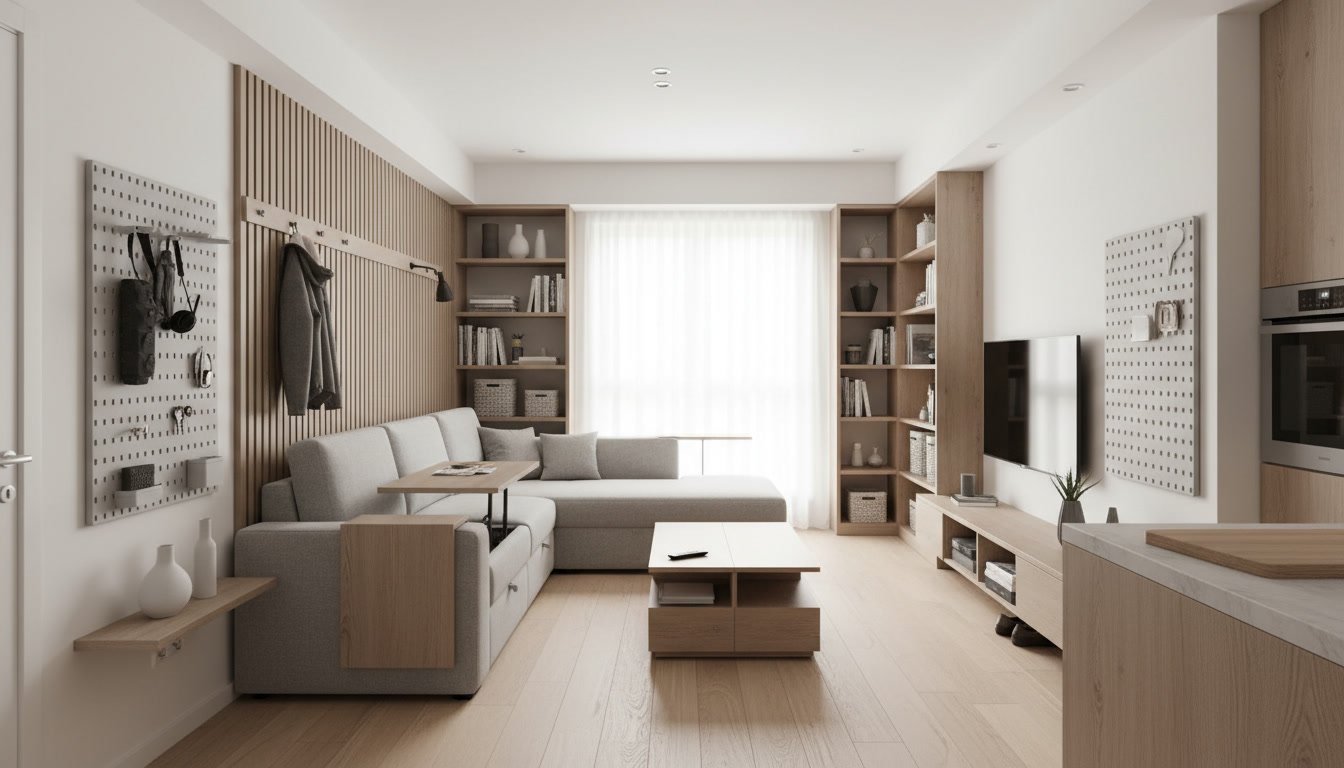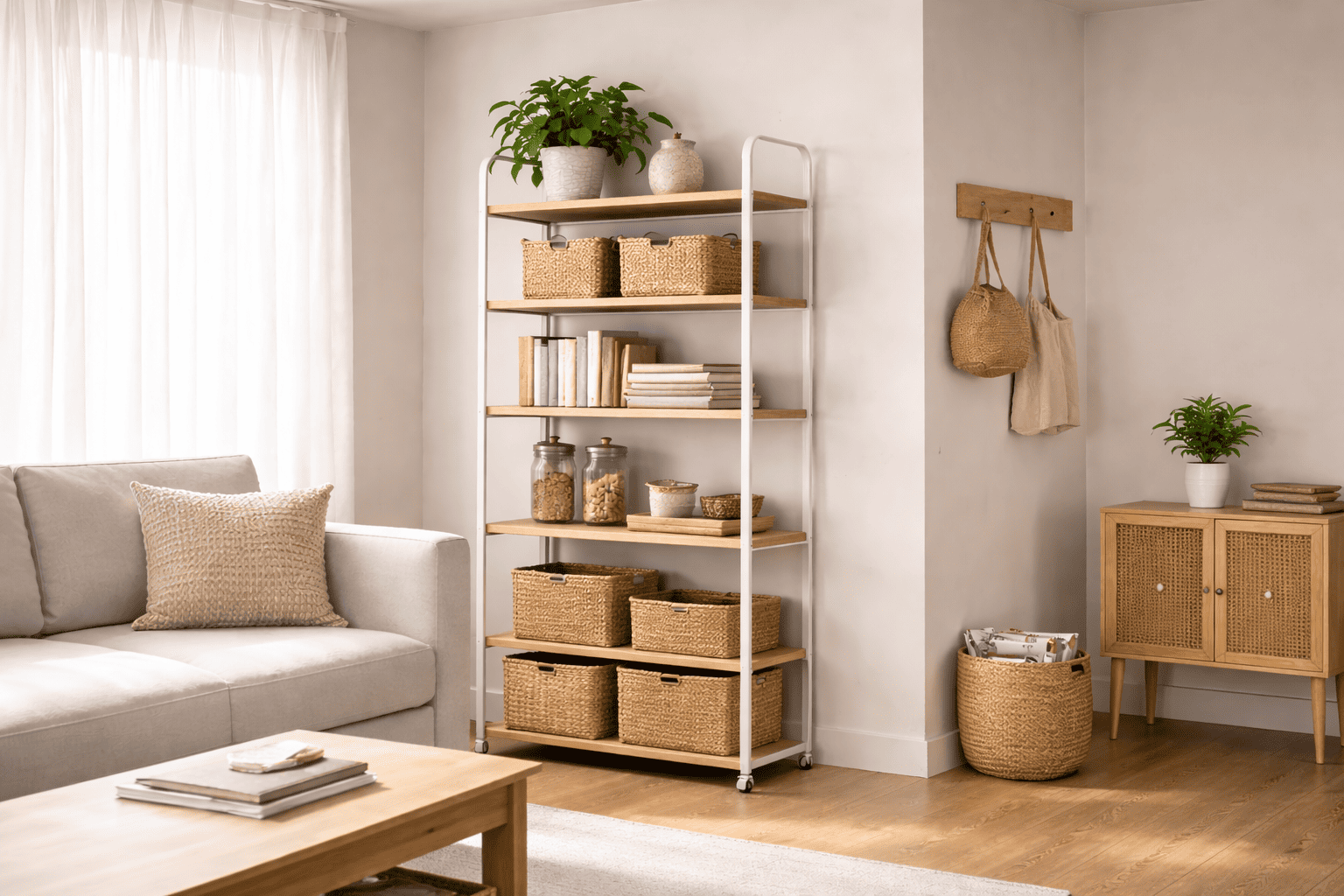

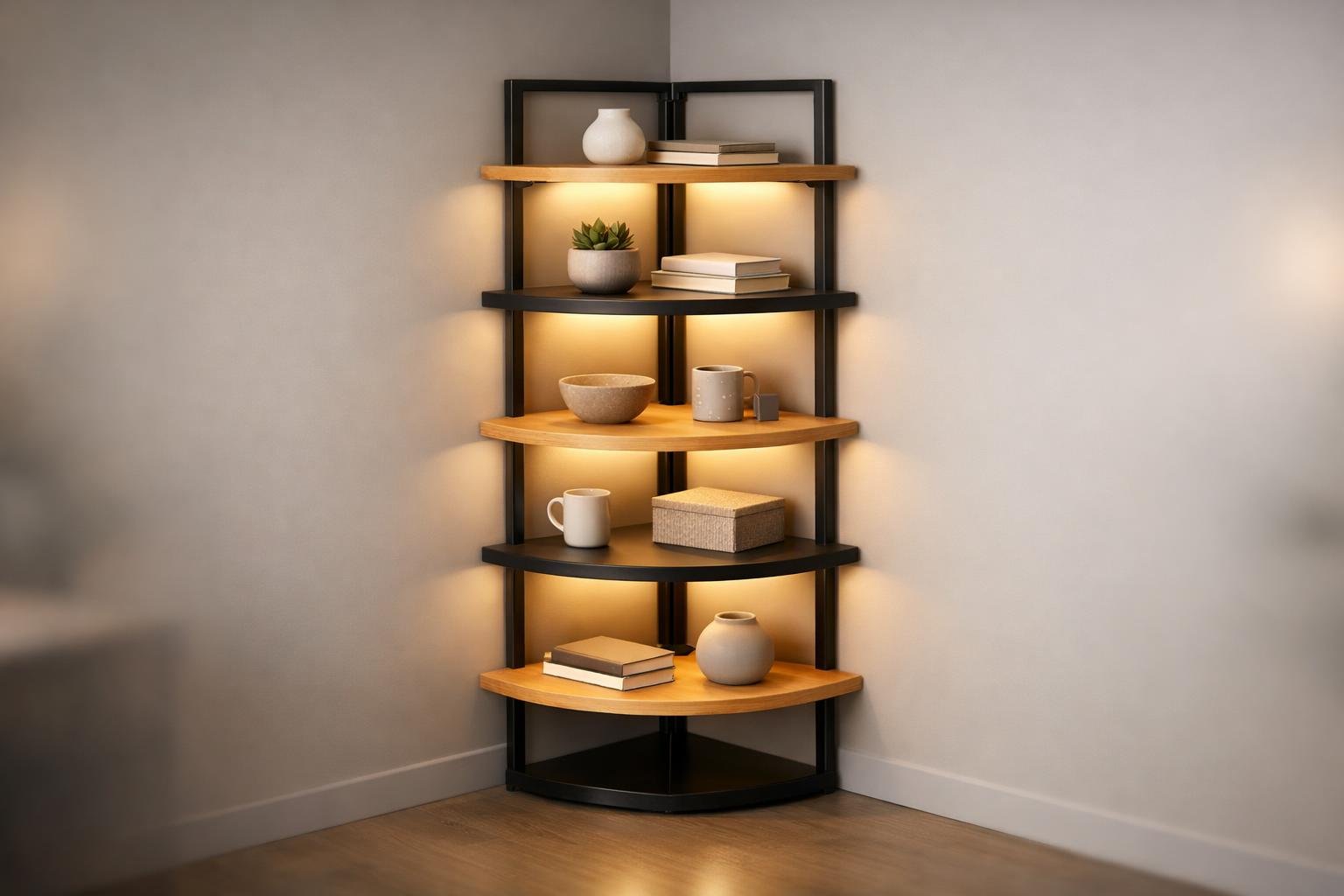
Corner shelving units are one of the simplest ways to unlock storage in a small apartment without sacrificing precious floor space. Instead of fighting for room along flat walls, you’re using the “dead zones” where two walls meet—areas that often sit empty even in well-organized homes. The right corner shelf can hold books, toiletries, kitchen staples, plants, or décor while keeping walkways clear and the room feeling open.
Why Corner Shelves Solve Small-Space Storage
Corner shelves turn awkward angles into usable square footage, which is exactly what tight spaces need. In studio apartments and compact rooms, corners are typically underutilized because standard bookcases and cabinets don’t fit cleanly without sticking out. A corner shelving unit hugs the walls, letting you store items vertically while leaving more of the room’s center open for living.
They also help you organize by “zone,” which is a practical approach in small homes. A corner shelf near the entry can become a landing spot for keys and bags; in a bathroom, it can replace a bulky cabinet; in a kitchen, it can hold spices or small appliances. Because it’s visually anchored in a corner, the shelf often looks intentional rather than like extra furniture crammed into the room.
The tradeoff is that corner shelves can limit what you store due to their shape and depth. Wide items—large bins, oversized books, or bulky appliances—may not sit well on triangular or curved shelves. Still, for everyday essentials and frequently used items, corner shelving units are a high-impact, low-footprint solution that works especially well for renters who can’t install built-ins.
Key Features to Look for in Tight Corners
Start with the footprint and dimensions, not the style. Measure both walls from the corner outward, and confirm the shelf’s depth at its widest point so it won’t interfere with doors, drawers, or walking paths. In very tight corners—like between a toilet and vanity or beside a bed—look for slim profiles, rounded fronts, and vertical designs that provide storage without jutting into the room.
Stability and material quality matter more in small spaces because tipping risks are higher in high-traffic layouts. Favor units with anti-tip hardware, wide bases, or wall-mount options, especially if you plan to store heavier items like books, cookware, or gallon-sized containers. Common materials include metal (often sturdy and moisture-friendly), engineered wood (budget-friendly but watch for sagging shelves), and bamboo or sealed wood (a good balance for bathrooms if properly finished).
Finally, consider shelf adjustability and use-case-specific features. Adjustable shelves let you fit tall bottles, baskets, or folded linens without wasting vertical space. For renters, tool-free assembly and minimal wall damage are big wins; tension-pole corner shelves can work well in bathrooms, while floating corner shelves create a clean look in living rooms—though they typically hold less weight. Pros: space-efficient storage, easy zoning, and better flow in tight rooms. Cons: limited shelf depth, variable weight capacity, and some models require careful anchoring to feel secure.
Corner shelving units are a smart, realistic upgrade for small apartments because they add storage where you’re least likely to miss the space. The best choice comes down to tight-corner fit, stability, and matching the shelf style to your room’s job—bathroom organization, kitchen overflow, or living-room display. Measure first, prioritize weight capacity and anti-tip support, and you’ll get a compact storage piece that feels built for your home rather than squeezed into it.