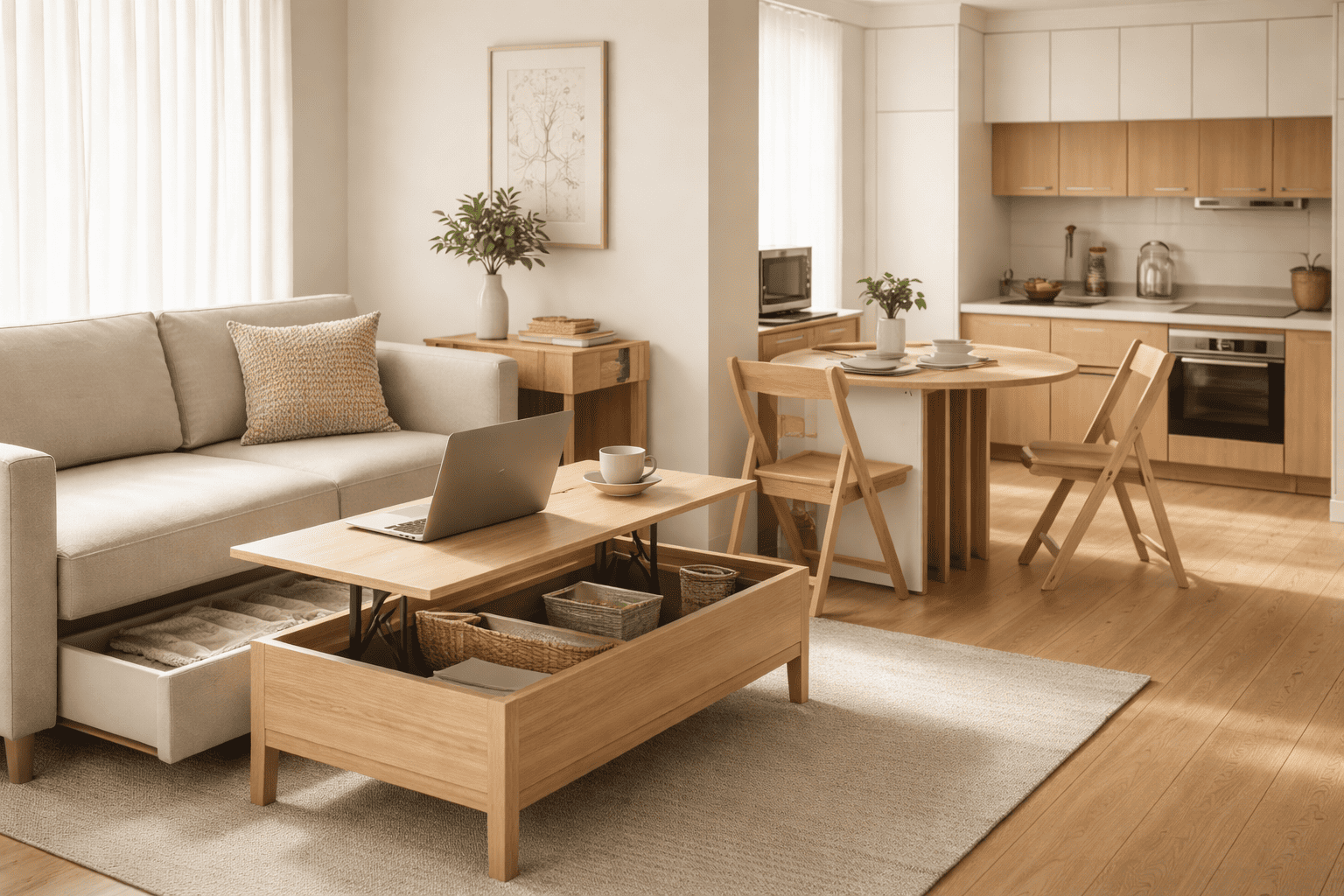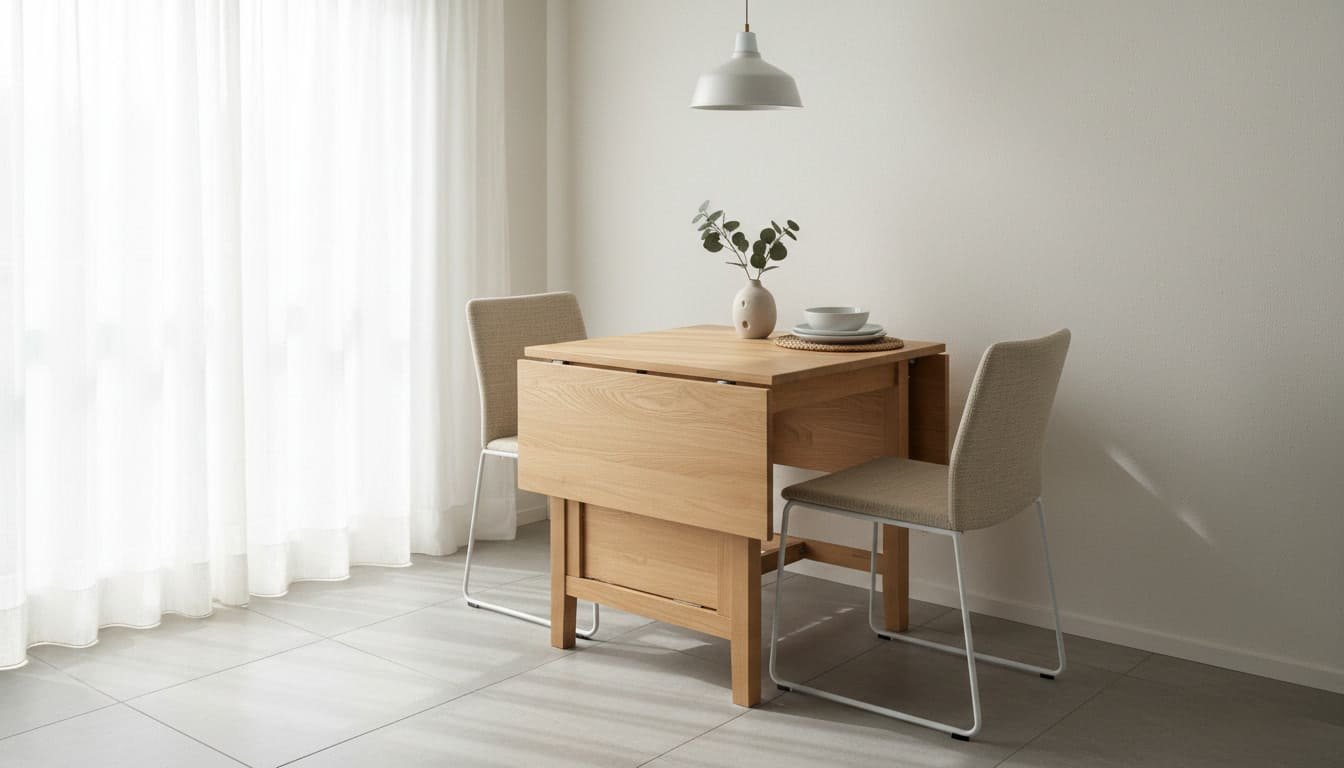

In a small living room, the coffee table can either be dead weight or the hardest-working piece of furniture you own. Multi-functional coffee tables solve a real compact-home problem: you need a place to set drinks, stash clutter, and sometimes even eat or work—without adding extra furniture. The best options combine everyday comfort with hidden storage and flexible layouts, helping renters and small-space owners keep the room usable, tidy, and visually open.
Space-Saving Features That Matter in Small Rooms
In tight spaces, the “right size” coffee table is more about circulation than surface area. Look for a footprint that leaves comfortable walking room around seating—especially between the sofa and TV stand—so the room doesn’t feel like an obstacle course. Slim profiles, rounded corners, and leggy designs that show more floor can make the same square footage feel less crowded.
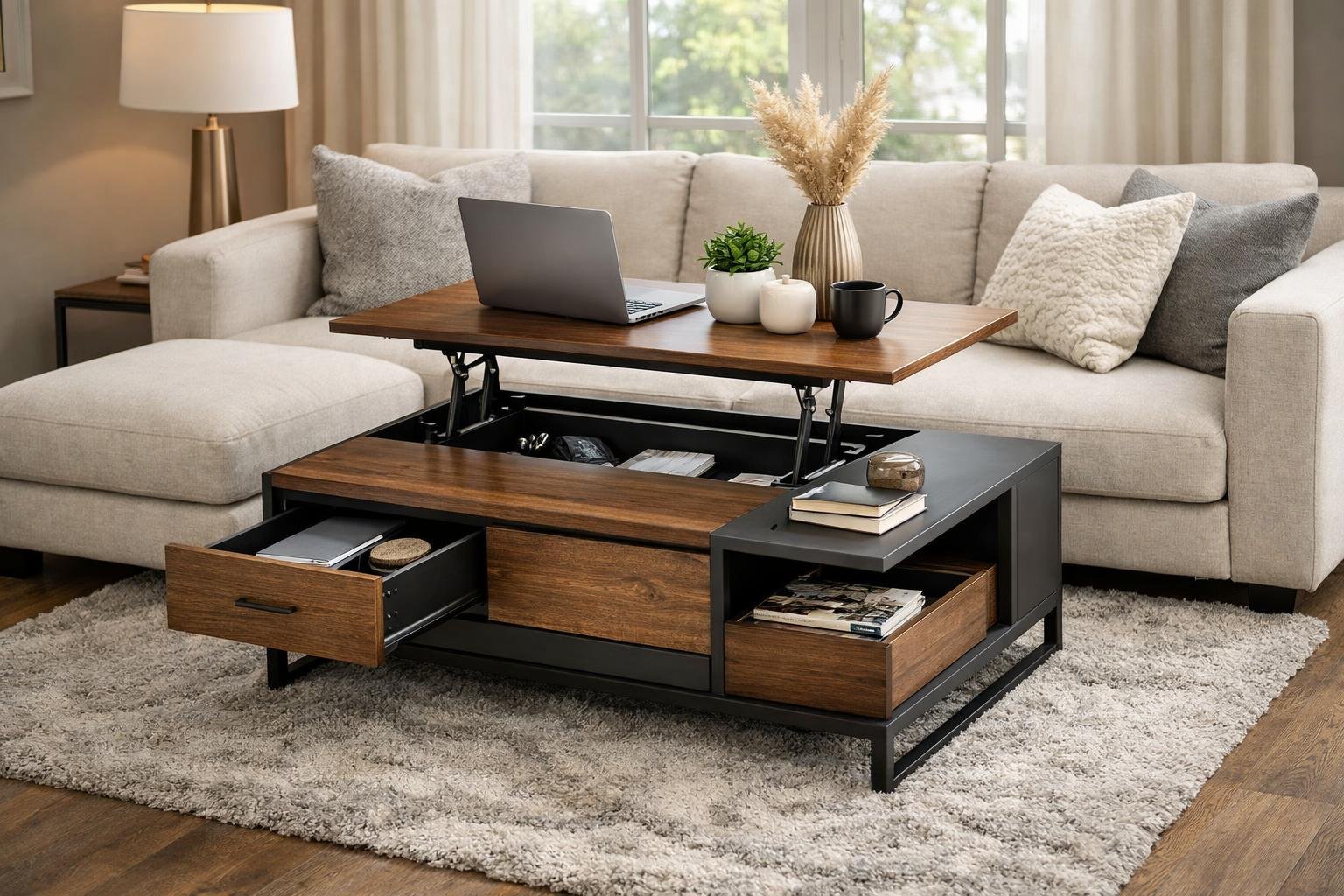
Storage is the feature that changes daily life the most. Tables with enclosed compartments, drawers, or lift-up tops reduce the need for extra cabinets, which is crucial when wall space is limited or you’re renting and can’t add built-ins. A good rule: if it can hide remotes, chargers, coasters, and a throw blanket, it’s doing more than a decorative table ever will.
Buy on Amazon:
👉 https://amzn.to/4dYhYj0
Pay attention to “invisible” usability details that matter in small apartments. Soft-close hinges are quieter (important with neighbors), and easy-clean finishes handle spills in rooms that double as dining areas. Pros of multi-functional tables include less clutter and fewer furniture pieces; cons can be added weight, more moving parts to maintain, and occasionally less knee clearance if the base is bulky.
Choosing Lift-Top, Storage, or Nesting Designs
Lift-top coffee tables are ideal when your living room doubles as a home office or dining nook. The lifting surface brings your laptop or meal up to a comfortable height while you stay on the sofa—no need to squeeze in a desk. The trade-off is that lift mechanisms add weight and can feel clunky if you frequently move the table to vacuum or reconfigure seating.
Storage-focused designs (drawers, compartments, or ottoman-style tops) are best for people who want the room to look calm fast. They’re great for hiding everyday items you don’t want on open shelves: game controllers, pet toys, paperwork, or extra cables. The downside is that “maximum storage” tables can look boxier, so balance capacity with a lighter look—raised legs, narrower edges, or a two-tier design can help.
Buy on Amazon:
👉 https://amzn.to/3PCLH7f
Nesting coffee tables (or a coffee table with tuck-under stools) shine in the smallest layouts because they change size depending on the moment. Pull them apart when guests come over, then slide them together to reclaim floor space. They’re not always the best for hidden storage, but they’re perfect for flexible use cases like entertaining, apartment living with frequent rearranging, or anyone who wants a coffee-table surface without committing to one large piece.
Multi-functional coffee tables are a practical upgrade for small living rooms because they replace multiple furniture needs—surface, storage, and sometimes a workspace—without taking over the floor. Prioritize circulation, easy access to storage, and a design that visually “breathes” in your room. Whether you choose a lift-top for work-from-sofa living, a storage table for clutter control, or nesting tables for flexibility, the best option is the one you’ll actually use every day in the space you have.