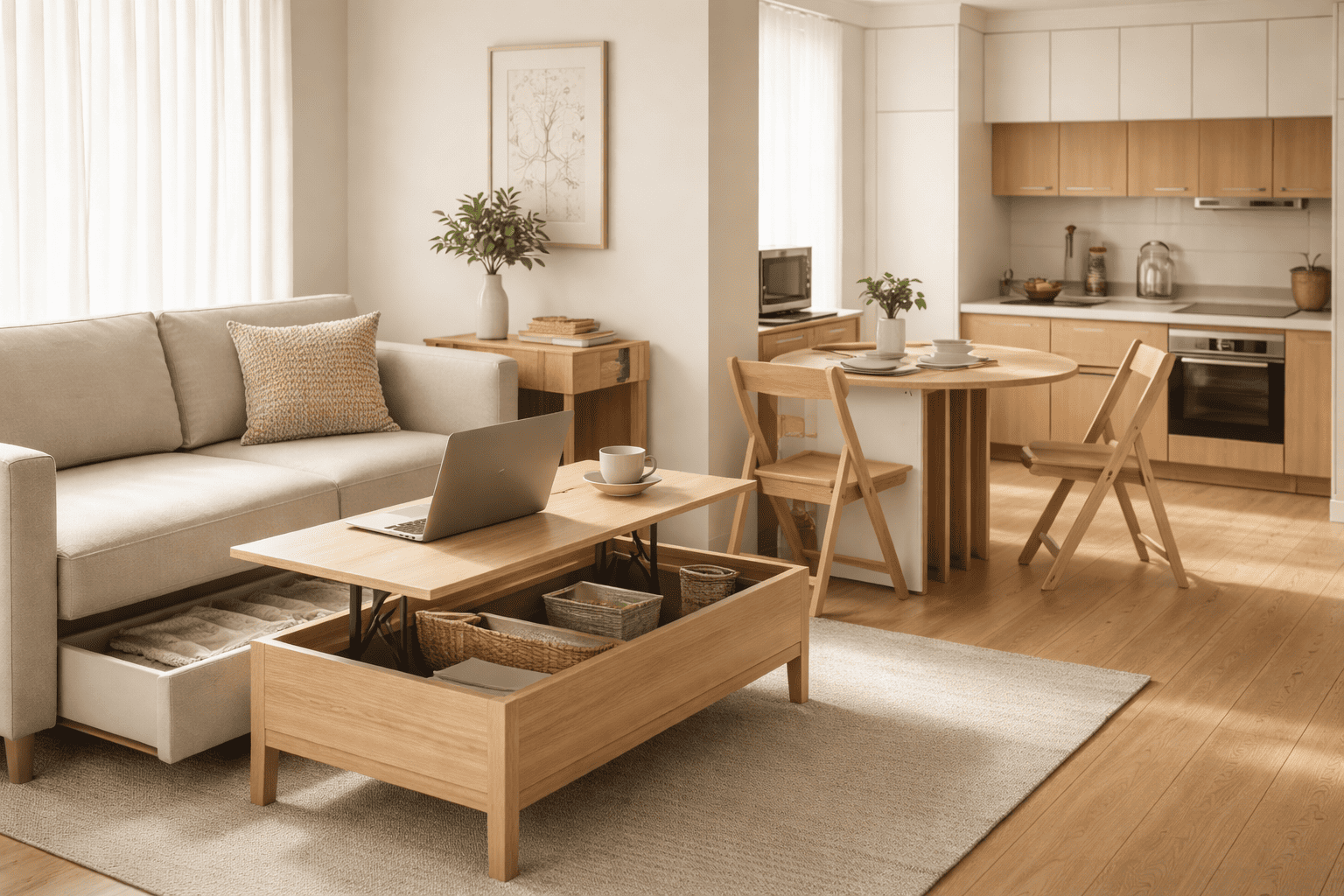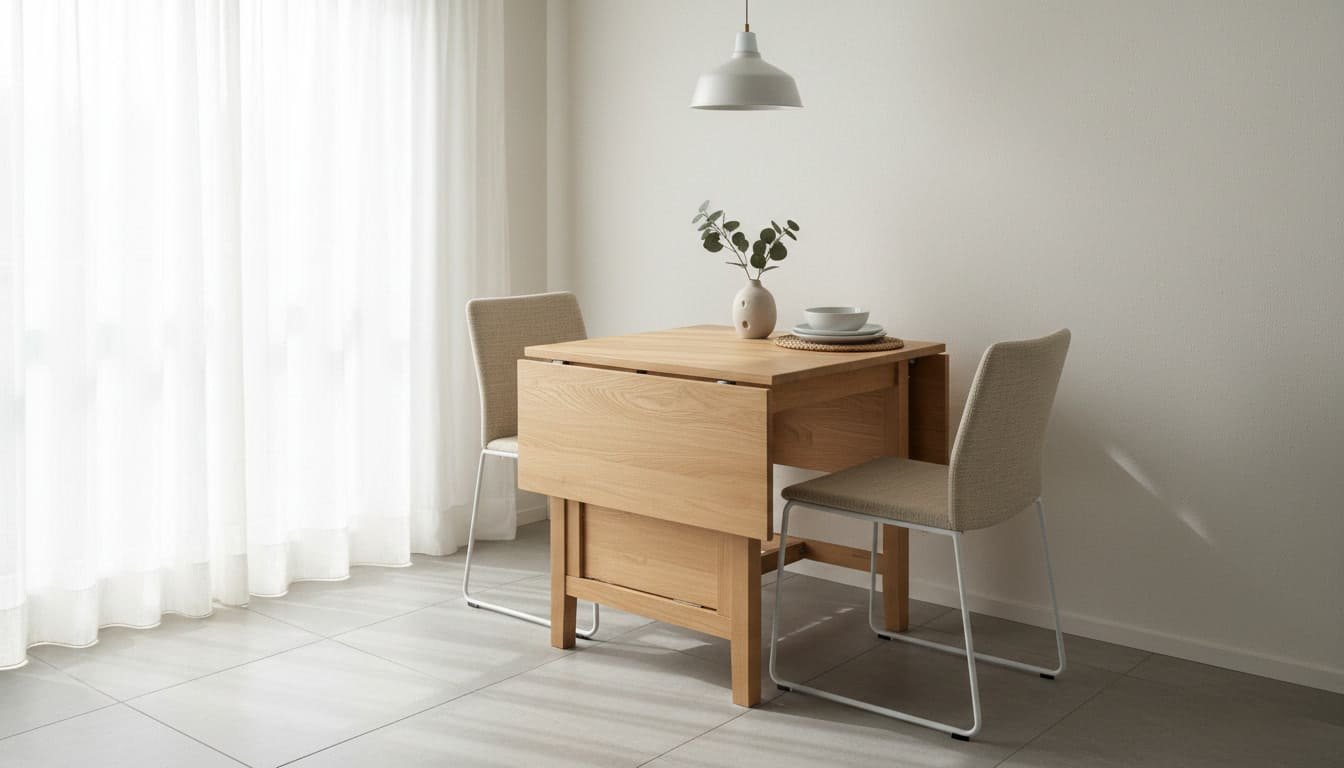

A small entryway is often the most overlooked part of an apartment, yet it sets the tone for the entire space. The problem is not just limited square meters, but poor organization: shoes pile up, outerwear has no defined place, and everyday items create constant visual noise.
Many try to solve this by adding more furniture, which usually makes things worse. A small entryway requires the opposite approach — fewer elements, but each with a clear function. Below are practical, space-efficient solutions that improve both usability and appearance.
1. Wall-Mounted Storage: Free the Floor
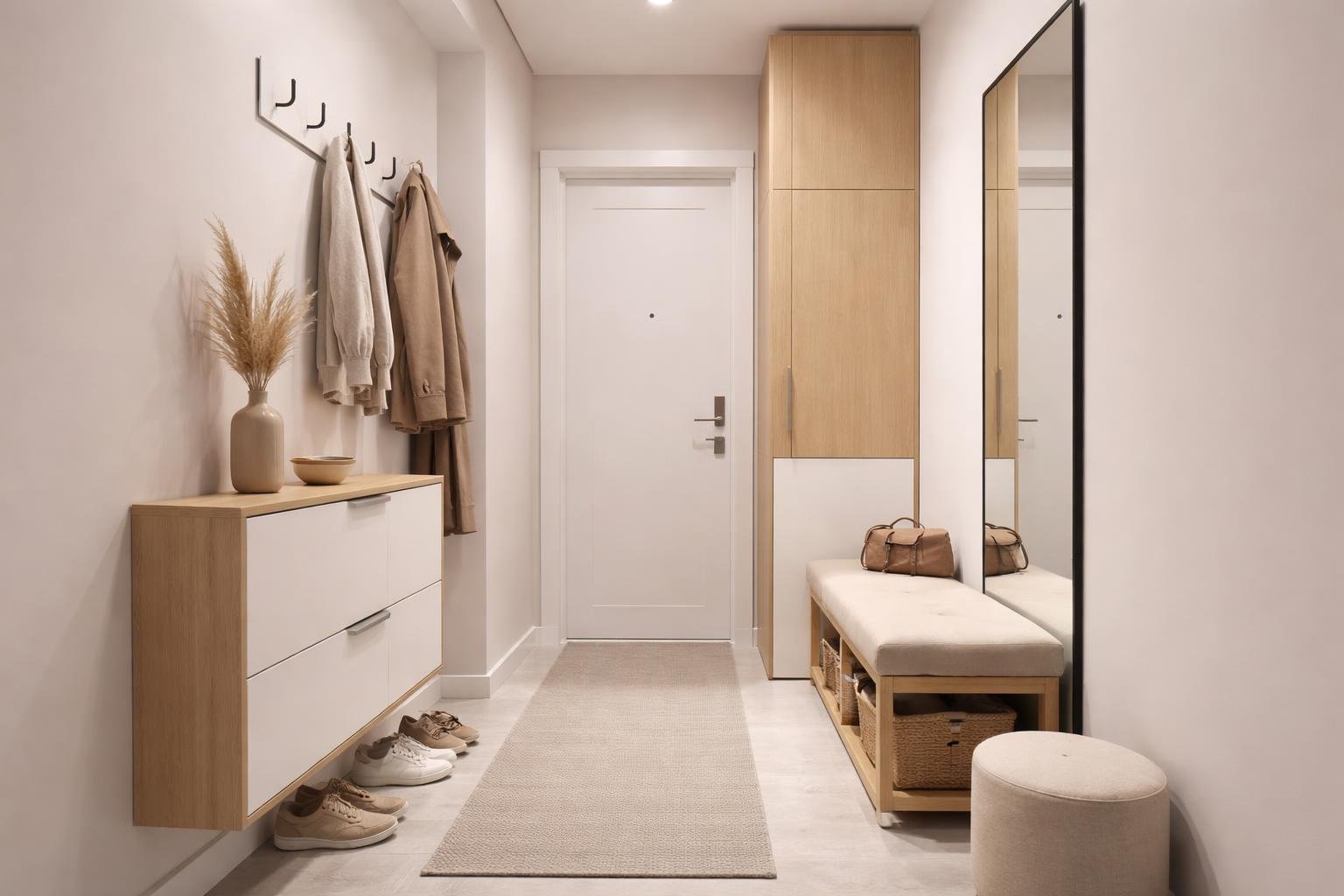
Bulky cabinets in a narrow hallway create immediate congestion. Wall-mounted solutions keep the floor open and make the space feel less restricted.
Recommended Option
Wall-mounted shoe cabinet (depth 15–20 cm)
👉 Check price and options
- Slim profile fits even in very narrow entryways
- Keeps shoes hidden, reducing visual clutter
- Often includes tilt-out compartments for better organization
Important:
Deep cabinets are a common mistake — anything over 25 cm can obstruct movement in tight spaces.
2. Vertical Storage: Use Height, Not Width
In small entryways, width is limited — height is not. Ignoring vertical space leads to unnecessary clutter at eye level.
What works:
- Tall narrow cabinets instead of wide ones
- Hooks arranged in vertical zones instead of a single row
- Shelves above door level for seasonal storage
Recommended Option
Tall narrow hallway cabinet (30–40 cm width)
👉 View product
- Maximizes storage without blocking movement
- Suitable for clothes, bags, and accessories
- Keeps items organized in one vertical structure
3. Smart Seating: Function Without Bulk
A bench in a small entryway can be useful, but only if it serves more than one purpose.
Recommended Option
Storage bench with shoe compartment
👉 Check availability
- Combines seating with hidden storage
- Helps organize frequently used footwear
- Reduces the need for additional furniture
Critical point:
Avoid soft oversized benches — they take up space without adding real functionality.
4. Mirrors: Expand the Space Visually
A mirror is not optional in a small entryway — it’s a structural element that changes spatial perception.
Effective approaches:
- Full-length mirror to increase perceived depth
- Wall-mounted mirrors without heavy frames
- Placement opposite a light source for maximum effect
A poorly placed or too small mirror provides minimal benefit.
5. Lighting: Avoid Dark, Compressed Spaces
Entryways often lack natural light, which makes them feel even smaller.
Practical solutions:
- Use bright, neutral lighting instead of dim warm tones
- Add wall lights to reduce shadows
- Avoid a single central light source
Lighting should make the space feel open, not enclosed.
6. Zoning: Define Functional Areas
Even in a small entryway, dividing space into zones improves usability.
Basic zones:
- Shoe storage
- Outerwear (jackets, coats)
- Small items (keys, bags, accessories)
Without zoning, items mix together and create constant disorder.
Conclusion
A small entryway does not require more furniture — it requires better structure. The goal is to reduce friction in daily use: easy access to essentials, minimal clutter, and clear organization.
Wall-mounted storage, vertical solutions, and multifunctional furniture create a system where every element has a defined role. The result is not just a cleaner space, but a more efficient one.