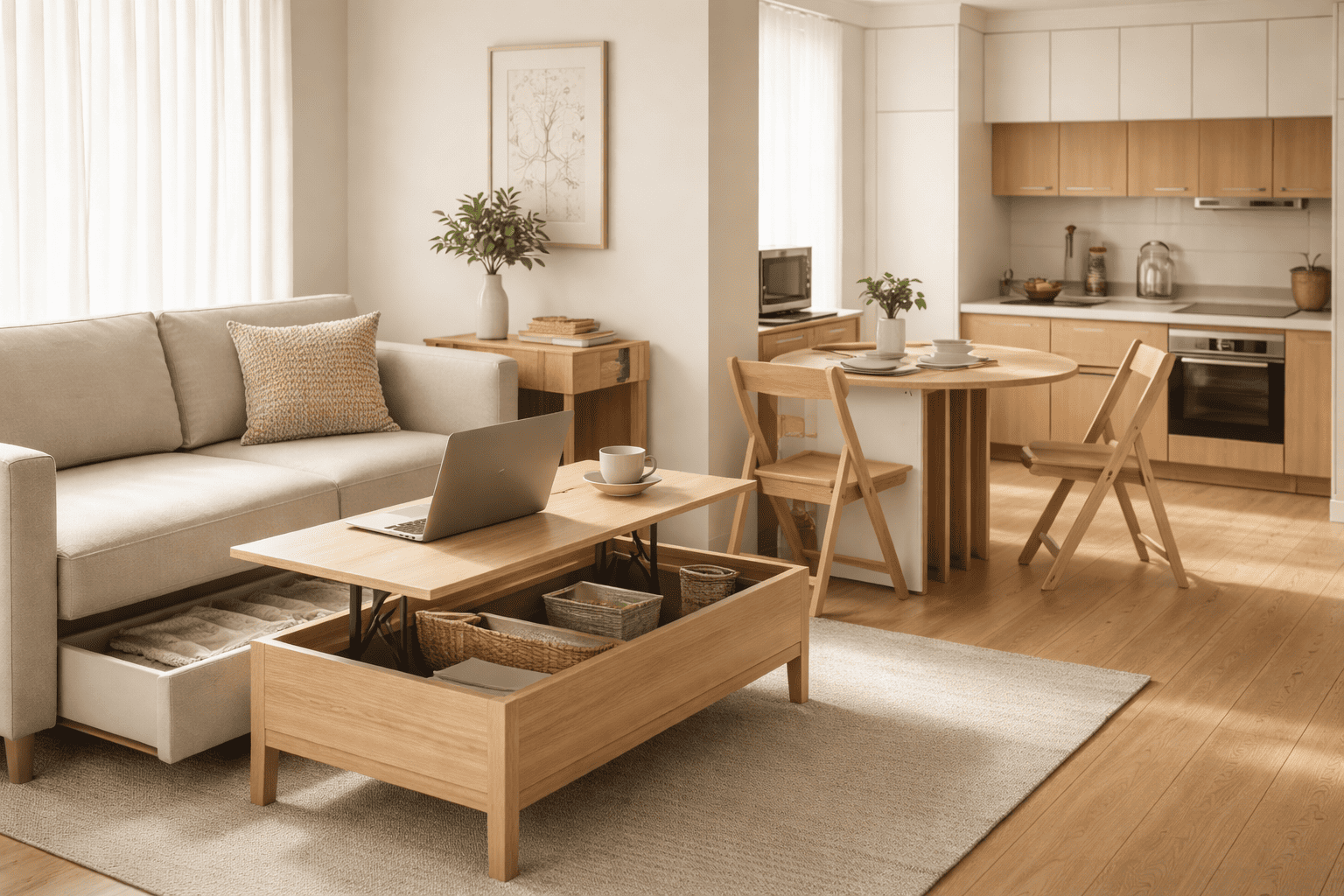


Studio apartments force every piece of furniture to earn its keep. A bed is usually the biggest space hog—essential at night, but often dead space during the day. Murphy beds (also called wall beds) solve that problem by letting you “store” your mattress vertically, opening up room for a desk, seating, workouts, or simply a cleaner layout. This guide breaks down why they work so well in studios and what to compare before you buy.
Why Murphy Beds Make Studio Living More Flexible
A Murphy bed turns your studio into a true multi-use room. Instead of designing everything around a permanent bed footprint, you can reclaim that square footage for daytime life—working from home, hosting friends, or creating a small dining setup. In many studios, folding the bed up can free a surprising amount of floor area, especially when paired with compact seating or nesting tables.
They also help with “visual space,” not just physical space. A made-up bed can still make a room feel like a bedroom first and everything else second. When the bed folds away, the room reads like a living space—cleaner lines, fewer bulky textiles on display, and less clutter competing for attention. For renters trying to make a small place feel more grown-up, that change in vibe can be just as valuable as the extra steps you can take across the room.
Buy on Amazon:
👉 https://amzn.to/4sb7eRR
That said, Murphy beds aren’t perfect for everyone. Pros include major space savings, a more versatile layout, and the ability to integrate storage or a desk in the same footprint. Cons include higher upfront cost than a basic bed frame, the need for proper installation (often wall-stud anchoring), and the daily “open/close” routine. Ideal use cases include studios with limited walking paths, hybrid work-from-home setups, or anyone who wants a dedicated living area without upgrading to a one-bedroom.
Key Features to Compare Before You Buy a Murphy Bed
Start with the mechanism and orientation. Vertical Murphy beds (folding down from the wall) fit most rooms and handle taller mattresses more easily, while horizontal models can work better under low ceilings or in long, narrow studios where wall width is available but depth is tight. Look for a smooth, counterbalanced lift system (piston or spring) that feels controlled—no slamming shut, no wrestling it open. A quality mechanism matters because you’ll use it daily.
Buy on Amazon:
👉 https://amzn.to/3O54jvU
Next, verify real-world fit: bed size, mattress limits, and clearance. Many wall beds specify a maximum mattress thickness and weight; exceed it and the bed may not close properly or could strain the hardware. Measure not only wall width and ceiling height, but also open-bed projection (how far it extends into the room) and side clearance for nightstands, outlets, and door swings. If you live in a rental, confirm whether you’re allowed to drill into studs, and consider freestanding or cabinet-style Murphy beds if wall anchoring is restricted—though they still may need anti-tip hardware.
Finally, compare built-in functionality and long-term durability. Some models include sofa fronts, shelving, or a fold-down desk, which can replace additional furniture and reduce clutter—great for studios where every item compounds the crowding. Check construction materials (solid wood or quality plywood tends to outlast thin particleboard), edge banding, hinge quality, and whether the unit includes a strap or retainer to keep bedding in place when closed. Practical extras—integrated lighting, cable cutouts, or adjustable shelving—can make a wall bed feel like a complete room system instead of just a bed that disappears.
Murphy beds are one of the most effective space-saving upgrades for studio apartments because they solve a daily problem: a bed taking over your only room. The right model can give you a living room by day and a comfortable bedroom by night—without constant rearranging. Focus your buying decision on mechanism quality, accurate measurements, installation realities, and the add-ons (desk, sofa, storage) that match how you actually live in your space.