
In small apartments, the bedroom often becomes the most overloaded room in the home. It serves not only as a place to rest, but also as a storage zone for clothes, seasonal items, luggage, and things that simply have nowhere else to go.
The problem is not the lack of storage itself, but how that storage is integrated. Poorly chosen solutions quickly turn a bedroom into a cramped, visually heavy space that feels anything but relaxing.
This article explores practical bedroom storage solutions that actually work in small apartments, without turning the room into a storage warehouse.
Why Bedroom Storage Fails in Small Apartments
Before choosing solutions, it’s important to understand why bedroom storage so often becomes ineffective.
Common issues include:
- bulky wardrobes that dominate the room
- visible storage that creates visual clutter
- unused space under existing furniture
- storage systems that are difficult to access daily
The most successful bedroom storage solutions are those that use space that already exists and stay visually quiet.
Under-Bed Storage: The Most Underused Space in the Bedroom
In most small bedrooms, the area under the bed represents the single largest unused storage zone. When left empty, it becomes wasted square footage; when used poorly, it turns into a chaotic dumping ground.
What Actually Works Under the Bed
The key difference is structure.
Loose bags and random boxes quickly become inaccessible and forgotten. Structured under-bed systems, on the other hand, allow this space to function as real storage.
Effective under-bed storage options include:
- rolling under-bed drawers that can be accessed from the side
- low-profile containers with solid lids
- divided storage systems that separate categories (clothes, bedding, shoes)
Buy on Amazon:
👉 https://amzn.to/4r1bJPm
Best use cases:
- off-season clothing
- extra bedding
- rarely used items
What to avoid:
soft fabric bags without structure — they collapse, collect dust, and become unusable over time.
Slim Wardrobes and Narrow Closet Systems
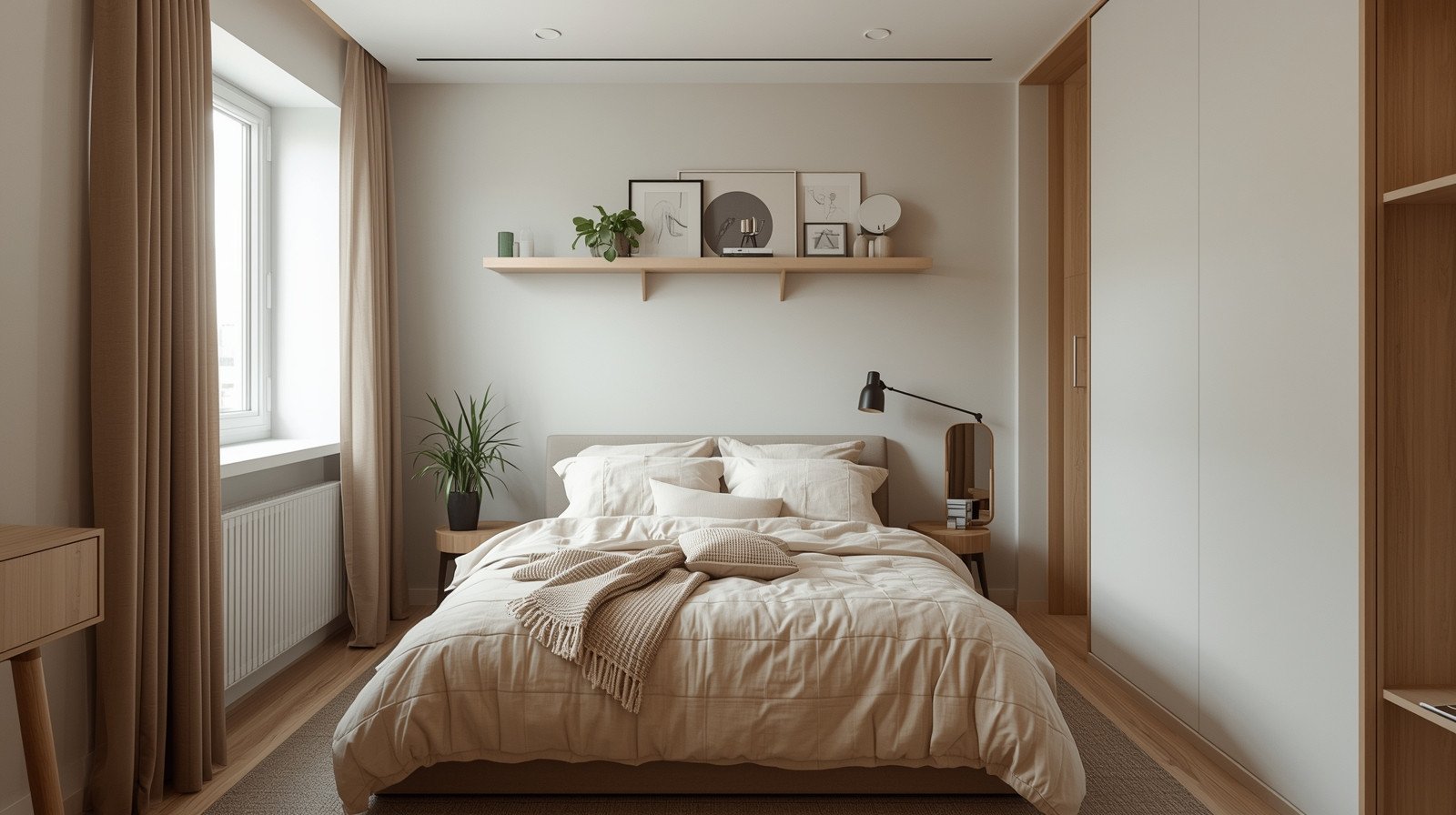
Traditional wardrobes are often designed for larger rooms. In small apartments, their depth alone can consume valuable floor space and disrupt movement.
Why Slim Wardrobes Work Better
Slim wardrobe systems focus on vertical capacity instead of depth. They store the same categories of items while allowing more breathing room in the layout.
Advantages of narrow wardrobe systems:
- reduced floor footprint
- better circulation space
- less visual dominance
Buy on Amazon:
👉 https://amzn.to/3MjwKFB
These systems work particularly well in:
- narrow bedrooms
- rooms with limited wall length
- apartments where wardrobes must coexist with workspaces
Floating Bedside Storage Instead of Nightstands
Nightstands are a classic example of furniture that looks harmless but quietly eats up floor space. In small bedrooms, even two compact nightstands can make the room feel crowded.
A Better Alternative
Wall-mounted bedside shelves or floating drawers provide the same functionality without occupying floor area.
Benefits include:
- easier cleaning
- lighter visual appearance
- better use of wall space
Buy on Amazon:
👉 https://amzn.to/3Z8U5Nc
This solution works best when:
- the bed is placed against a solid wall
- storage needs are minimal (books, phone, lamp)
Comparison: Bedroom Storage Solutions That Actually Work
| Storage Type | Space Efficiency | Visual Impact | Daily Usability |
|---|---|---|---|
| Under-bed storage systems | High | Low | Medium |
| Slim wardrobes | Medium | Medium | High |
| Floating bedside storage | High | Very Low | High |
How to Combine These Solutions Without Overcrowding
The mistake many people make is trying to use all storage options at once.
A balanced approach:
- use under-bed storage for seasonal items
- choose one slim wardrobe instead of multiple cabinets
- replace nightstands with floating storage
This combination maintains functionality while keeping the bedroom visually calm.
Why Visual Calm Matters in Bedrooms
Bedrooms are not just functional spaces — they directly affect rest and mental comfort. Visible clutter, bulky furniture, and overcrowded layouts increase stress, even when everything is technically “organized”.
Storage that stays out of sight supports:
- better sleep quality
- easier daily routines
- a sense of space, even in small rooms
Conclusion
Smart bedroom storage is not about maximizing how much you can store. It’s about choosing solutions that respect the function of the room.
In small apartments, the most effective bedroom storage systems are those that:
- use existing space (especially under the bed)
- minimize visual weight
- remain accessible without effort
When storage works quietly in the background, the bedroom can remain what it should be — a place to rest, not a storage problem to manage.