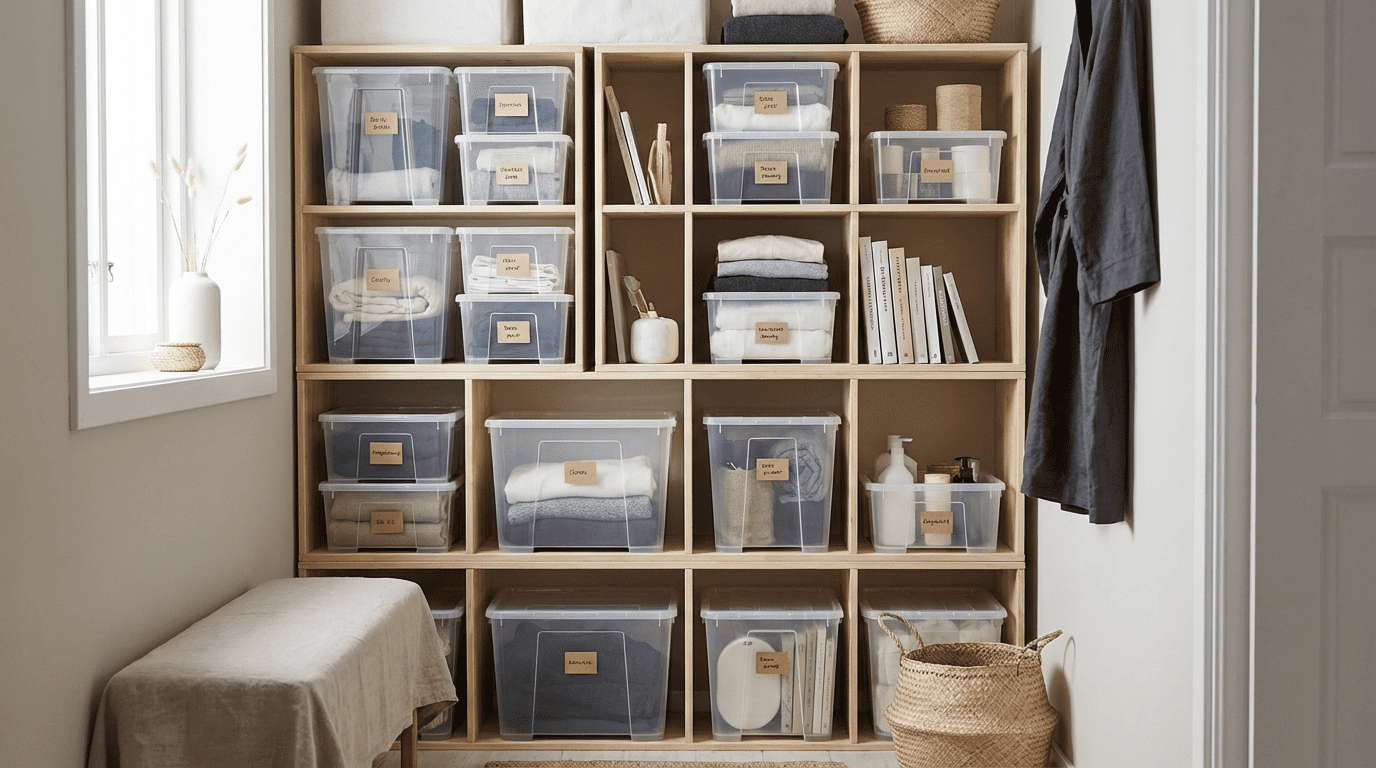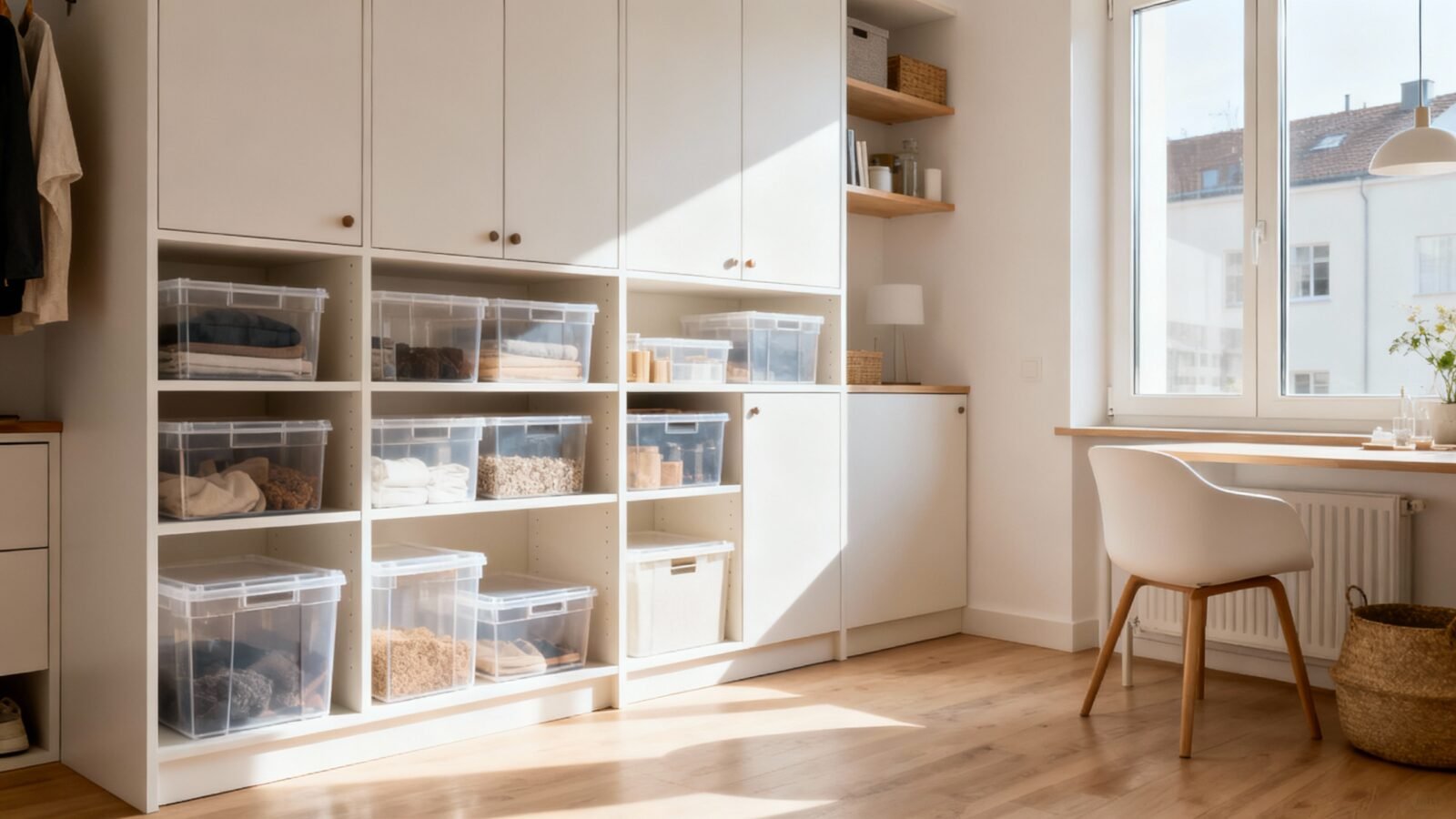

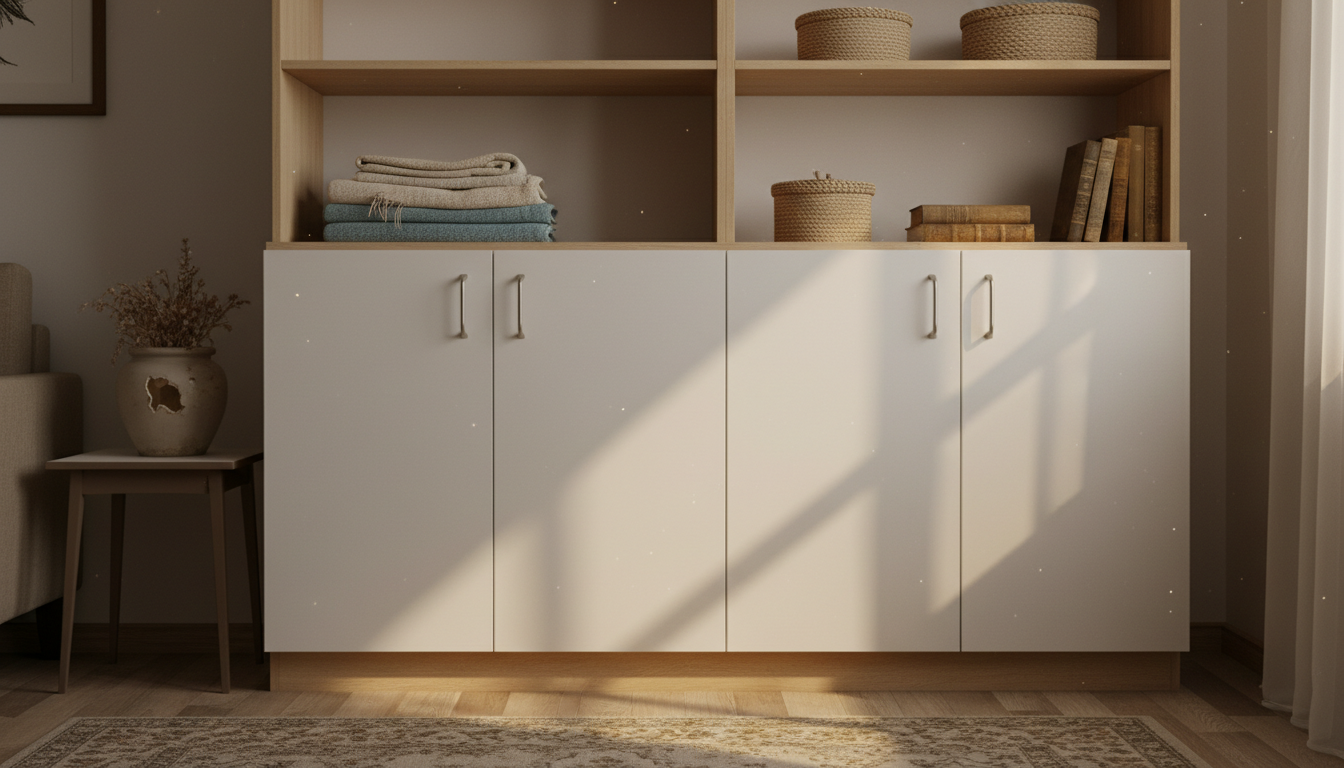
Not all items should be stored the same way. Effective organization starts with understanding what deserves visible, hidden, or minimal storage.
1) Visible Storage — What Should Stay Open
Good candidates:
- books
- daily-use items
- decorative objects
Rule:
If you use it daily → it can be visible.
2) Hidden Storage — What Should Be Invisible
Best for:
- seasonal items
- cables
- documents
- mixed objects
Examples:
- storage beds
- ottomans
- closed cabinets
3) Minimal Storage — What Should Be Reduced
Danger zone:
- duplicates
- rarely used items
- emotional clutter
Decision Table:
| Item Type | Keep | Hide | Remove |
|---|---|---|---|
| Daily-use | ✔ | ✖ | ✖ |
| Seasonal | ✖ | ✔ | ✖ |
| Rarely used | ✖ | ✖ | ✔ |
4) The “One In – One Out” Rule
For small apartments:
- every new item replaces an old one
- prevents storage overflow
Conclusion
Smart storage is not about more boxes, but about smarter decisions. When items are categorized by visibility and frequency of use, clutter stops returning.