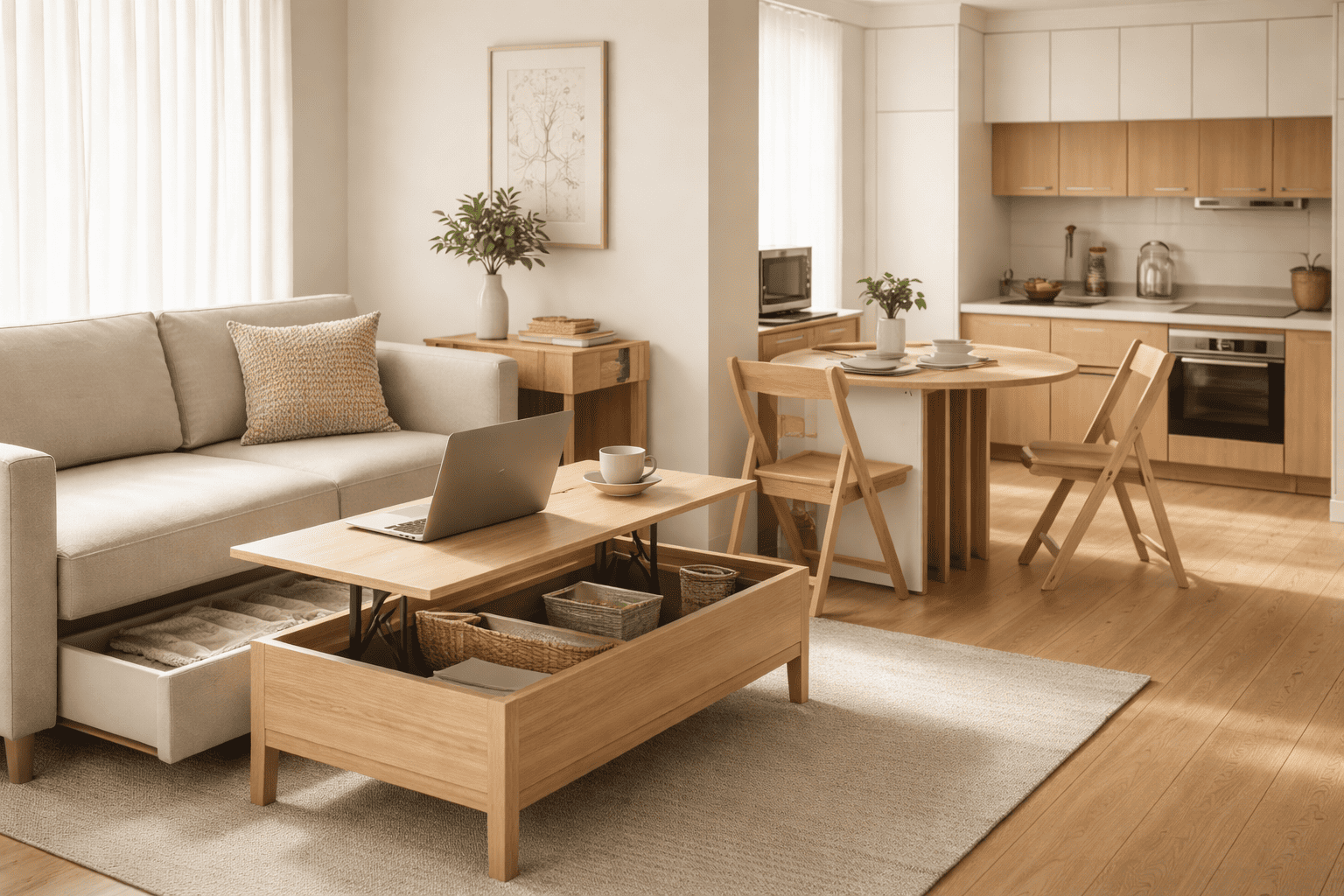

Dining tables often take up more space than they give back. In small apartments, choosing the right table can improve daily living, while the wrong one turns into an obstacle. Compact dining tables are designed for limited spaces, but not all models are practical for real apartments.
This guide explains which types of compact dining tables work best, how they differ, and what to consider before choosing one.
Why Dining Tables Are Challenging in Small Apartments
In compact homes, every item must serve a clear purpose. A dining table is not only for eating — it often becomes a workspace, storage surface, or gathering point. The challenge is to find a table that supports multiple uses without dominating the room.
The best compact dining tables:
- provide enough seating without visual bulk
- adapt when more surface is needed
- fit naturally into everyday layouts
The Most Practical Types of Compact Dining Tables
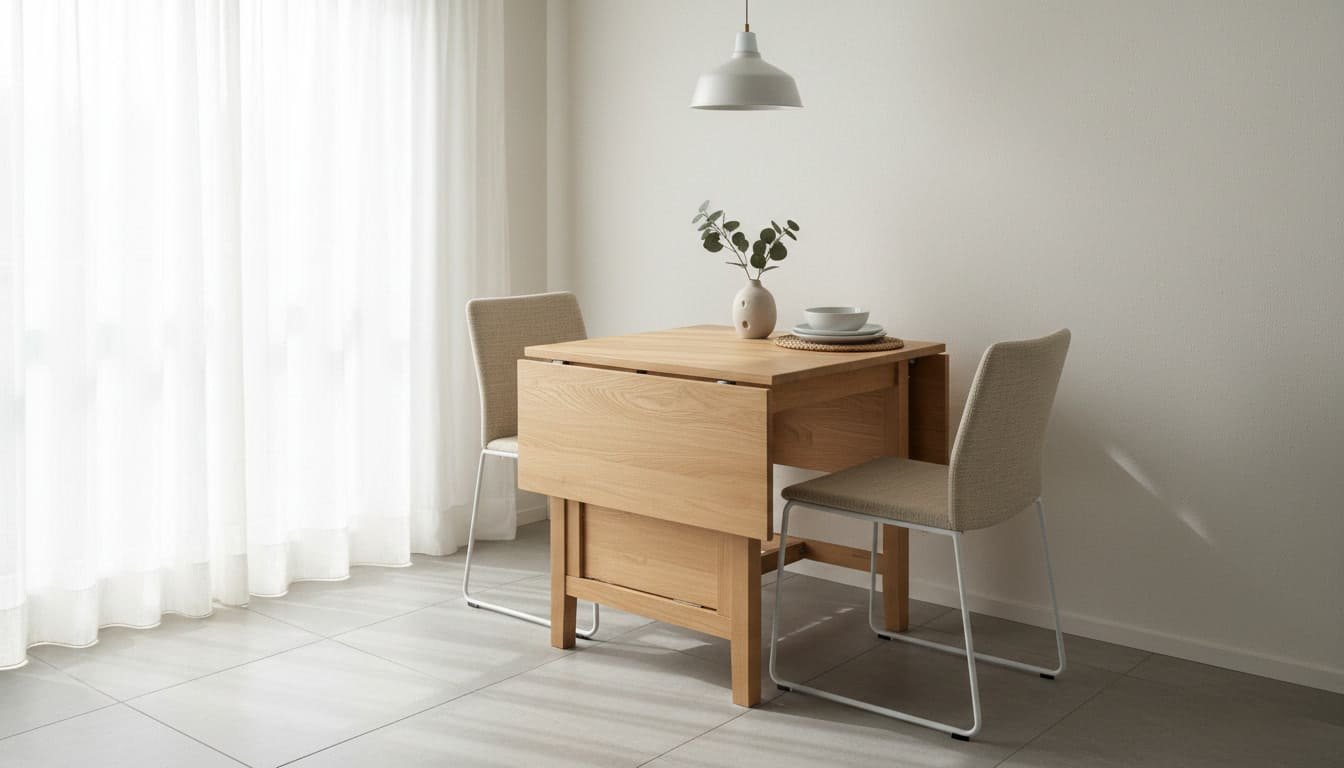
Drop-Leaf Tables
Drop-leaf tables have folding sides that expand when needed. They work well in apartments where space is tight most of the time but flexibility is required occasionally.
Best for: small kitchens and studio apartments
Limitations: hinges and supports should be durable for long-term use
Expandable (Extendable) Tables
Expandable tables use sliding or fold-out extensions. They offer more seating capacity while keeping a smaller footprint for daily use.
Best for: apartments that host guests
Limitations: not intended for frequent daily reconfiguration
Wall-Mounted Folding Tables
These tables attach to the wall and fold flat when not in use. They are suitable for spaces where floor area is extremely limited.
Best for: tiny apartments and flexible layouts
Limitations: requires secure wall mounting
👉 Product Examples (Affiliate Block)
The following dining table types are commonly used in small apartments:
- Drop-leaf dining tables — expand only when needed
- Expandable dining tables — support more seating occasionally
- Wall-mounted folding tables — ideal for ultra-compact spaces
→ View compact dining table options on Amazon:https://amzn.to/49ONdJN
What to Look for in a Compact Dining Table
Before choosing a table, consider these key points:
- Size when closed: must fit daily movement in the room
- Stability: lightweight tables often sacrifice durability
- Material: solid wood or metal frames last longer
- Ease of expansion: avoid mechanisms that require full disassembly
A good compact dining table should feel natural to use, not like a constant compromise.
When a Compact Table Is Not the Best Choice
Compact tables are not ideal when:
- you need seating for more than 4 people daily
- the apartment already feels visually crowded
- you require a permanent work surface instead of a flexible one
In these cases, a slim fixed table or multifunctional desk may work better.
Internal Linking Suggestions
To strengthen site structure, link this article to:
- “Multifunctional Furniture That Actually Makes Small Apartments Easier”
- “Smart Storage That Reduces Clutter Long-Term”
This keeps readers moving through your site and increases SEO depth.
Conclusion
Compact dining tables can make small apartments more functional when chosen carefully. The goal is not to save space at any cost, but to find a table that fits naturally into daily life. Flexible designs work best when they support real routines instead of adding extra steps.