
Living in a small apartment often means choosing between having your favorite books on display and keeping your floor plan livable. Slim bookshelves solve that trade-off by giving you vertical storage with a small footprint, making them a go-to option for renters and urban dwellers who want organization without crowding. The best part is they’re not just for books—these narrow units can double as display shelves, pantry-style storage, or a tidy home office companion.
Why Slim Bookshelves Work in Tight Apartments
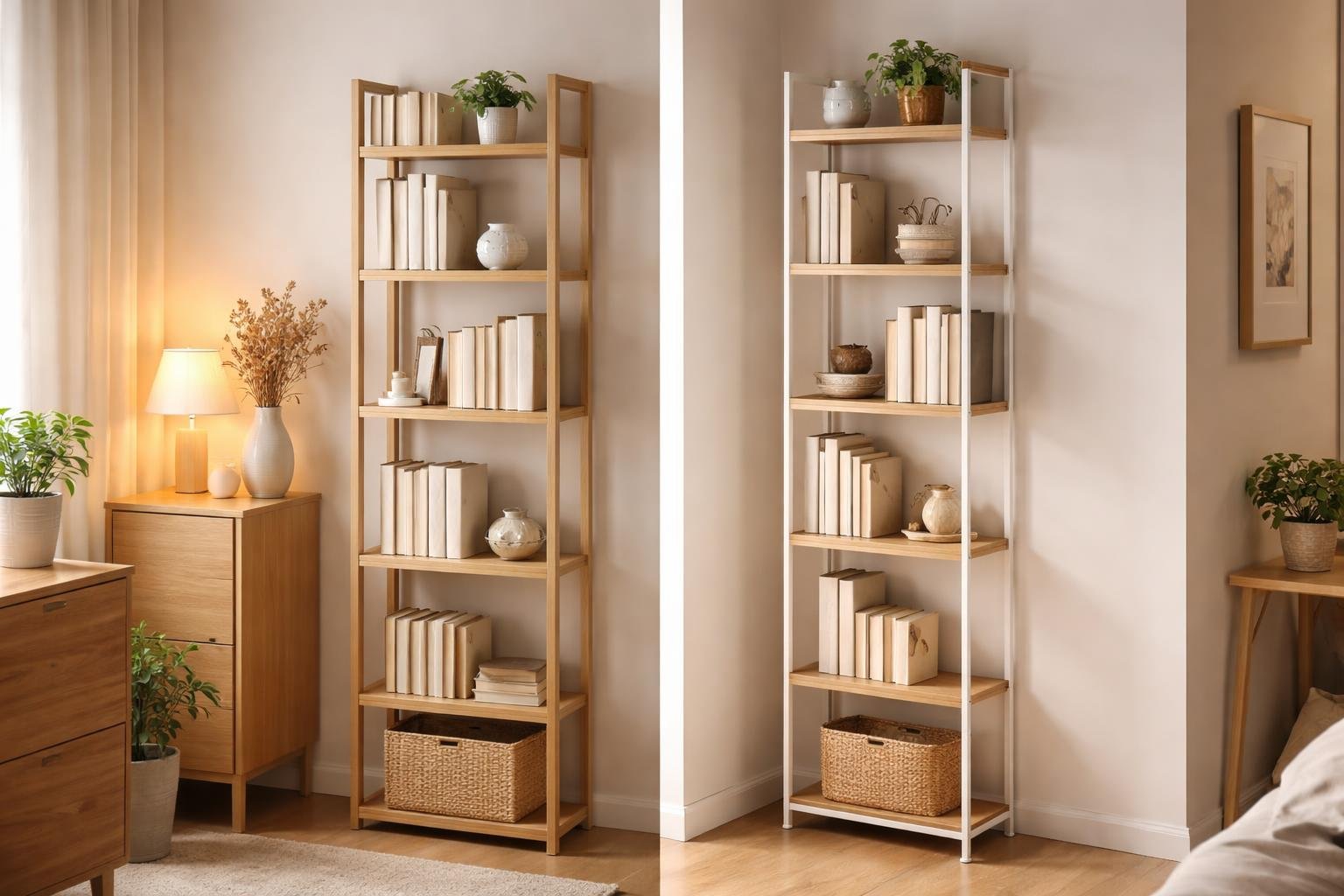
Slim bookshelves are designed to maximize vertical space while minimizing floor space, which is exactly what most apartments lack. Instead of a wide, bulky unit that pushes furniture outward and narrows walkways, a slim shelf can tuck into underused zones like the space beside a sofa, a bedroom corner, or that awkward strip of wall near a closet. In practical terms, you get storage without sacrificing circulation.
Buy on Amazon:
👉 https://amzn.to/41ayPHO
They also help reduce “surface clutter,” which is one of the fastest ways a small home starts feeling cramped. When everyday items—paperback stacks, notebooks, chargers, decor—sit on tables and counters, the room feels busier than it is. A narrow bookshelf acts like a vertical landing zone, letting you store more items at eye level without spreading them across your limited flat surfaces.
There are a few trade-offs worth noting. Pros include easy placement, good visibility for items, and better use of wall height. Cons can include lower overall capacity compared to wider bookcases and, for very tall slim units, stability concerns if they aren’t anchored. In homes with kids, pets, or frequent movement, wall anchoring is less “optional” and more “essential.”
How to Choose a Slim Bookshelf That Fits Well
Start with measurements that reflect real-life use, not just the empty space you see. Measure width and depth for the intended spot, and pay attention to door swings, closet access, and walking clearance. A shelf that’s “only” 10–12 inches deep can still feel intrusive if it sits in a narrow corridor, while that same depth may be perfect next to a desk or couch arm.
Buy on Amazon:
👉 https://amzn.to/4m7X82S
Next, match the bookshelf’s structure to what you’re storing. Adjustable shelves are a big win in small apartments because they adapt as your needs change—textbooks today, baskets and files tomorrow. If you plan to store heavy hardcovers, look for thicker shelves, solid back panels (or bracing), and a stated weight capacity per shelf. Open-back minimalist designs can look lighter visually, but they sometimes wobble more unless the frame is well-built.
Finally, choose features that fit apartment life and typical use cases. For renters, tool-free or easy-assembly models reduce hassle when moving, and lighter materials are easier to carry upstairs. If you’re using the shelf in a living room, a mix of open shelves and a bottom cabinet (or fabric bins) can hide clutter while keeping display space up top. Just be realistic about the pros and cons: narrow units look clean and fit almost anywhere, but they can tip if overloaded high up, so plan to put heavier items on lower shelves and anchor tall designs whenever possible.
Slim bookshelves are one of the most practical storage upgrades for apartments with limited space because they turn overlooked vertical areas into functional, organized zones. By focusing on the right measurements, shelf adjustability, stability, and how you’ll actually use the unit day to day, you can find a bookshelf that fits your layout and your lifestyle—without making your home feel tighter. For small-space living, the goal isn’t just more storage; it’s storage that keeps your apartment open, calm, and easy to move through.