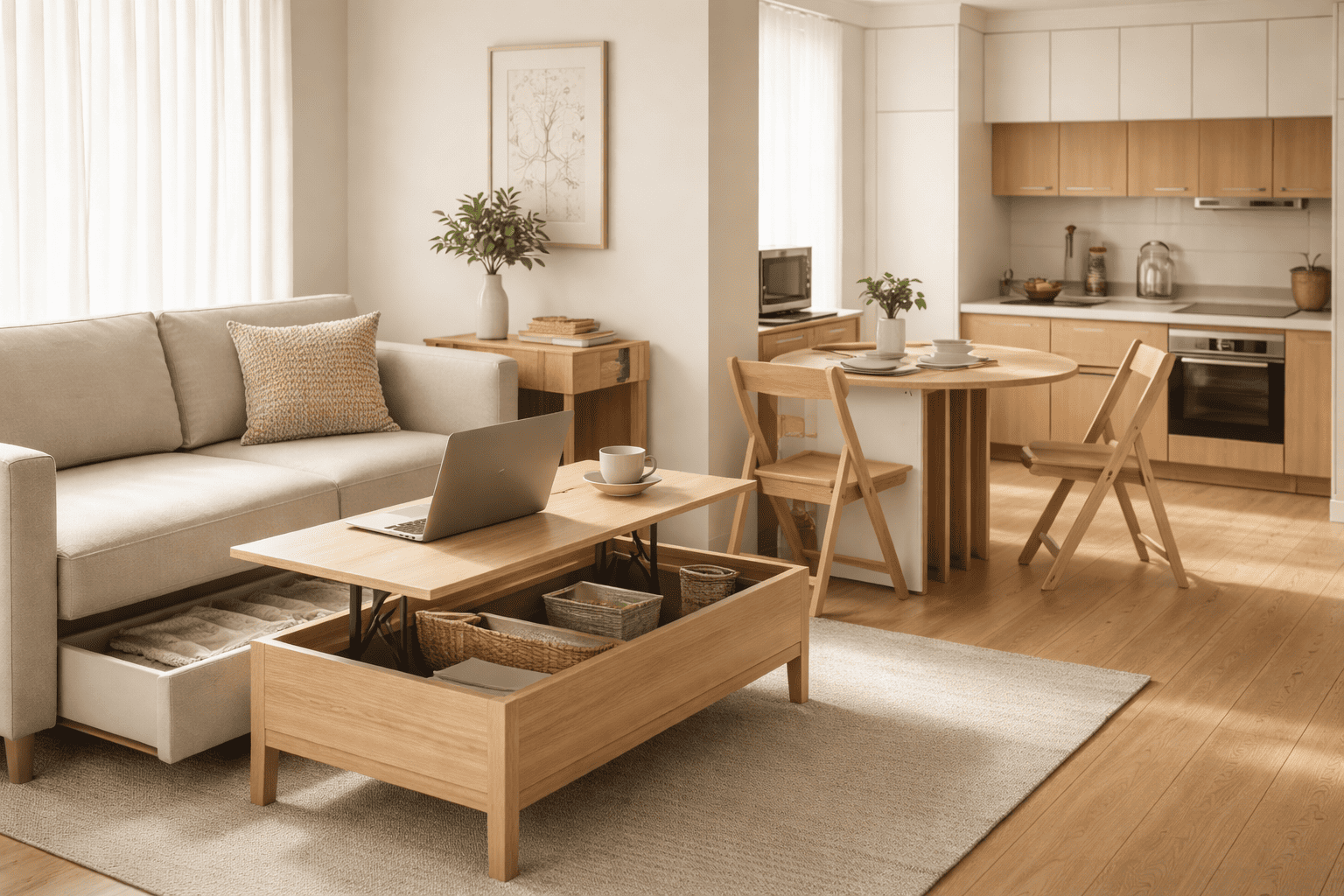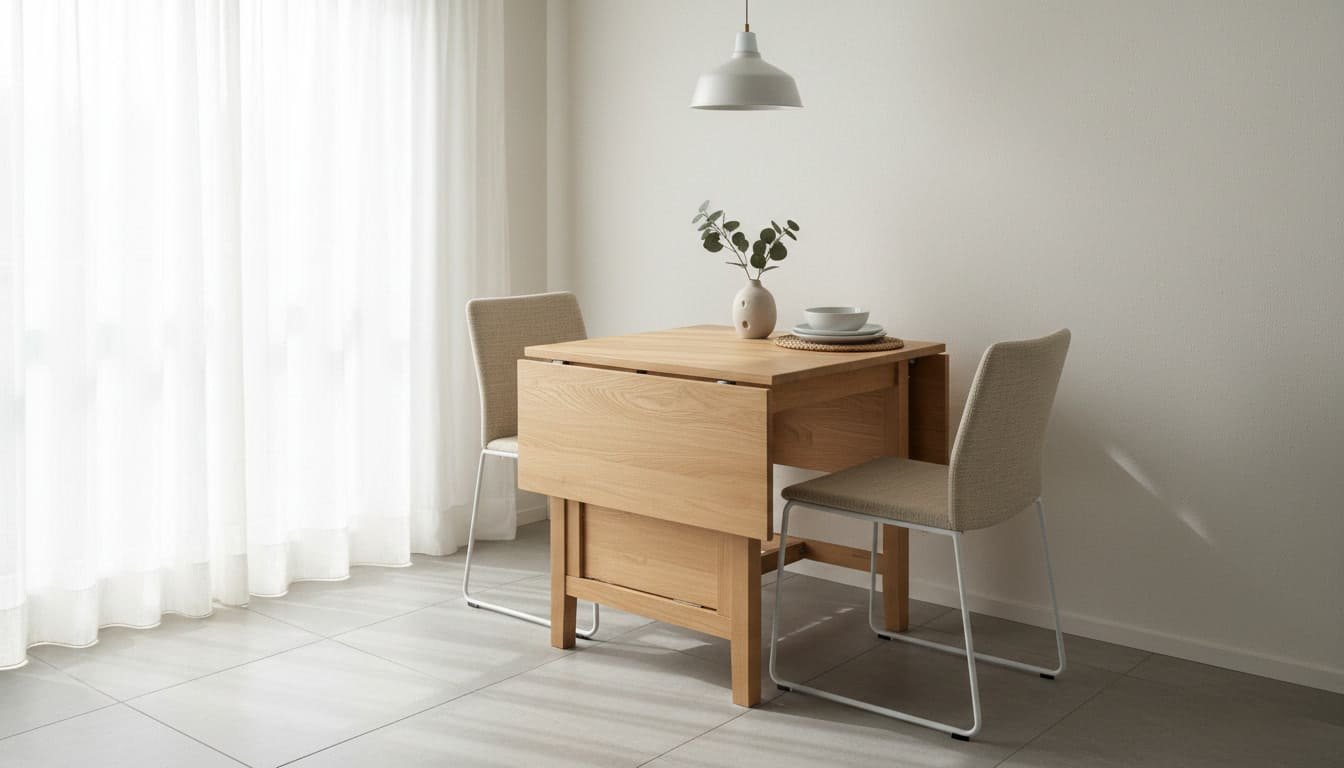

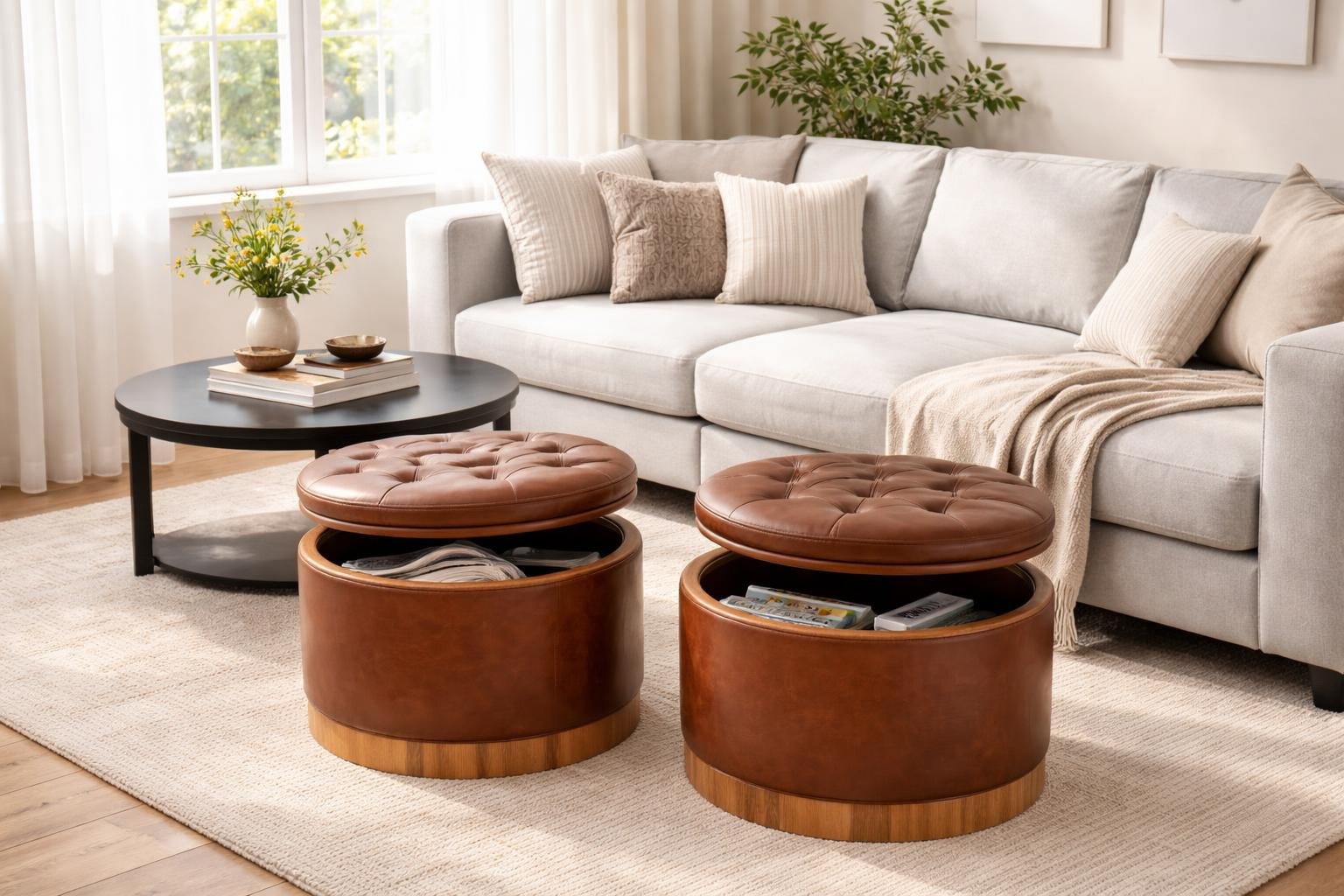
Hidden storage ottomans are one of the easiest upgrades you can make in a small living room because they solve two problems at once: you need a place to sit or rest your feet, and you need more storage without adding another bulky cabinet. For renters and small-space dwellers, they’re especially appealing because they don’t require wall mounting, drilling, or permanent changes—just drop one in and immediately reclaim cluttered surfaces. The key is choosing the right style and size so it improves flow instead of becoming another obstacle in an already tight layout.
Why Hidden Storage Ottomans Work in Tight Spaces
Hidden storage ottomans maximize small living rooms by combining furniture roles that would otherwise take up separate footprints. Instead of a standalone coffee table plus a storage bin plus extra seating, you get one compact piece that can do all three. This is most noticeable in narrow apartments where every extra item turns pathways into squeeze zones.
They also create “invisible storage,” which matters when you don’t have a dedicated closet nearby. Toss in throw blankets, kids’ toys, gaming controllers, or a stack of magazines, and the room instantly looks calmer. For small spaces, visual clutter can make the room feel smaller than it is, so closed-lid storage offers a big psychological win.
Buy on Amazon:
👉 https://amzn.to/4bM07dI
There are a few trade-offs worth noting. Storage ottomans can be less stable than a solid coffee table for heavy use (like eating dinner daily), and some lids aren’t designed for constant opening and closing. But for everyday small-living-room realities—needing flexible seating, hiding mess fast, and avoiding more furniture—they’re a practical, high-impact solution.
Key Features to Look for Before You Buy
Start with sizing and shape, because the “right” ottoman is the one that doesn’t disrupt walkways. In compact living rooms, a square or rectangular ottoman often works best when it can tuck close to a sofa or align with a rug’s edges. As a quick guideline, aim for a height close to your sofa seat height and leave enough clearance so people can pass without turning sideways.
Next, look at the storage mechanism and interior usability. Hinged lids are convenient, but check for safety hinges or soft-close supports so the lid won’t slam on fingers—especially important for families. Lift-off lids are simpler and often cheaper, but they’re less convenient if you’re opening it daily. Also consider whether the interior is deep enough for blankets and pillows, and whether it’s lined (linings reduce snagging and look more finished).
Finally, evaluate how you’ll actually use it in your room—this is where “features” become real-life pros and cons. If it will double as a coffee table, prioritize a firm, structured top (or a reversible tray top) so drinks don’t wobble. If it’s mainly extra seating, confirm the weight capacity and look for sturdy legs or a reinforced base. Common ideal use cases include: a blanket and board-game hub for movie nights, a toy drop-zone for quick tidying before guests arrive, or a compact entry-adjacent perch in studio apartments where the living room does everything.
Buy on Amazon:
👉 https://amzn.to/4bM07dI
In small living rooms, hidden storage ottomans stand out because they add function without demanding more space—exactly what compact homes need. The best pick is the one that matches your room’s circulation (easy to walk around), your daily habits (how often you’ll open it), and your lifestyle (table use, seating needs, or clutter control). Choose thoughtfully, and you’ll get a cleaner-looking room, more flexible seating, and storage that stays out of sight until you need it.