
Compact living rooms often force you to choose between a TV setup that feels “finished” and the storage you actually need for daily life. Compact TV stands with storage solve that tension by combining media organization, cable control, and clutter-hiding space in one footprint-friendly piece. For renters and small-space owners, they’re one of the easiest upgrades because they replace multiple bulky items (a TV bench, baskets, shelves) without making the room feel crowded.
Why Compact TV Stands Solve Small-Space Storage
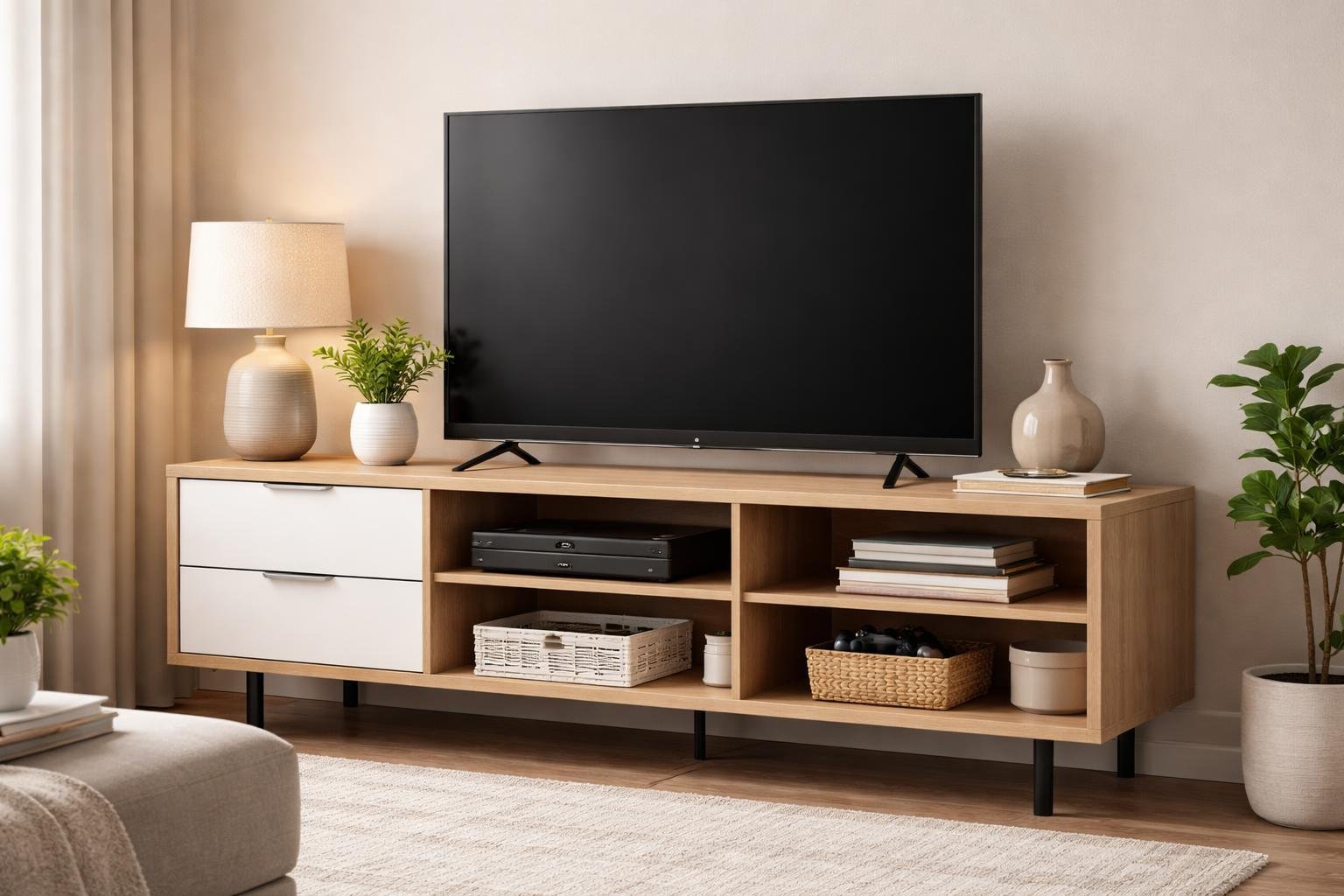
A small living room usually has the same clutter as a large one—just fewer places to put it. Remotes, consoles, routers, books, blankets, and kids’ stuff tend to pile up on coffee tables and windowsills when there’s no dedicated home for them. A compact TV stand with closed storage (doors or drawers) hides that visual noise quickly, making the room feel calmer without requiring a full shelving wall.
They also “earn” their floor space because the TV zone is already a fixed destination in most apartments. When your TV sits on a narrow console that includes shelves, cubbies, or drawers, you’re storing items exactly where you use them—streaming devices near the TV, controllers within reach, extra HDMI cables in a drawer. That reduces the need for additional side cabinets or rolling carts that steal walkway clearance.
Buy on Amazon:
👉 https://amzn.to/4sHQtyI
The main trade-off is capacity: compact stands won’t hold everything, and that’s a good thing if you want a small room to stay livable. The pro is that they encourage a curated setup (only what you use stays in the living room). The con is that you’ll need to be realistic about what belongs elsewhere—seasonal decor, bulky board games, or large speaker systems may require separate storage.
Key Features to Look For Before You Buy
Start with sizing that matches both your TV and your wall. A stand that’s too wide can overwhelm a small room, but one that’s too narrow can feel unstable and leave no surface for a soundbar. As a rule of thumb, aim for a stand that’s at least a few inches wider than the TV’s base (or the TV’s width if you’re not wall-mounting), and check depth carefully—compact models often range around 12–16 inches deep, which is great for tight spaces but may not fit deeper receivers.
Buy on Amazon:
👉 https://amzn.to/3O0Ku91
Next, prioritize storage that fits your real habits, not just what looks good in photos. Open shelves are ideal for consoles, set-top boxes, and anything that needs airflow or remote signal access, while drawers and doors are better for hiding chargers, manuals, and spare cords. If you’re in a studio or multipurpose room, look for a mix: one open bay for active devices and one closed section to keep the room from looking like an electronics closet. The downside of fully open designs is constant visual clutter; the downside of fully closed designs is heat buildup and weaker remote performance.
Finally, don’t ignore the small details that matter every day: cable management holes, adjustable shelves, and sturdy hardware. Cable cutouts keep cords from spilling out the sides and make cleaning easier in tight corners. Adjustable shelves help you adapt to changing tech (a new console, a taller router), and higher weight ratings usually mean less wobble—especially important on older apartment floors. Ideal use cases include narrow living rooms where you need to preserve walking space, corners where a shallow stand prevents crowding, and renter setups where you want a polished look without drilling built-ins into the wall.
In a small living room, the best furniture pulls double duty without feeling heavy or complicated. Compact TV stands with storage do exactly that by turning your entertainment area into a clean, organized hub—while keeping floors and surfaces free for everyday living. If you choose the right size, the right mix of open and closed storage, and practical features like cable control, you’ll get a setup that looks tidy, works with your tech, and fits the realities of small-space life.