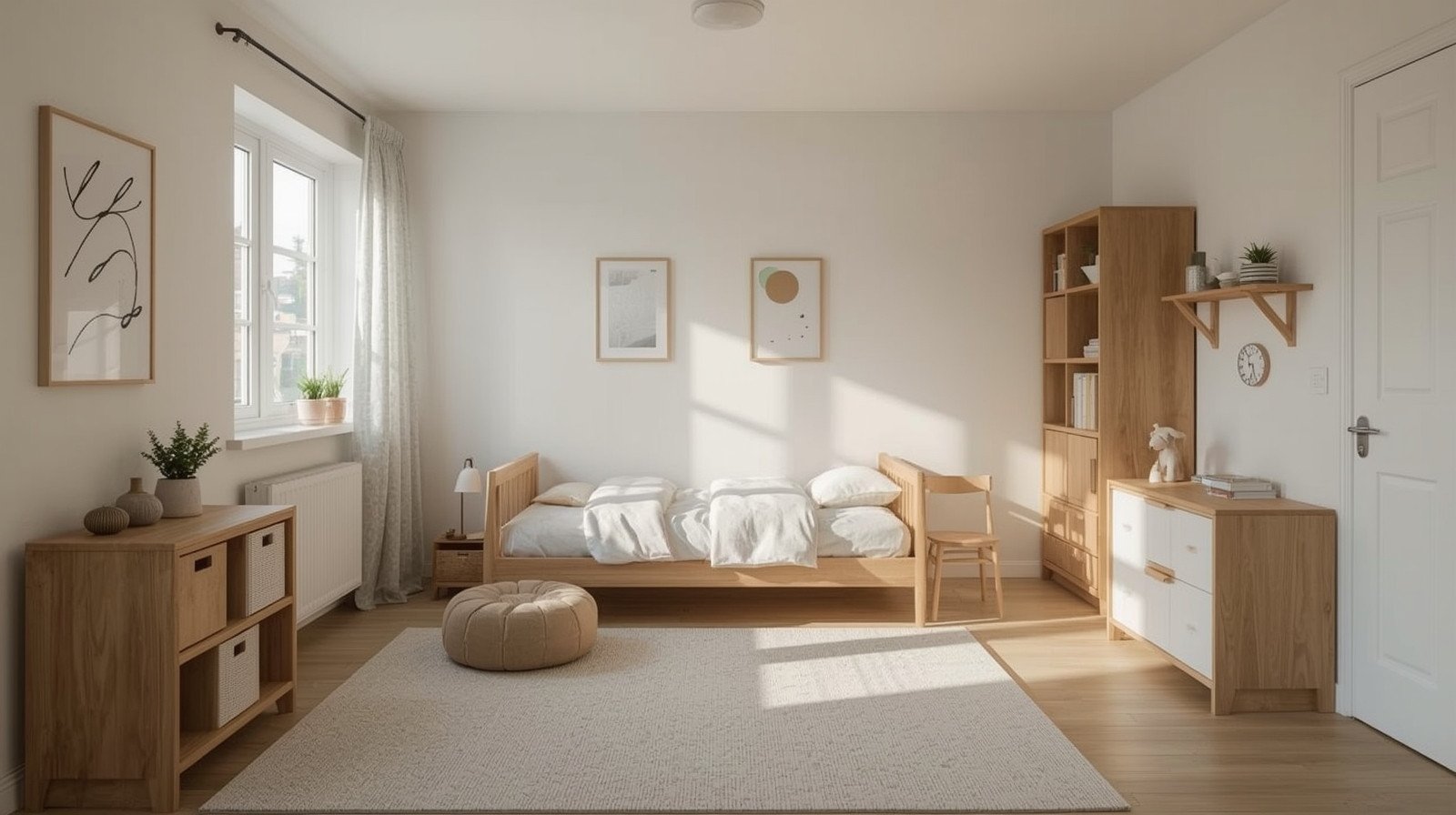

Designing a small kids’ room is not just about making it look cute. The real challenge is functionality. A child’s room often needs to serve multiple purposes at once: sleeping, playing, studying, and storage.
The biggest mistake most people make is trying to fit standard-sized furniture into a small space. This quickly leads to clutter, limited movement, and a room that feels smaller than it actually is.
The solution is not adding more furniture — it’s choosing the right type of furniture.
This guide breaks down the best furniture types for small kids’ rooms, with clear pros, cons, and practical recommendations so you can choose what actually works.
1. Loft Beds (Raised Beds with Space Underneath)
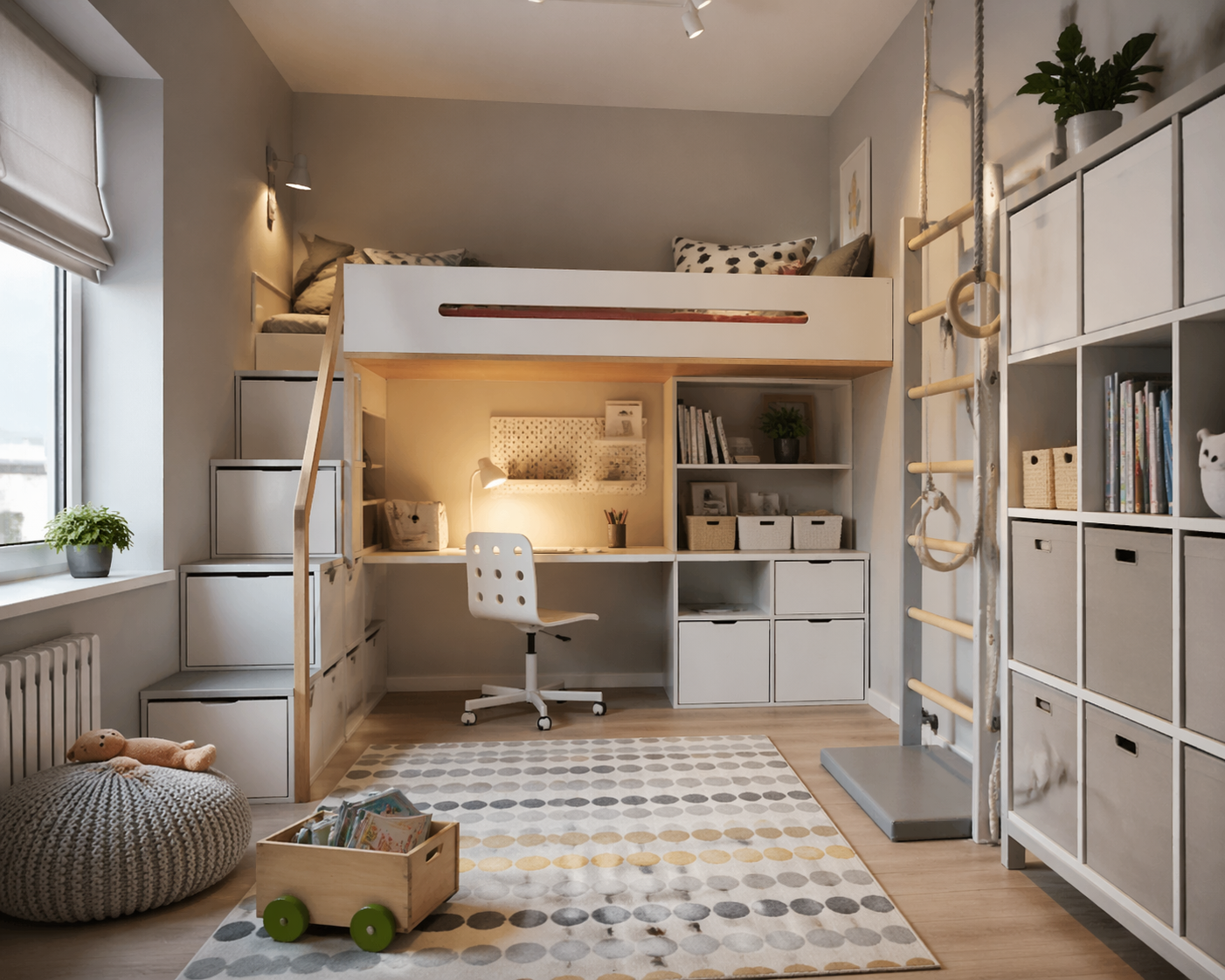
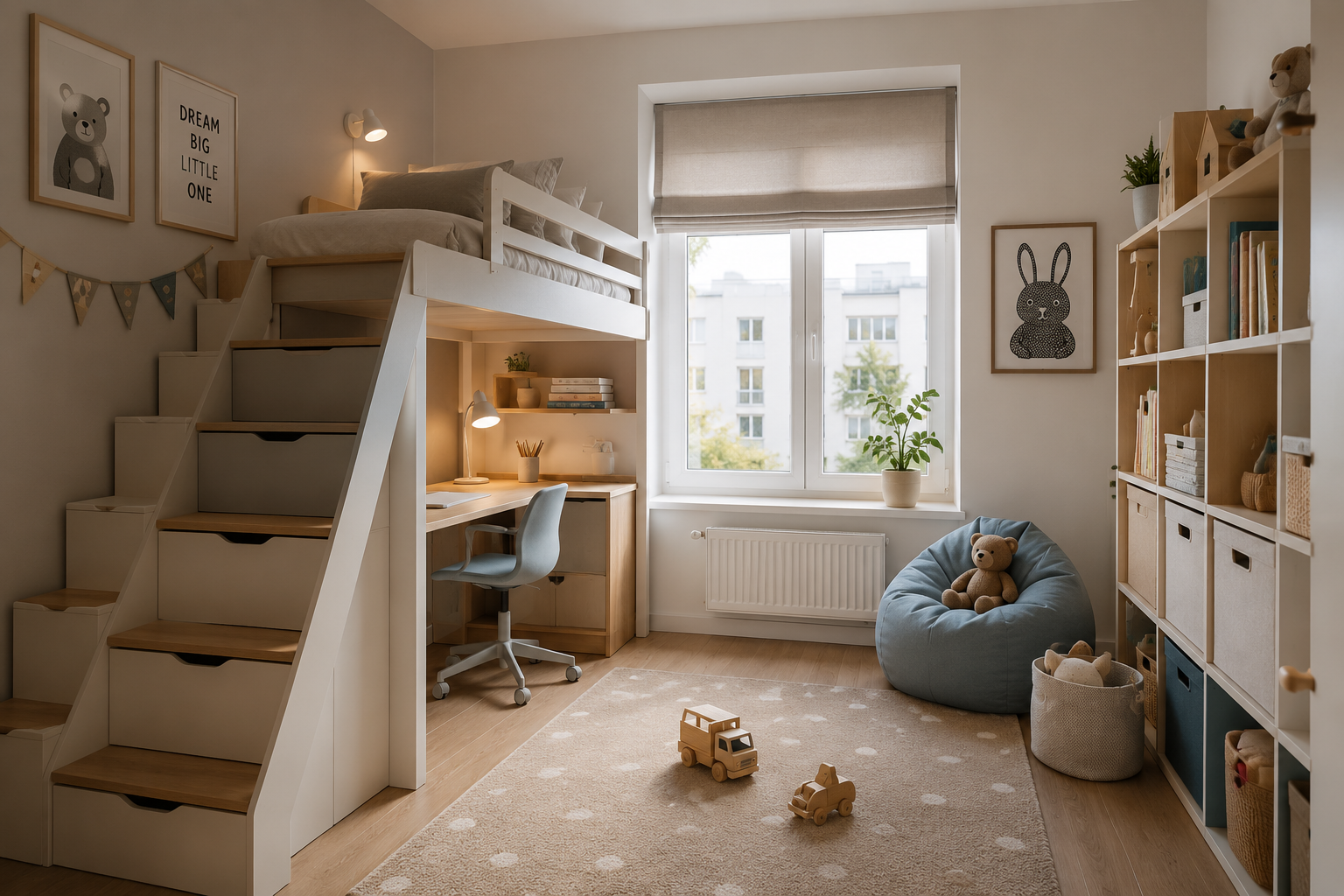
Loft beds are one of the most effective solutions for small kids’ rooms because they free up the floor area underneath the bed.
Instead of wasting space, you can use it for a desk, storage, or a play zone.
Advantages
- maximizes vertical space
- creates room for study or storage underneath
- ideal for very small rooms
Disadvantages
- not suitable for very young children
- requires ceiling height
- can feel bulky in low ceilings
Best For
Small rooms where you need to fit multiple functions (bed + desk + storage).
2. Bunk Beds (For Shared Rooms)
If two kids share one room, bunk beds are one of the most efficient solutions.
They reduce the footprint of two beds into the space of one.
Advantages
- saves significant floor space
- ideal for shared rooms
- often includes built-in storage
Disadvantages
- less privacy for children
- safety considerations
- harder to access top bunk
Best For
Shared kids’ rooms or sleepovers.
3. Storage Beds (Beds with Built-In Storage)
Storage beds include drawers or compartments underneath, making them extremely practical for small rooms.
Instead of adding extra furniture, storage is integrated into the bed itself.
Advantages
- reduces need for extra storage furniture
- keeps clutter hidden
- efficient use of space
Disadvantages
- heavier and harder to move
- storage access may be inconvenient
Best For
Rooms with limited closet space.
4. Compact Kids Desks
A full-size desk is often too large for small rooms. Compact desks or wall-mounted desks are a better solution.
They provide a workspace without overwhelming the room.
Advantages
- space-saving
- functional for studying and drawing
- available in foldable designs
Disadvantages
- limited surface area
- not suitable for multiple uses at once
Best For
School-age children in small rooms.
5. Wall-Mounted Shelves
Shelving is essential in kids’ rooms, but floor storage quickly eats up space. Wall-mounted shelves solve this problem.
They keep items organized while maintaining open floor space.
Advantages
- no floor space used
- great for books and toys
- visually light
Disadvantages
- limited weight capacity
- requires installation
Best For
Storage without cluttering the room.
6. Toy Storage Units (Bins & Organizers)
Kids’ rooms often feel messy because of toys, not furniture. Proper storage systems can completely change the space.
Advantages
- keeps toys organized
- easy for kids to use
- reduces visual clutter
Disadvantages
- can look messy if open
- requires regular organization
Best For
Daily organization and easy cleanup.
Comparison Table
| Furniture Type | Space Saving | Functionality | Best For | Main Drawback |
|---|---|---|---|---|
| Loft Bed | Very High | High | Small rooms | Needs ceiling height |
| Bunk Bed | Very High | Medium | Shared rooms | Safety concerns |
| Storage Bed | High | High | Extra storage | Heavy |
| Compact Desk | High | Medium | Study area | Small surface |
| Wall Shelves | Very High | Medium | Organization | Limited weight |
| Toy Storage Units | Medium | High | Daily use | Needs maintenance |
How to Choose the Right Furniture
Choosing furniture for a small kids’ room is about priorities, not quantity.
Start by asking:
- Do you need more storage or more free space?
- Is the room shared?
- Does your child need a study area?
Then choose furniture that solves the main problem — not everything at once.
Common Mistakes to Avoid
Most small kids’ rooms feel overcrowded because of poor choices, not size.
Avoid:
- oversized furniture
- too many storage units
- ignoring vertical space
- filling every corner
A small room needs breathing space, not more items.
Final Recommendation
For most small kids’ rooms:
- choose loft beds → if space is extremely limited
- choose bunk beds → for shared rooms
- choose storage beds → if clutter is the main problem
- add wall shelves → to keep the floor clear
The best setup is not the one with the most furniture — it’s the one that makes the room easier to use every day.
You might also like: Space-Saving Solutions for Small Kids’ Rooms That Actually Work