
A small kids’ room is often overloaded with expectations: it has to function as a bedroom, play area, study space, and storage zone simultaneously. The typical mistake is trying to fit all these functions using standard-sized furniture, which leads to clutter and inefficient use of space.
The real constraint is not size, but poor prioritization. A well-designed small kids’ room focuses on adaptability, vertical use of space, and multifunctional elements. Below are practical solutions that improve usability without turning the room into a cramped storage unit.
1. Loft Beds: Free Up Functional Space
The bed occupies the largest footprint in a child’s room. Keeping it at floor level wastes valuable space that could be used more efficiently.
Recommended Option
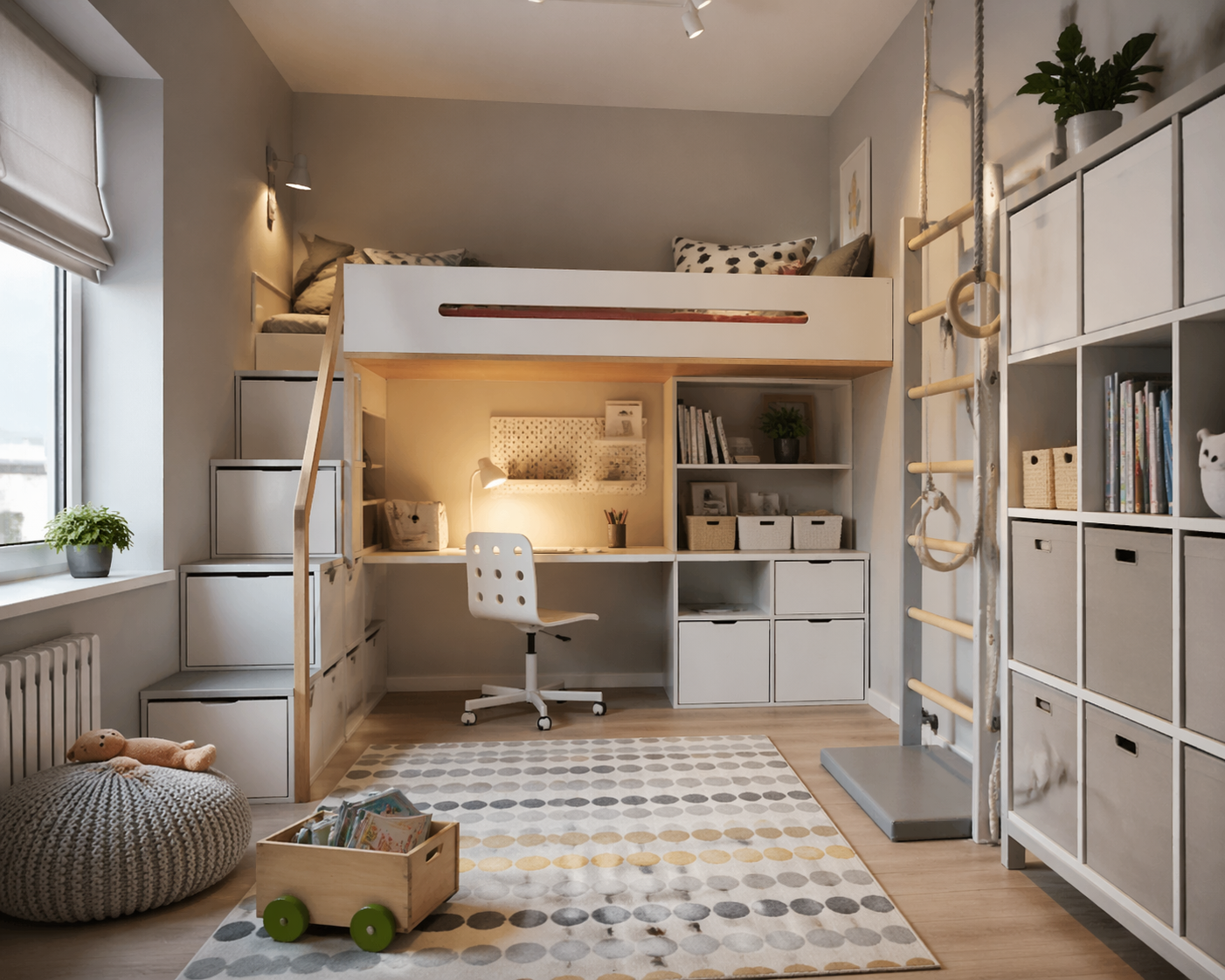
Loft bed with integrated desk or storage
👉 Check price and options
- Elevates the sleeping area to free up space below
- Creates room for a desk, play zone, or storage
- Reduces the need for multiple separate furniture pieces
Important:
Loft beds are not suitable for very young children (typically under 5–6 years). Safety should take priority over space optimization.
2. Modular Storage: Adapt as the Child Grows
Children’s needs change quickly, so fixed storage solutions become inefficient over time.
What works:
- Modular shelving systems that can be reconfigured
- Stackable storage units instead of large wardrobes
- Open + closed storage combination
Recommended Option
Modular cube storage system
👉 View product
- Flexible configuration depending on room layout
- Easy to expand or reorganize
- Suitable for toys, books, and clothes
3. Foldable or Transforming Furniture
In small rooms, static furniture is a limitation. Transformable elements allow the same area to serve multiple purposes.
Recommended Option
Fold-down wall desk (space-saving study solution)
👉 Check availability
- Can be folded away when not in use
- Frees up floor space for play
- Works well in rooms without space for a full desk
Alternative:
Consider extendable desks if wall mounting is not possible.
4. Zoning: Define Clear Functional Areas
Trying to mix sleeping, studying, and playing in the same spot leads to distraction and disorder.
Basic zones to define:
- Sleeping area (bed)
- Study area (desk, lighting)
- Play/storage area
Even visual zoning (rugs, lighting, color accents) improves structure.
5. Vertical Space: The Most Underused Resource
Walls in kids’ rooms are often underutilized, while floor space becomes overcrowded.
Practical solutions:
- Wall shelves above desk or bed
- Hanging organizers for small items
- Hooks for bags and accessories
Mistake to avoid:
Placing everything within reach at floor level creates clutter and reduces usable space.
6. Colors and Visual Simplicity
Bright and chaotic designs are common in kids’ rooms but can overwhelm small spaces.
Better approach:
- Use a neutral base with limited accent colors
- Avoid too many patterns
- Keep large surfaces visually clean
A calmer environment improves both perception of space and focus.
Conclusion
A small kids’ room is not about fitting everything in — it’s about choosing what actually matters. The goal is to create a flexible system that adapts to the child’s needs without constant reorganization.
Loft beds, modular storage, and transformable furniture allow one space to serve multiple functions efficiently. When each element has a clear purpose, even a compact room becomes practical and comfortable.