
A small balcony is often treated as an afterthought — a place for storage, not living. That’s usually a planning failure, not a space limitation. When there is no defined function, clutter fills the gap.
The first step is not buying furniture. It’s deciding what the balcony is for: relaxing, working, dining, or storage. Trying to combine everything in a few square meters leads to inefficiency. A focused setup performs better than a “do-it-all” approach.
Below are practical, space-efficient ideas that prioritize usability over decoration.
1. Foldable Furniture: Keep It Flexible
Permanent furniture quickly consumes space and limits movement. Foldable solutions allow the balcony to adapt to different uses.
Recommended Option
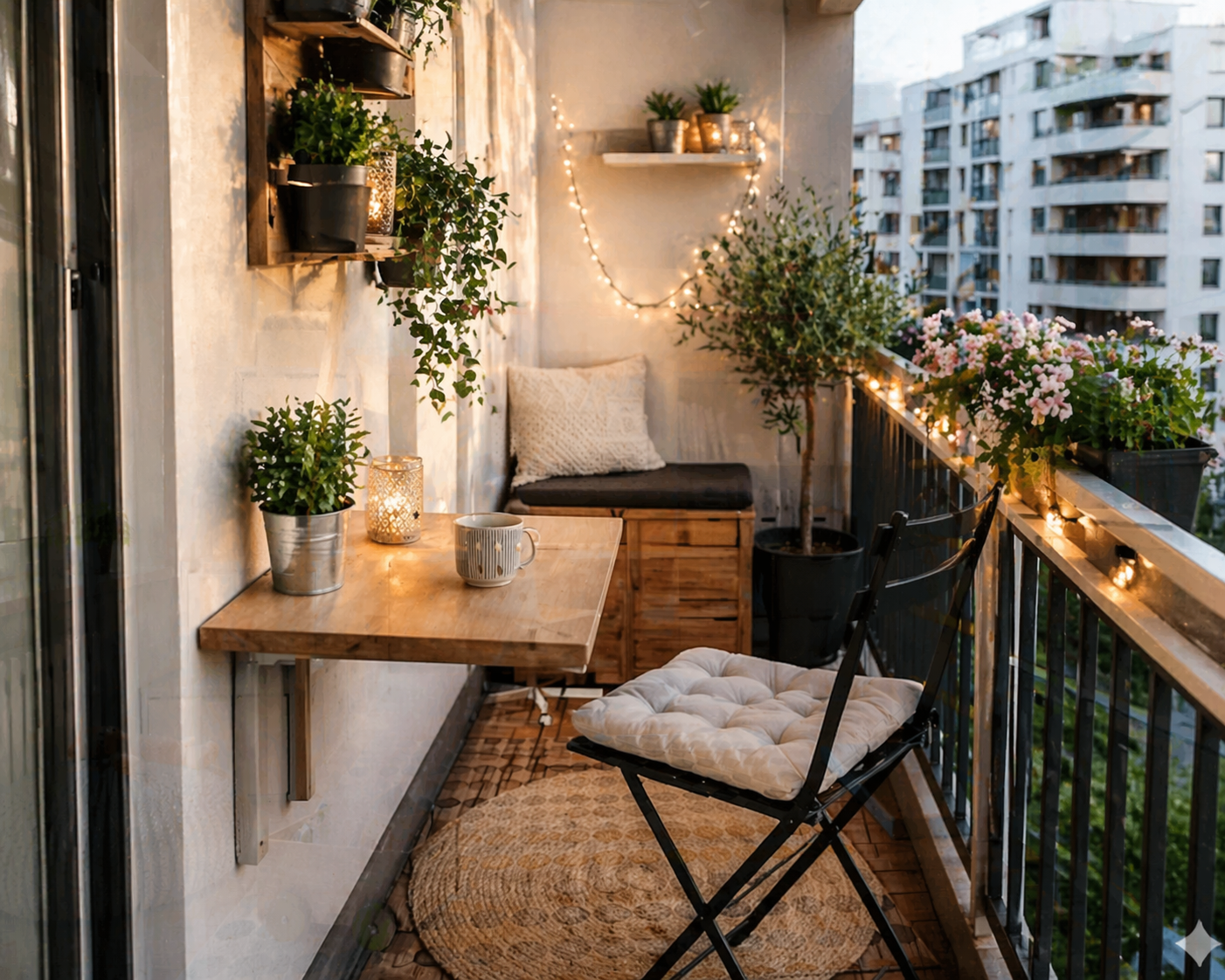
Wall-mounted foldable balcony table
👉 Check price and options
- Attaches directly to the wall, leaving the floor clear
- Can be folded away when not in use
- Suitable for dining, working, or coffee setup
Critical point:
Free-standing tables may seem convenient, but in narrow balconies they become obstacles.
2. Vertical Storage: Use the Walls
Most small balconies suffer from poor use of vertical space. Everything ends up on the floor, which reduces usability.
What works:
- Wall-mounted shelves
- Hanging planters
- Slim vertical racks
Recommended Option
Narrow vertical shelving unit for balcony
👉 View product
- Keeps items organized without blocking movement
- Suitable for plants, decor, or small storage
- Maximizes unused wall space
3. Compact Seating: Scale Matters
Oversized outdoor furniture is one of the most common mistakes. Balcony furniture must match the scale of the space.
Recommended Option
Foldable compact balcony chairs
👉 Check availability
- Lightweight and easy to store
- Designed specifically for small spaces
- Can be removed or folded when extra space is needed
Alternative:
A storage bench can work, but only if it replaces other storage solutions — otherwise it just adds bulk.
4. Hidden Storage: Reduce Visual Noise
Using the balcony for storage is practical, but visible clutter ruins usability.
Practical solutions:
- Storage benches with compartments
- Weatherproof storage boxes
- Stackable containers with lids
Closed storage keeps the space clean and functional.
5. Lighting: Make It Usable at Night
Without lighting, a balcony is limited to daytime use.
Effective solutions:
- Warm LED string lights for ambient atmosphere
- Wall-mounted lights for functional visibility
- Solar lights if electrical access is limited
Overly bright lighting should be avoided — it reduces comfort and creates harsh shadows.
6. Zoning: Even Small Spaces Need Structure
A small balcony still benefits from clear organization.
Example layout:
- One side for seating
- One wall for storage or plants
- Central area left open for movement
Trying to fill every corner leads to clutter and reduced usability.
7. Materials: Plan for Outdoor Conditions
Balconies are exposed to weather, and poor material choices lead to fast deterioration.
What to choose:
- Powder-coated metal or treated wood
- Waterproof cushions and fabrics
- UV-resistant finishes
Ignoring durability leads to higher long-term costs.
Conclusion
A small balcony is not about decoration — it’s about efficiency. The most successful setups are minimal, flexible, and purpose-driven.
Foldable furniture, vertical storage, and compact seating allow the same space to serve multiple functions without becoming crowded. The goal is not to fill the balcony, but to make it usable.