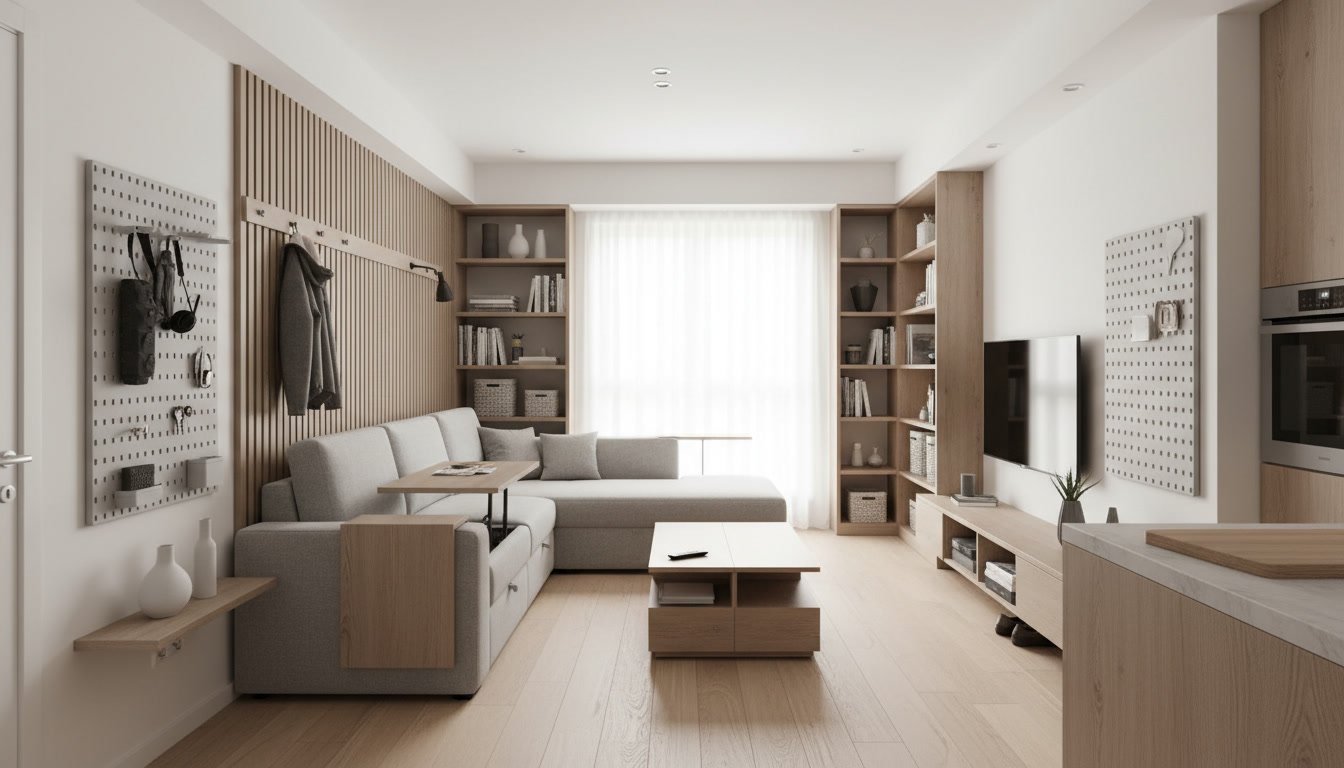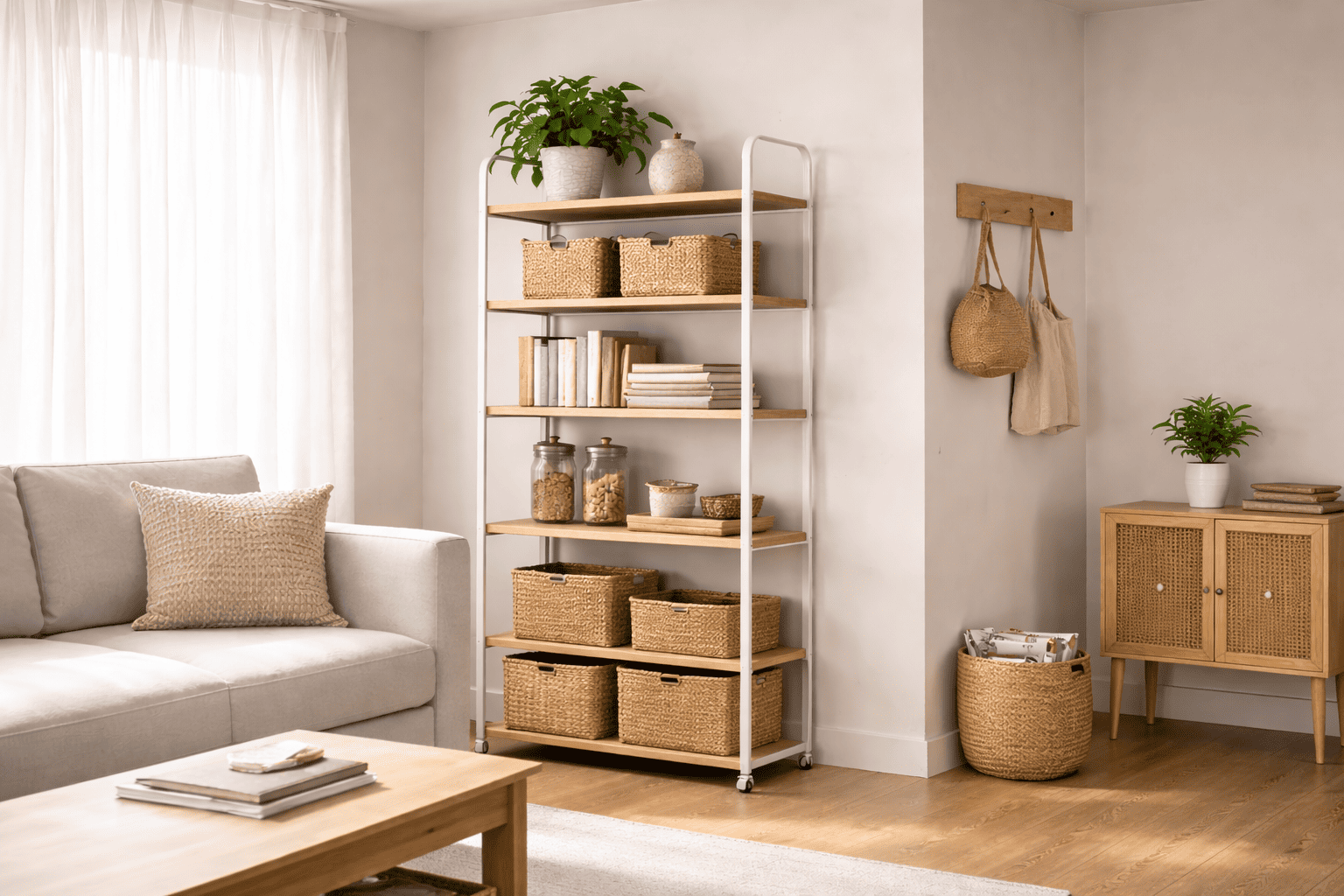

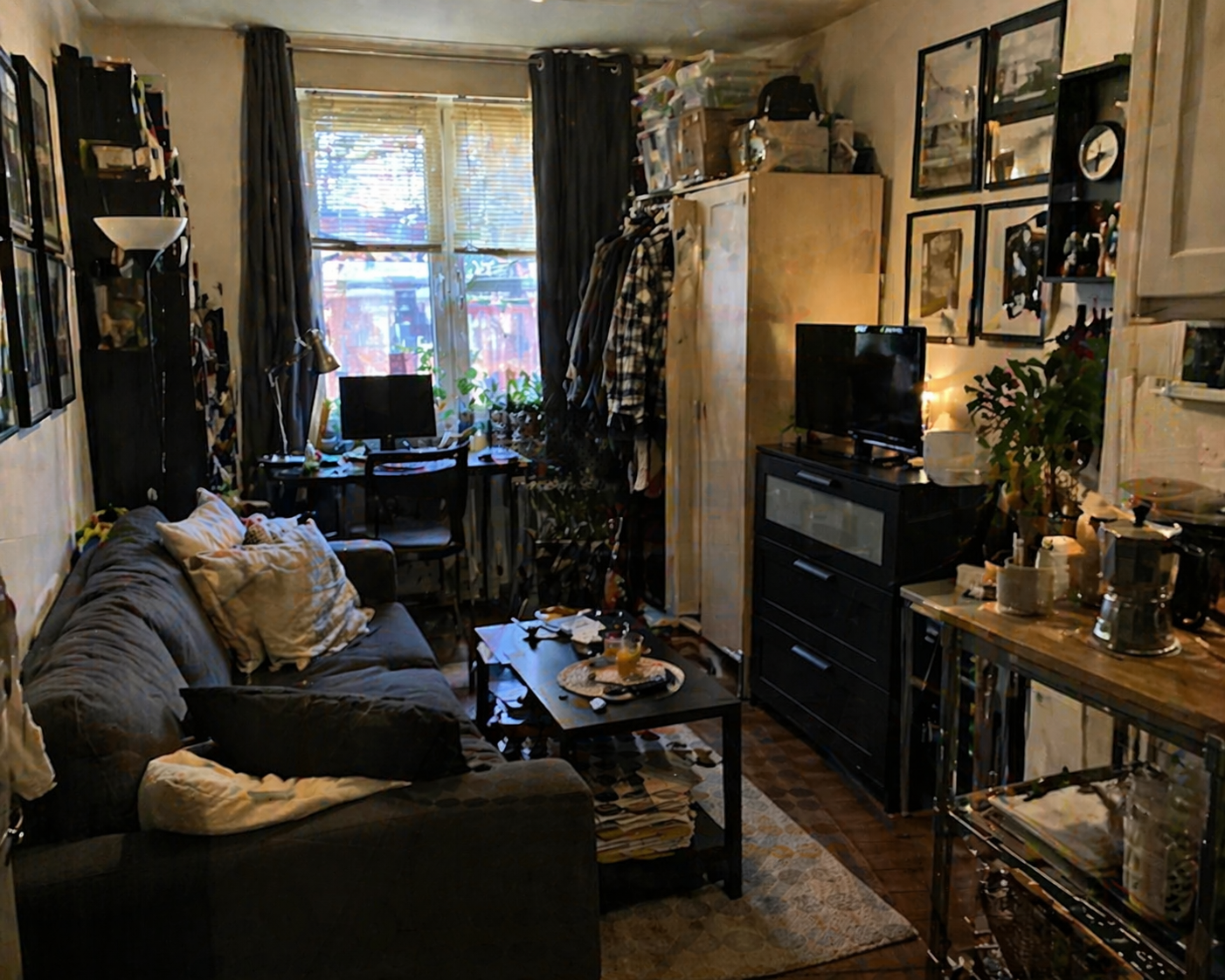
Small apartments don’t feel cramped because of their size alone — they feel cramped because of poor decisions. In many cases, the space could function significantly better with minor adjustments. The problem is that most people optimize for appearance or trends instead of usability.
Worse, some of the most common “design tips” actually make small spaces feel tighter. Below are the key mistakes that reduce both physical and perceived space — along with what to do instead.
1. Oversized Furniture
One of the most damaging mistakes is choosing furniture that is out of scale with the room.
Large sofas, deep wardrobes, and bulky tables immediately dominate the space and restrict movement.
Why it fails:
- Reduces usable walking areas
- Blocks natural light
- Makes the room visually heavy
What works better:
- Slim-profile furniture
- Raised (legged) pieces that expose the floor
- Multi-functional items instead of multiple single-purpose ones
2. Pushing Everything Against the Walls
It seems logical: push furniture to the walls to “free up space.” In reality, this often creates an empty center and awkward layout.
Why it fails:
- Breaks natural flow
- Makes the room feel unbalanced
- Emphasizes the room’s small dimensions
Better approach:
- Create functional zones
- Use partial spacing (even small gaps improve perception)
- Arrange furniture based on use, not just walls
3. Too Much Visible Storage
Open shelves, exposed items, and cluttered surfaces make a space feel chaotic.
Why it fails:
- Visual noise reduces perceived space
- The eye has no place to rest
- Even organized items can feel overwhelming
What works:
- Closed storage systems
- Minimal items on display
- Grouping instead of scattering objects
4. Poor Lighting Strategy
Relying on a single ceiling light is one of the most common mistakes.
Why it fails:
- Creates shadows that compress space
- Makes corners feel darker and smaller
- Flattens the room visually
Better solution:
- Multiple light sources (ceiling + wall + task lighting)
- Neutral light temperature
- Lighting that highlights depth, not just brightness
5. Dark or Heavy Color Schemes
Dark colors are not inherently bad, but in small spaces they require careful use.
Why it fails:
- Absorbs light
- Makes walls feel closer
- Reduces depth perception
What works:
- Light neutral base colors
- Subtle contrast instead of high contrast
- Consistent color palette
6. Ignoring Vertical Space
Focusing only on floor-level storage leads to overcrowding.
Why it fails:
- Wastes available wall height
- Forces everything into limited floor space
- Increases clutter density
Better approach:
- Wall-mounted shelves
- Tall, narrow storage units
- Hanging systems
7. Too Many Small Items Instead of Fewer Functional Ones
A common misconception is that smaller items are always better. In reality, too many small objects create fragmentation.
Why it fails:
- Breaks visual continuity
- Creates clutter
- Makes the space feel busy
What works:
- Fewer, larger (but still appropriately scaled) elements
- Multi-functional furniture
- Simplified layouts
8. Ignoring Clear Pathways
If movement through a space feels restricted, the apartment will feel smaller regardless of actual size.
Why it fails:
- Interrupts natural flow
- Creates friction in daily use
- Makes the layout feel cramped
Solution:
- Maintain clear walking paths
- Avoid placing furniture in high-traffic areas
- Test layouts based on real movement, not just appearance
9. Overdecorating
Trying to “add personality” often results in too many decorative elements.
Why it fails:
- Adds unnecessary visual weight
- Competes for attention
- Reduces clarity of the space
Better approach:
- Select a few strong decorative elements
- Keep surfaces mostly clear
- Focus on function first, aesthetics second
Conclusion
Small apartments don’t need more ideas — they need fewer mistakes. Most issues come from overloading the space, poor scaling, and ignoring how the space is actually used.
When you remove unnecessary elements and prioritize function, even a small apartment can feel open and efficient. The goal is not to fill the space, but to make it work.