
Introduction
Creating a workspace in a living room is not just about adding a desk. In small apartments, this approach usually fails — the space becomes cluttered, visually chaotic, and uncomfortable for both work and relaxation.
The real goal is to separate functions inside one room without heavy renovation. This requires smart zoning, correct furniture scale, and minimal visual noise. When done properly, a living room can support both work and rest without conflict.
1. Define the Function First
Before choosing furniture, clarify how the workspace will be used.
- Occasional laptop use requires only a compact desk
- Full-time work needs storage, lighting, and separation
- Video calls require a controlled and clean background
Skipping this step leads to poor layout decisions and unnecessary purchases.
2. Choose the Right Location
The placement of the workspace determines how comfortable it will be.
Best options:
- Near a window for natural light
- Along a wall to reduce distractions
- In an unused corner of the room
Avoid:
- Center of the living room
- High-traffic areas
- Direct overlap with TV or relaxation zones
3. Separate the Workspace Visually
You don’t need to build walls. In small spaces, light separation works better.
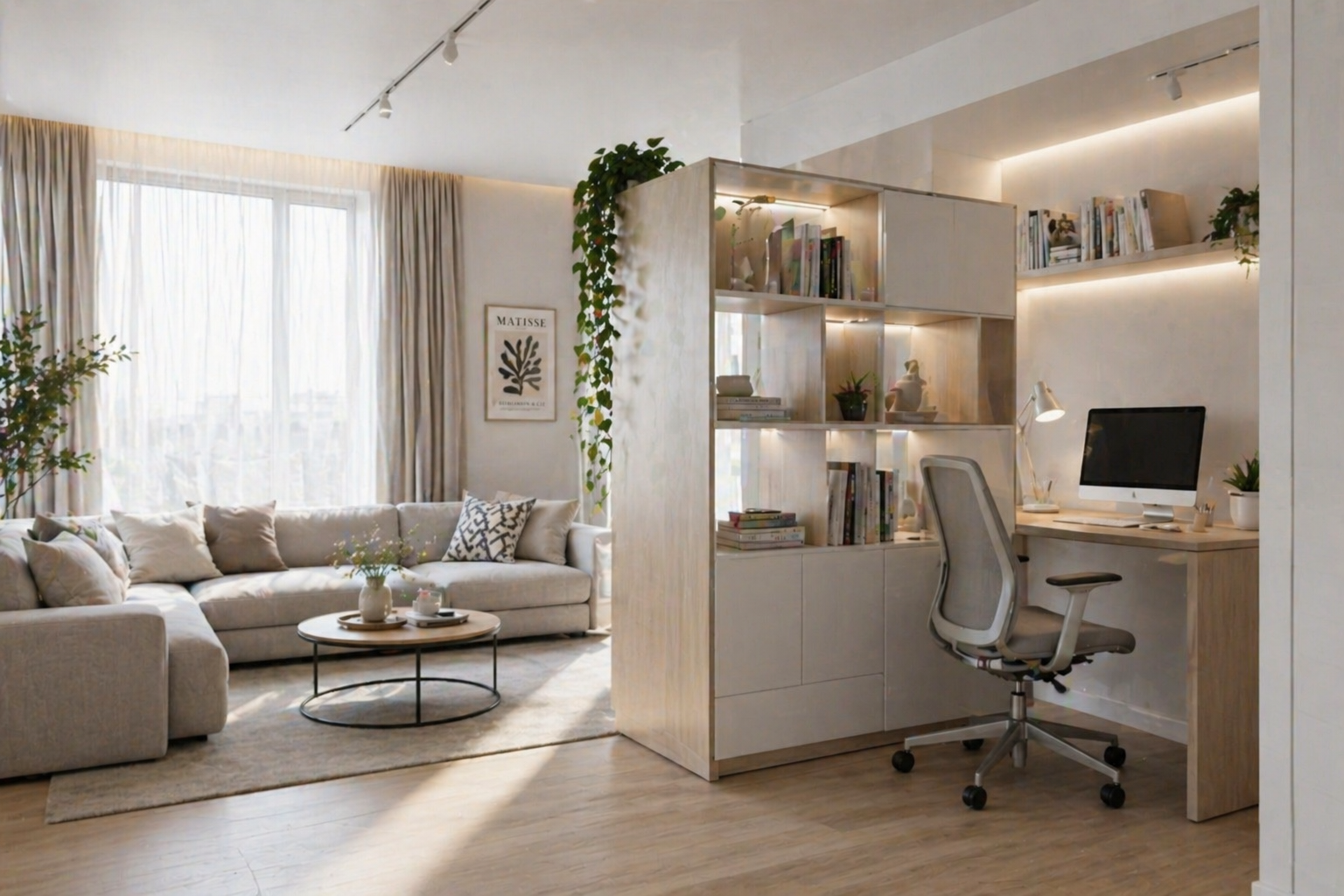
Option 1: Open Shelving Divider
One of the most practical solutions is an open shelving unit. It divides the room while keeping it visually open.
- Allows light to pass through
- Adds storage without bulk
- Creates a clear boundary between zones
This is the safest and most versatile solution for small apartments.
Option 2: Curtain Divider
Curtains provide flexible separation and can hide the workspace when needed.
- Easy to install
- Works well in rental spaces
- Can fully hide the work area
However, curtains don’t provide structural separation and may feel temporary.
Option 3: Folding Room Divider
A freestanding divider offers a more defined boundary without installation.
- Portable and adjustable
- Creates instant zoning
- No drilling or mounting required
This is a good balance between flexibility and structure.
Option 4: Wardrobe or Cabinet as Divider
A wardrobe can act as a solid divider when placed perpendicular to the wall.
- Provides strong physical separation
- Adds significant storage
- Can partially or fully hide the workspace
Important:
This solution works best in medium-sized rooms. In small spaces, a large cabinet may block light and make the room feel tighter.
4. Choose a Compact Desk
The desk should match the scale of the room.
- Slim or wall-mounted designs are ideal
- Avoid deep or oversized desks
- Keep the footprint minimal
5. Use Separate Lighting for Work
Lighting should support function, not just aesthetics.
- Desk lamp for focused work
- Softer ambient lighting for the living area
- Neutral light temperature for balance
Using one light source for both zones reduces effectiveness.
6. Control Visual Clutter
A workspace in the living room is always visible, so clutter becomes more noticeable.
- Keep only essential items on the desk
- Use closed storage when possible
- Manage cables and accessories
A clean workspace improves both focus and overall room perception.
7. Create Subtle Zoning
Even small visual cues help define the workspace.
- Use a rug under the desk
- Keep a consistent color scheme
- Slightly differentiate lighting
These details reinforce separation without adding bulk.
Conclusion
A workspace in the living room works only when it is intentionally designed. Simply placing a desk in a corner rarely delivers a good result.
The most effective approach combines compact furniture, visual separation, and controlled layout. Open shelving, dividers, or even a wardrobe can define zones without requiring renovation.
When each element has a clear function, the room remains both a comfortable living area and a productive workspace.