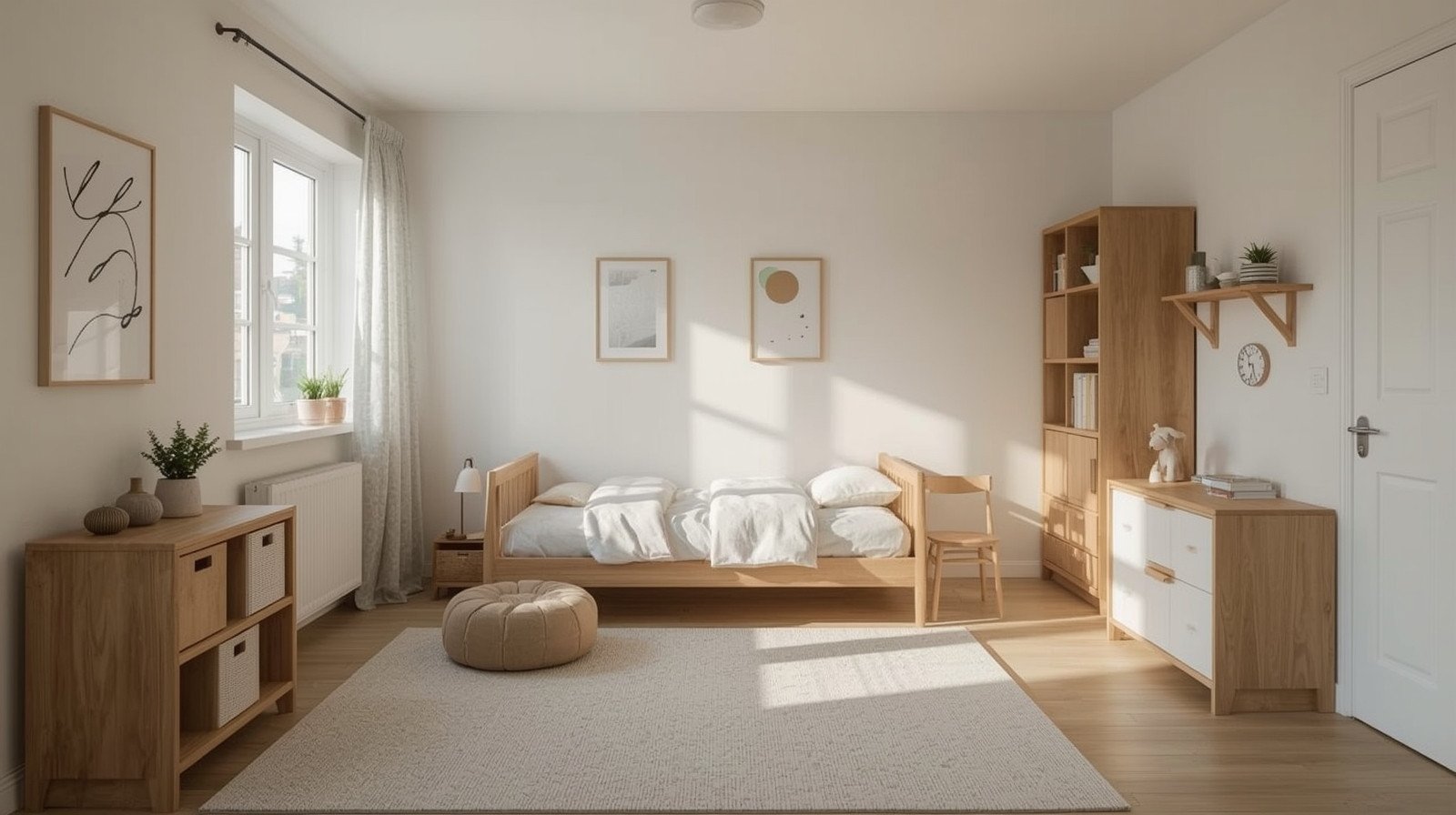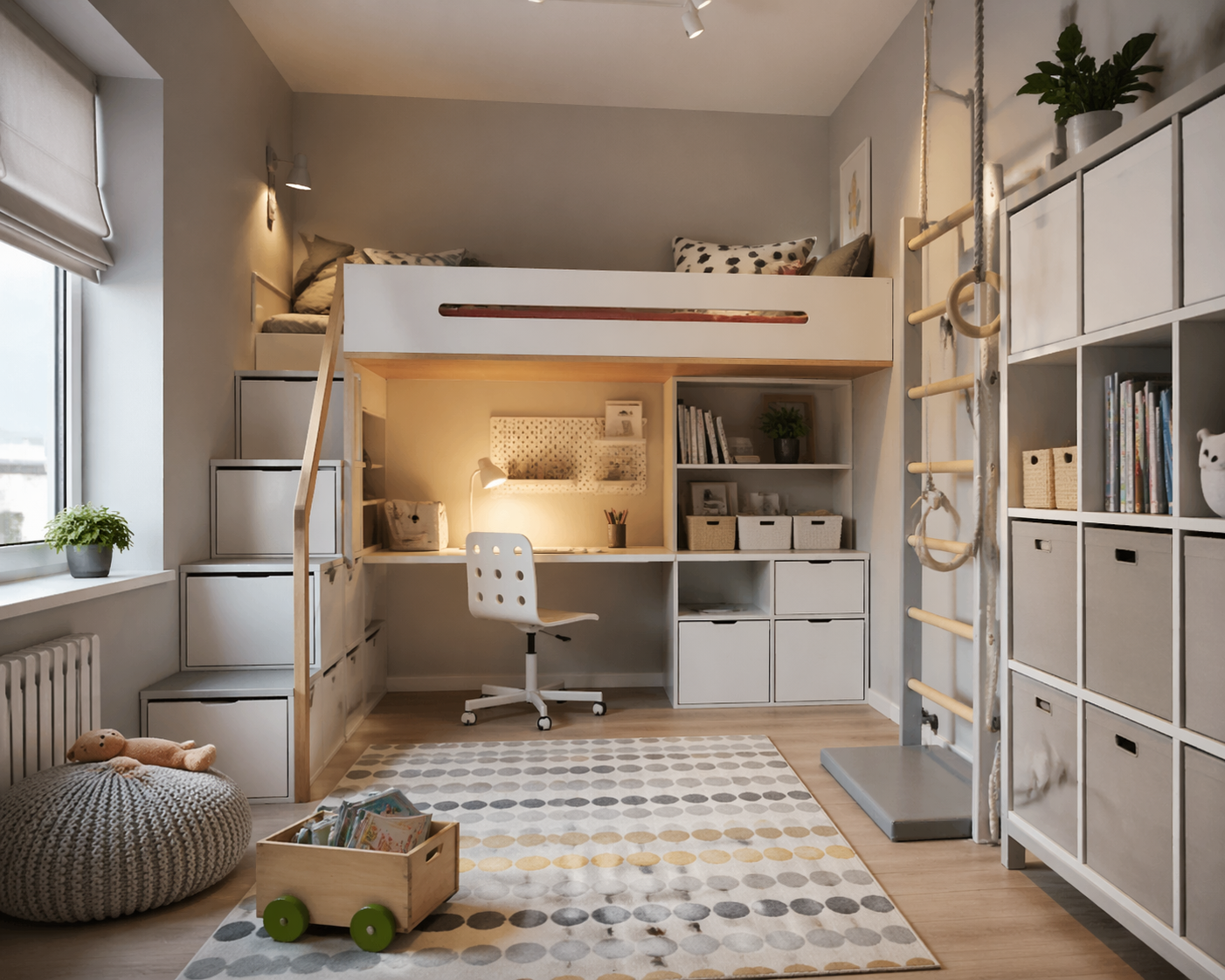

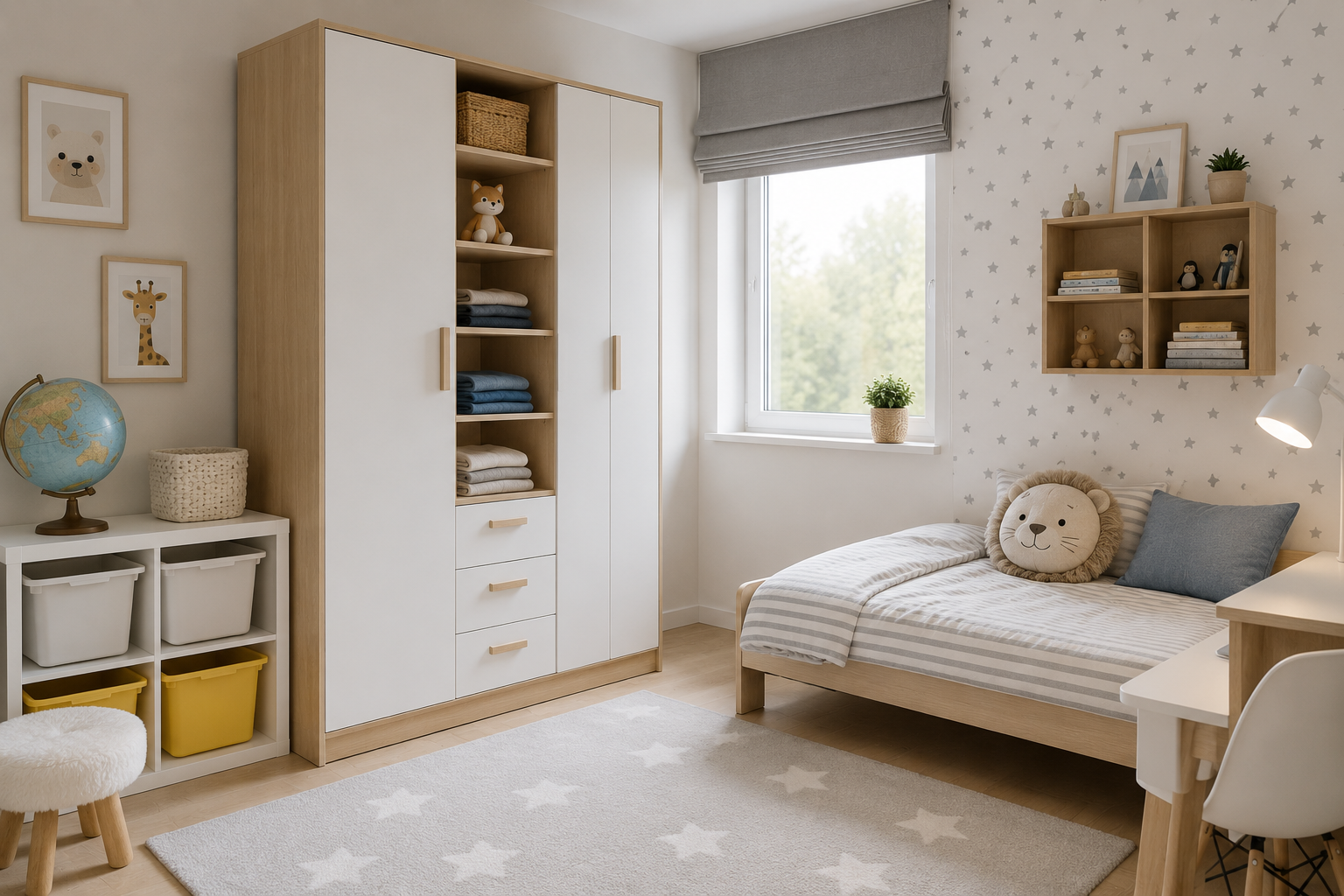
A small kids’ room can become messy very quickly. Clothes, shoes, toys, books, seasonal items, and school supplies all need a place, but standard wardrobes are often too large or poorly designed for compact spaces.
The biggest mistake parents make is choosing a wardrobe based only on width. A narrow wardrobe may save floor space, but if it does not have enough shelves, drawers, or vertical storage, it quickly becomes overcrowded.
The best wardrobe for a small kids’ room should maximize every centimeter of space. A smart design can provide storage for clothing, accessories, toys, and everyday essentials without making the room feel crowded.
In this guide, we compare different types of kids’ wardrobes for small rooms and explain which option works best for different needs.
Types of Wardrobes for Small Kids’ Rooms
1. Tall Narrow Wardrobes
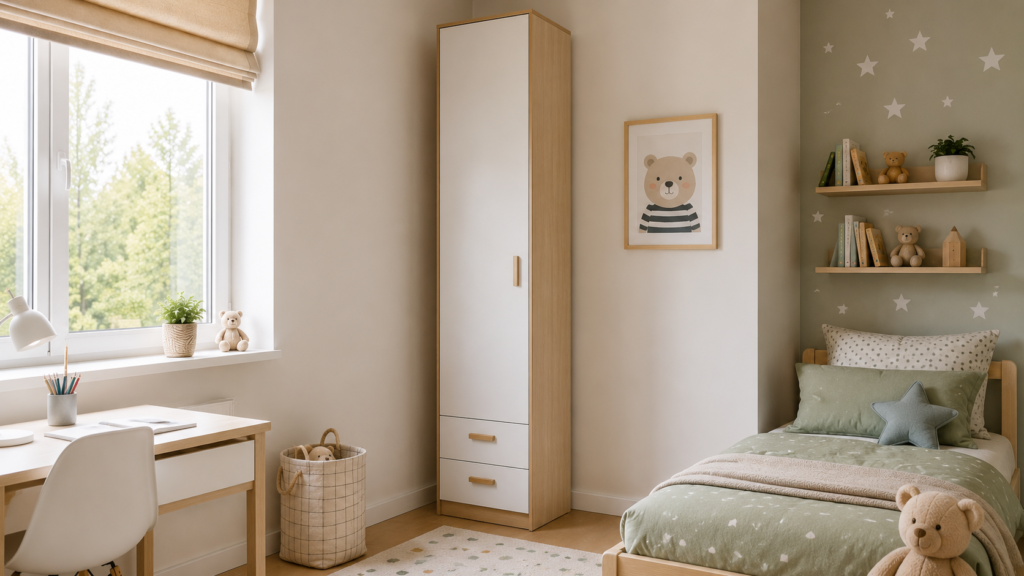
Tall narrow wardrobes are one of the best solutions for small bedrooms because they use vertical space instead of taking up valuable floor area.
These wardrobes usually include a hanging section, several shelves, and sometimes drawers at the bottom.
Advantages
- very small footprint
- makes use of room height
- fits corners and narrow spaces
- suitable for small bedrooms
Disadvantages
- less hanging space
- high shelves may be difficult for young children to reach
Best For
Tiny rooms with limited floor space.
2. Wardrobes with Drawers and Shelves
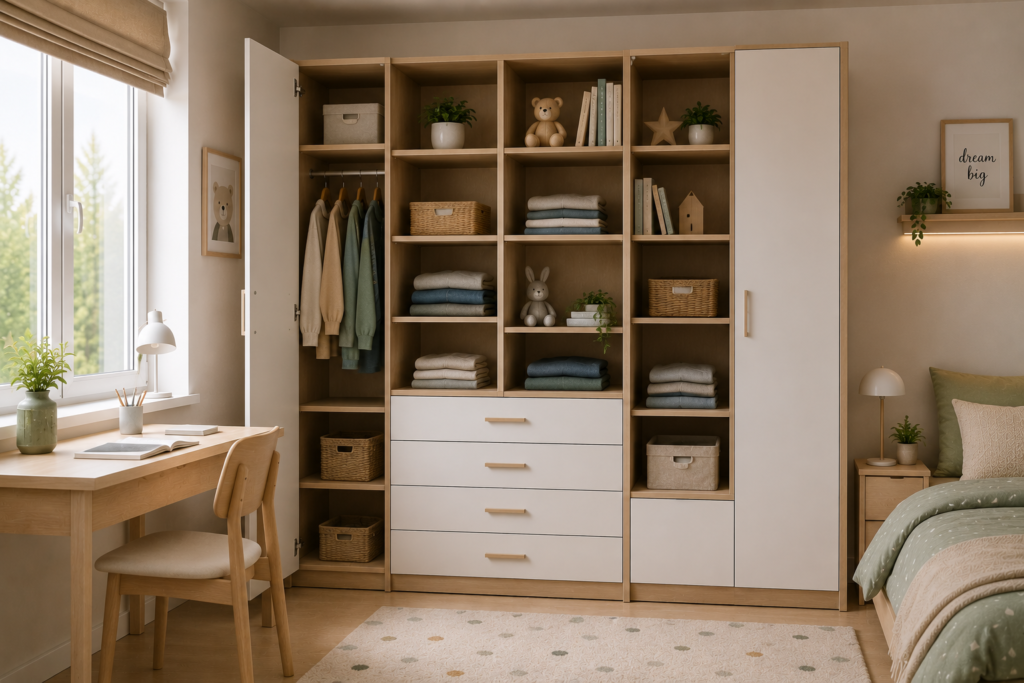
A combination wardrobe includes different types of storage in one piece of furniture. Instead of needing a separate dresser, you have hanging space, shelves, and drawers together.
This is one of the most practical options for small kids’ rooms because it keeps all clothing in one place.
Advantages
- multifunctional storage
- reduces the need for extra furniture
- keeps the room organized
Disadvantages
- wider than simple wardrobes
- requires careful measuring before buying
Best For
Families who need storage for everyday clothes, underwear, pajamas, and accessories.
3. Corner Wardrobes
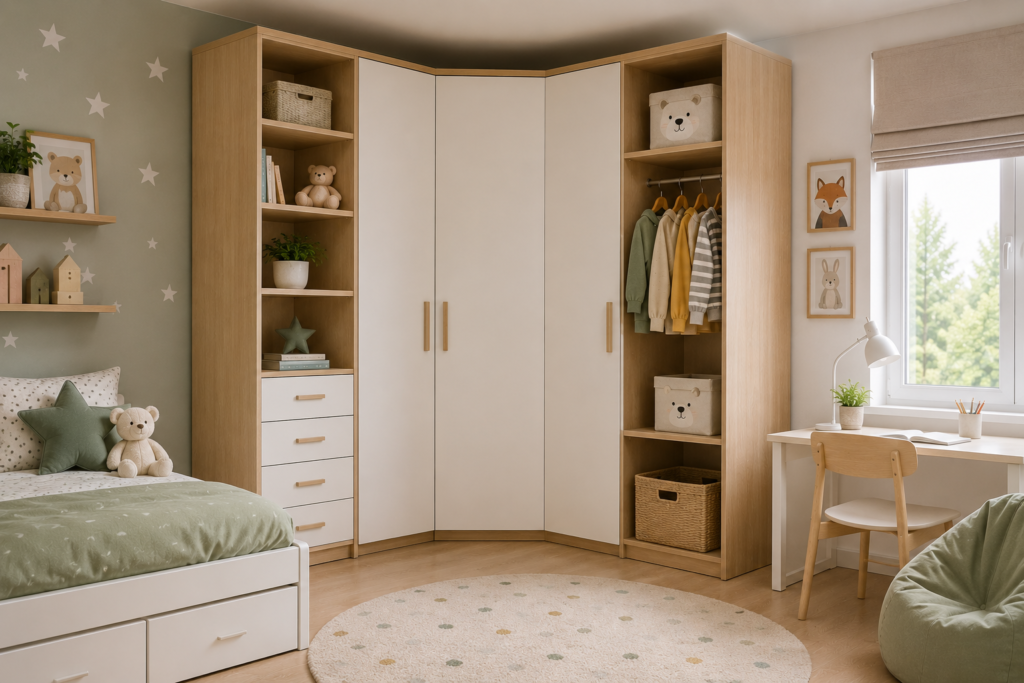
Corners are often wasted areas in small rooms. A corner wardrobe turns that unused space into practical storage.
Because of their shape, these wardrobes can offer surprisingly large capacity without blocking the center of the room.
Advantages
- makes use of difficult corners
- provides a large amount of storage
- keeps the room more open
Disadvantages
- fewer design options
- may be more expensive
Best For
Small rooms with awkward layouts or empty corners.
4. Open Clothing Storage Systems
Open wardrobes, clothing racks, and modular storage systems are a modern alternative to traditional wardrobes.
They make a room feel lighter visually and can be adjusted as the child grows.
Advantages
- inexpensive
- flexible and customizable
- easy for children to access
Disadvantages
- requires constant organization
- clothes are visible and can look messy
Best For
Minimalist rooms and children who need easy access to everyday clothing.
5. Wardrobes with Sliding Doors
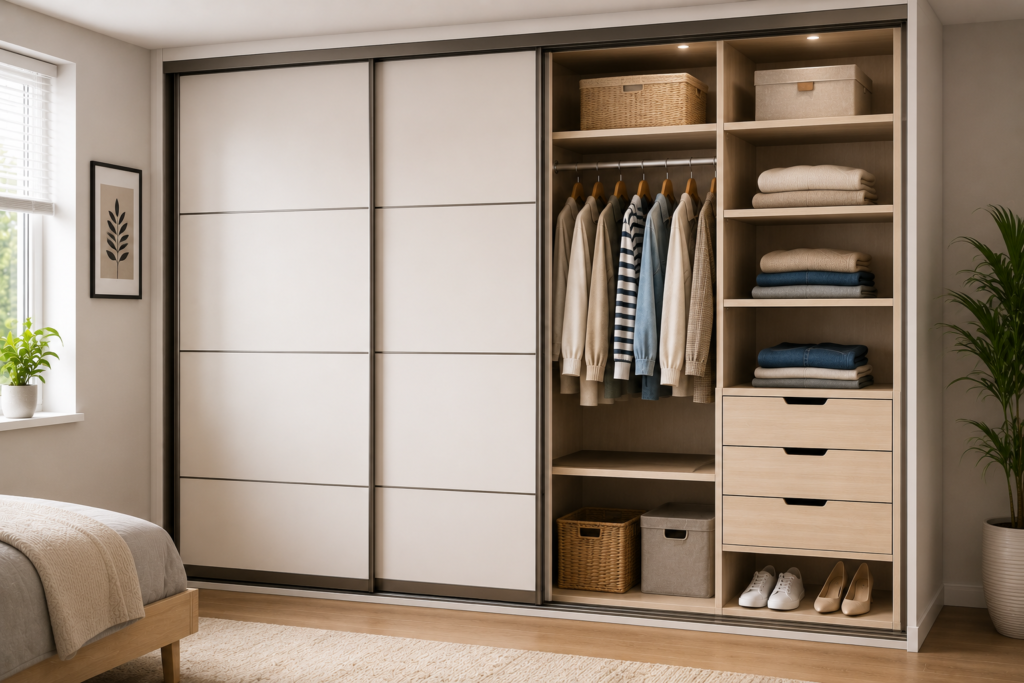
Traditional doors require extra space to open. Sliding doors move sideways, making them a smart choice for tight rooms.
Many sliding-door wardrobes also include a combination of shelves and hanging rails.
Advantages
- saves space around the wardrobe
- modern appearance
- suitable for narrow rooms
Disadvantages
- usually more expensive
- one side of the wardrobe is always closed
Best For
Small rooms where there is not enough space for doors to swing open.
Wardrobe Comparison Table
| Wardrobe Type | Storage Capacity | Space Saving | Organization | Best For | Main Drawback |
|---|---|---|---|---|---|
| Tall Narrow Wardrobe | Medium | ★★★★★ | ★★★☆☆ | Tiny rooms | Limited hanging space |
| Wardrobe with Drawers & Shelves | ★★★★★ | ★★★★☆ | ★★★★★ | Everyday family use | Takes more width |
| Corner Wardrobe | ★★★★★ | ★★★★★ | ★★★★☆ | Awkward layouts | Higher price |
| Open Storage System | ★★★☆☆ | ★★★★☆ | ★★★☆☆ | Minimalist rooms | Looks messy easily |
| Sliding Door Wardrobe | ★★★★★ | ★★★★★ | ★★★★☆ | Narrow rooms | More expensive |
What Makes a Good Wardrobe for a Small Kids’ Room?
A good small-space wardrobe is not necessarily the smallest one. It is the wardrobe that uses space efficiently.
Look for features such as:
- adjustable shelves
- built-in drawers
- hanging rails at the correct height
- storage boxes and organizers
- vertical storage options
A well-designed wardrobe should reduce the need for additional furniture in the room.
When a Large Wardrobe Is a Bad Idea
Many parents assume that buying the biggest wardrobe possible will solve all storage problems. In reality, an oversized wardrobe can make a small room feel cramped and leave no space for playing or studying.
Avoid wardrobes that:
- block windows or natural light
- prevent doors from opening fully
- leave little walking space
- have unnecessary depth
Sometimes a tall, narrow wardrobe provides more practical storage than a wide, bulky one.
Common Mistakes to Avoid
The most common mistake is buying a wardrobe without planning what will actually be stored inside.
Other mistakes include:
- choosing only hanging storage and forgetting shelves
- ignoring vertical space
- buying furniture that children cannot easily reach
- not measuring the room before purchasing
The best storage solution should work for both parents and children.
How to Choose the Right Wardrobe for Your Child
Before purchasing a wardrobe, consider the child’s age, the room size, and storage needs.
For very small rooms, a tall narrow wardrobe or corner model usually works best. If the child has many clothes and accessories, a wardrobe with drawers and shelves may be a better investment.
Think about how the room will function in the next several years. A flexible wardrobe can grow with your child and prevent you from replacing furniture too soon.
Final Recommendation
For most small kids’ rooms, a wardrobe with a combination of shelves, drawers, and hanging space is usually the best all-around choice.
For extremely small rooms, tall narrow wardrobes and corner wardrobes maximize storage while preserving valuable floor space. Sliding doors are ideal when every centimeter matters, and open systems can work well in minimalist spaces.
The perfect wardrobe is not the biggest one you can fit into the room. It is the one that keeps everything organized while leaving enough free space for your child to play, learn, and relax.