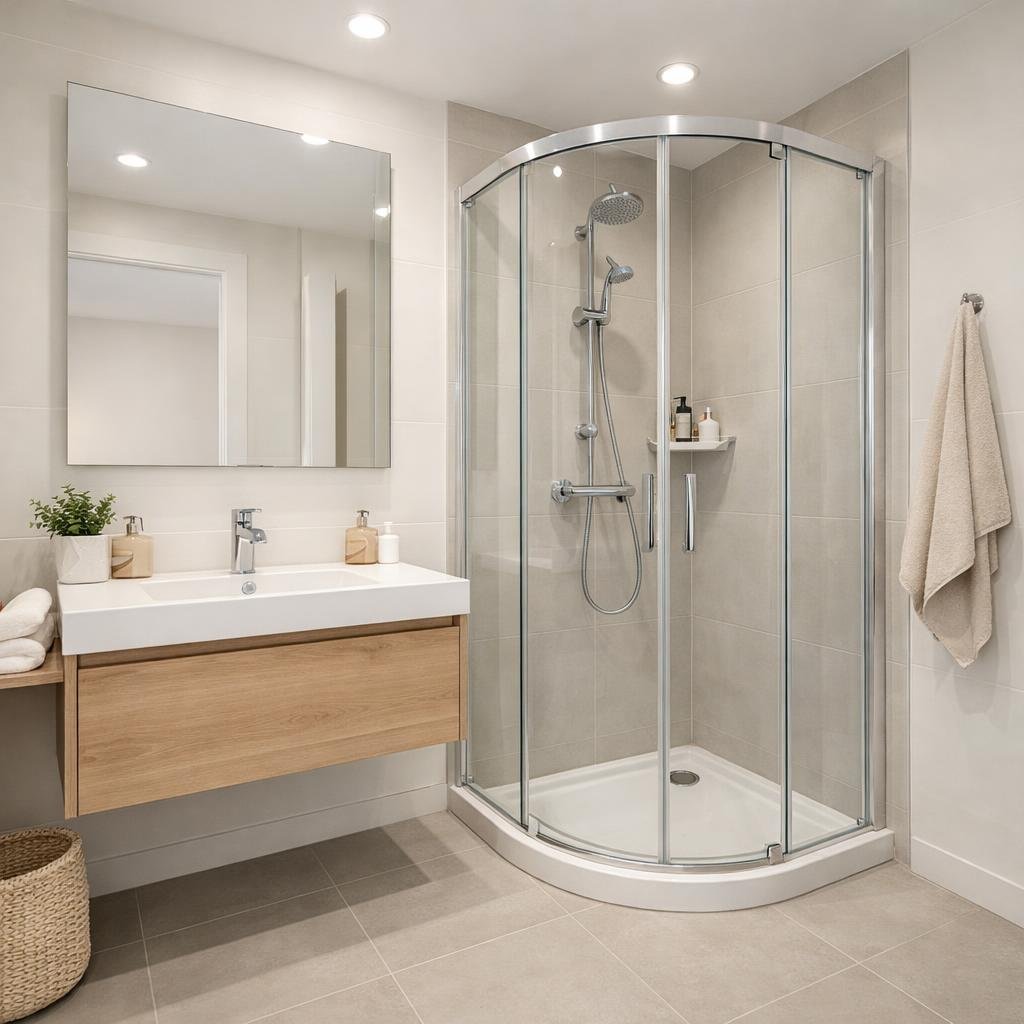

Small bathrooms often have one major problem: there simply isn’t enough floor space for traditional storage furniture. A standard cabinet may be too wide, a deep vanity can make the room feel cramped, and open shelves can quickly become cluttered.
The good news is that you don’t need a large piece of furniture to create useful bathroom storage. Narrow bathroom storage cabinets can make use of small gaps beside a vanity, toilet, shower, or doorway while keeping everyday essentials organized and easy to reach.
The best option depends on how much storage you need, how much floor space you have, and whether you prefer closed storage or open shelves. Some cabinets are better for towels and larger items, while others work well for toiletries, cleaning supplies, or small bathroom accessories.
In this guide, we’ll compare the most useful types of narrow bathroom storage cabinets for small bathrooms and explain what to look for before buying one.
Why Narrow Storage Cabinets Work Well in Small Bathrooms
A small bathroom doesn’t necessarily need less storage. It needs more efficient storage.
A narrow cabinet can take advantage of vertical space without taking up much floor area. This is especially useful in bathrooms where every few inches matter.
For example, a tall cabinet with a small footprint can provide several shelves while occupying much less floor space than a wide bathroom cupboard.
Narrow storage is particularly useful for:
- Toiletries and skincare products
- Extra toilet paper
- Towels and washcloths
- Hair styling tools
- Cleaning supplies
- Small bathroom accessories
- Spare soap and personal-care products
Before choosing a cabinet, measure the available space carefully. A cabinet that looks compact online may still be too deep for a narrow passageway.
Best Types of Narrow Bathroom Storage Cabinets
There are several types of storage solutions that work particularly well in small bathrooms. Each has different advantages.
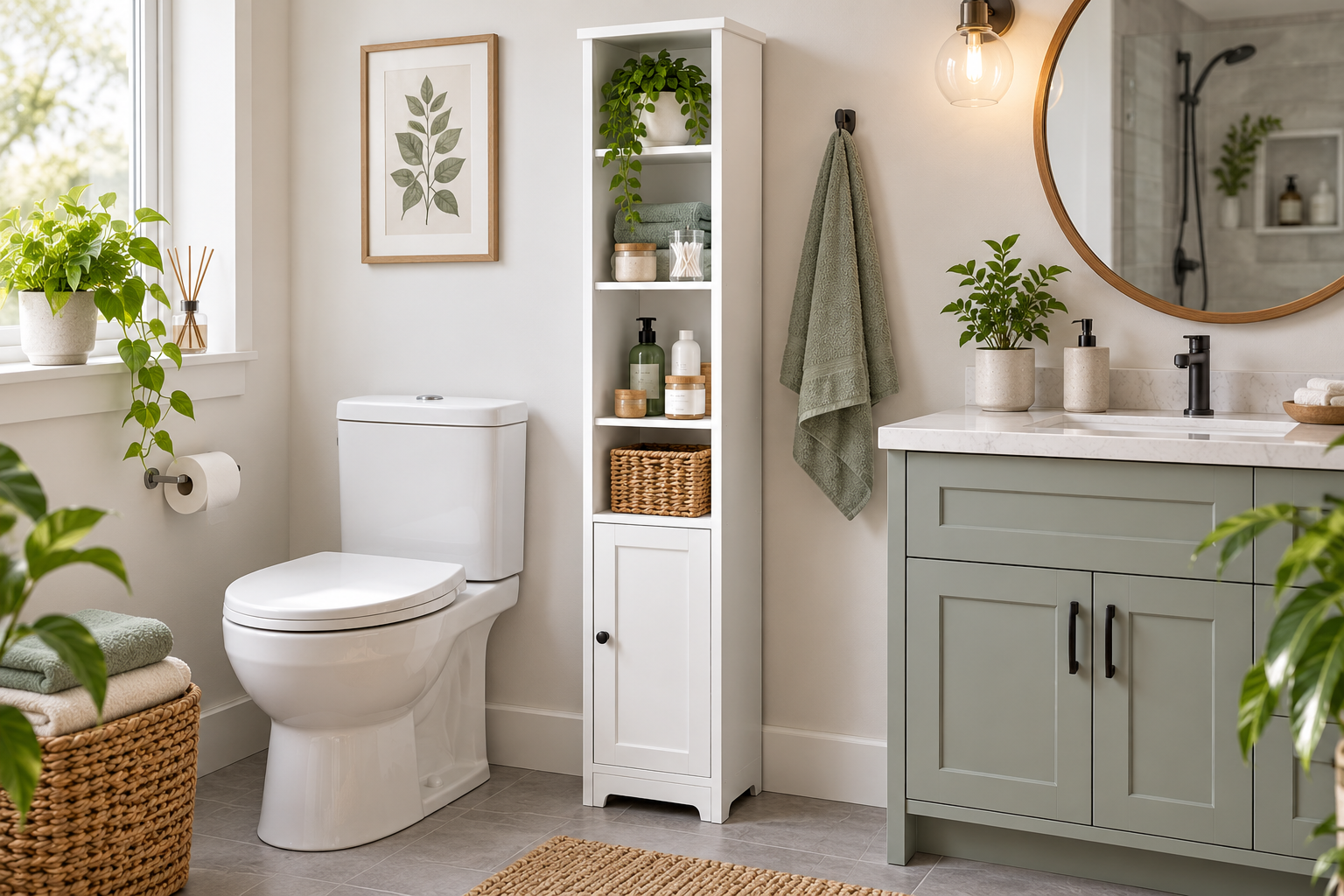
1. Slim Freestanding Bathroom Cabinets
A slim freestanding cabinet is one of the easiest options because it doesn’t require permanent installation.
These cabinets are useful when you need:
- Closed storage
- Several shelves
- A dedicated place for toiletries
- Storage that can be moved later
A tall, narrow design is generally more useful in a small bathroom than a short and wide cabinet. Vertical storage allows you to use unused wall height while keeping the floor area relatively clear.
The main disadvantage is that freestanding cabinets still take up some floor space. You also need to make sure the cabinet doesn’t interfere with doors, drawers, or movement around the bathroom.
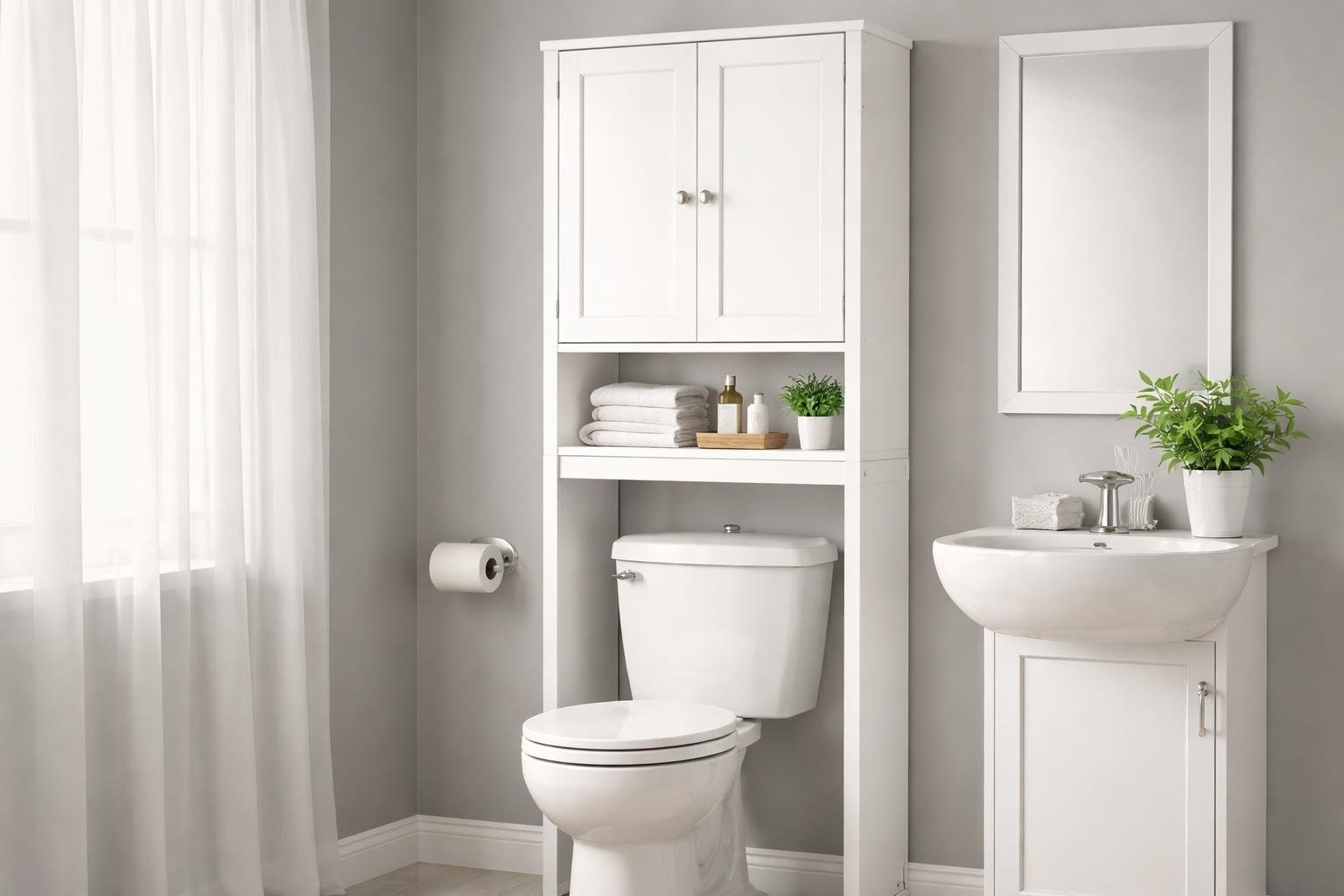
2. Over-the-Toilet Storage Cabinets
Over-the-toilet cabinets make use of one of the most commonly wasted areas in a bathroom.
They can provide storage without using additional floor space, which makes them particularly attractive for very small bathrooms.
These cabinets are suitable for:
- Toilet paper
- Towels
- Toiletries
- Decorative items
- Small baskets
However, they aren’t suitable for every bathroom. Measure the toilet and the available wall height before buying one, and make sure the cabinet doesn’t interfere with the toilet tank or nearby fixtures.
If you have already considered this type of storage, a narrow freestanding cabinet may be a better alternative when you need more flexible placement.
3. Wall-Mounted Narrow Cabinets
Wall-mounted cabinets are another strong option when floor space is limited.
Because the cabinet is attached to the wall, the floor underneath remains open. This can make a small bathroom feel less crowded and also makes cleaning the floor easier.
Wall-mounted cabinets work particularly well above:
- A vanity
- A sink
- A toilet
- A narrow unused wall section
The disadvantage is installation. You need to make sure the wall can support the cabinet and that it is securely mounted.
4. Corner Bathroom Cabinets
Corners are often difficult to use efficiently, but a corner cabinet can turn this unused space into practical storage.
A corner cabinet is especially useful when the walls around the vanity or toilet are already occupied.
Look for a design with doors that can open fully without hitting another fixture. A cabinet that technically fits the corner but blocks a doorway or drawer isn’t a useful solution.
5. Slim Rolling Bathroom Carts
A narrow rolling cart isn’t technically a cabinet, but it can be one of the most practical solutions for extremely small bathrooms.
These carts are useful because they can be moved when necessary. You can keep them between a vanity and a wall, next to the toilet, or beside a bathtub.
They are particularly convenient for:
- Hair products
- Cosmetics
- Cleaning supplies
- Toilet paper
- Small towels
The trade-off is that open carts provide less visual concealment than a closed cabinet.
Narrow Bathroom Storage Cabinet Comparison
| Storage Type | Best For | Floor Space | Installation | Storage Privacy | Flexibility |
|---|---|---|---|---|---|
| Slim freestanding cabinet | General bathroom storage | Low | Easy | High | High |
| Over-the-toilet cabinet | Very small bathrooms | Very low | Easy–Moderate | High | Low |
| Wall-mounted cabinet | Maximum floor space | Minimal | Moderate | High | Moderate |
| Corner cabinet | Unused corners | Low | Easy–Moderate | High | Moderate |
| Rolling storage cart | Flexible everyday storage | Very low | None | Low | Very high |
There isn’t one type that is best for every bathroom. The right choice depends on where your unused space is located.
For example, a bathroom with an empty corner may benefit from a corner cabinet, while a bathroom with almost no available floor space may be better suited to a wall-mounted unit.
What to Look for When Choosing a Narrow Bathroom Cabinet
Measure the Width First
Width is usually the first measurement people consider, but it isn’t the only one that matters.
Measure:
- Available width
- Available depth
- Total height
- Door and drawer clearance
- Space needed for walking
Leave enough clearance around the cabinet so that the bathroom doesn’t become difficult to use.
Don’t Ignore Cabinet Depth
A cabinet can be narrow but still feel bulky if it is too deep.
This is especially important when placing storage next to a toilet, vanity, bathtub, or doorway.
For narrow bathrooms, a slightly taller cabinet with a shallow depth can often be more practical than a short but deep cabinet.
Look for Adjustable Shelves
Adjustable shelves make a cabinet much easier to organize.
Tall bottles, toilet paper packages, folded towels, and small containers all require different amounts of vertical space. Fixed shelves can leave you with wasted gaps.
If you expect to store different types of bathroom products, adjustable shelving is worth prioritizing.
Consider Closed vs. Open Storage
Closed cabinets are useful when you want the bathroom to look clean and organized even when the shelves aren’t perfectly arranged.
Open shelving, on the other hand, makes frequently used items easier to access.
A combination of both can be useful: closed compartments for less attractive or rarely used items and open shelves for everyday products.
Check Moisture Resistance
Bathrooms are humid environments, so materials matter.
Look for cabinets designed for bathroom use and check the manufacturer’s information regarding moisture resistance. Avoid assuming that a cabinet is suitable for a humid room simply because it looks like bathroom furniture.
Good ventilation also helps protect bathroom furniture over time.
How to Organize a Narrow Bathroom Cabinet
A narrow cabinet can hold surprisingly many items when it is organized vertically.
Keep Everyday Items at Eye Level
Place frequently used products where they are easiest to reach.
For example:
- Toothpaste
- Skincare
- Hair products
- Hand towels
- Daily toiletries
Less frequently used items can go on the highest shelves.
Use Small Baskets
Small baskets prevent individual products from becoming scattered across several shelves.
You can create separate categories for:
- Hair care
- Skincare
- First-aid supplies
- Cleaning products
- Extra toiletries
This also makes it easier to remove an entire category when cleaning or restocking.
Use the Cabinet Door
If the cabinet has a suitable interior door surface, a small organizer can provide additional storage for lightweight items.
This can be useful for:
- Hair accessories
- Brushes
- Small bottles
- Cleaning cloths
However, avoid adding too much weight to the door because it can affect the hinges.
Narrow Cabinet vs. Open Shelving
Both options can work well in a small bathroom, but they create different results.
A narrow cabinet is better when you want:
- Hidden clutter
- A cleaner visual appearance
- Protection from dust
- More privacy
- Organized closed storage
Open shelves are better when you want:
- Quick access
- Lower cost
- Easy visibility
- Decorative storage
- Simple installation
If your bathroom already feels visually busy, a cabinet with doors may be the better choice. If the room is clean and minimalist, open shelves can provide useful storage without making the space feel heavy.
Common Mistakes to Avoid
Buying Without Measuring
This is the biggest mistake.
Don’t rely only on the product’s listed width. Measure your actual bathroom space, including door swings and nearby fixtures.
Choosing Storage That Is Too Deep
Extra depth may seem useful, but it can make a narrow bathroom difficult to navigate.
Using Every Shelf for Small Items
A cabinet becomes harder to use when every shelf is filled with individual products.
Use containers or baskets to group similar items together.
Ignoring Stability
Tall narrow cabinets have a smaller footprint, which means stability is important. If the manufacturer recommends securing the cabinet to the wall, follow those instructions.
Forgetting About Cleaning
Furniture placed directly on the floor can make cleaning more difficult. Wall-mounted cabinets or furniture with enough clearance underneath can make bathroom maintenance easier.
Which Narrow Bathroom Storage Option Should You Choose?
If you want the most versatile solution, a slim freestanding cabinet is a good starting point because it provides enclosed storage and can usually be moved later.
If your bathroom has almost no floor space, consider a wall-mounted cabinet or an over-the-toilet solution.
If you have an unused corner, a corner cabinet can make better use of the room without interfering with the main walkway.
And if you want maximum flexibility, a narrow rolling cart can be moved whenever you need access to the surrounding area.
The key is not simply finding the narrowest cabinet. The goal is to find a storage solution that fits the available space while still giving you enough usable storage.
FAQ
What is the best storage for a very small bathroom?
Wall-mounted cabinets, over-the-toilet storage, and narrow vertical cabinets can all work well. The best option depends on the available wall and floor space.
How deep should a narrow bathroom cabinet be?
There is no universal ideal depth. Choose a cabinet that provides enough storage without reducing the comfortable walking area or interfering with bathroom fixtures.
Are tall bathroom cabinets safe?
Tall cabinets should be stable and installed according to the manufacturer’s instructions. If an anti-tip or wall-anchoring system is provided, it should be used.
Is open or closed bathroom storage better?
Closed storage hides clutter and creates a cleaner appearance, while open storage provides faster access. Many small bathrooms benefit from using both.
How can I create more bathroom storage without remodeling?
Use vertical space, narrow cabinets, over-the-toilet storage, wall-mounted shelves, door organizers, and slim rolling carts. These options can add storage without changing the bathroom layout.
Final Thoughts
A small bathroom doesn’t have to mean limited storage. The most effective approach is to use vertical space, narrow gaps, corners, and unused wall areas instead of trying to fit a large cabinet into a small room.
Before buying, measure the available space carefully and consider how you actually use the bathroom. A slim cabinet with adjustable shelves may be more useful than a larger cabinet with a deeper footprint.
For many small bathrooms, the best storage solution isn’t the biggest one — it’s the one that provides enough organization while taking up as little usable space as possible.