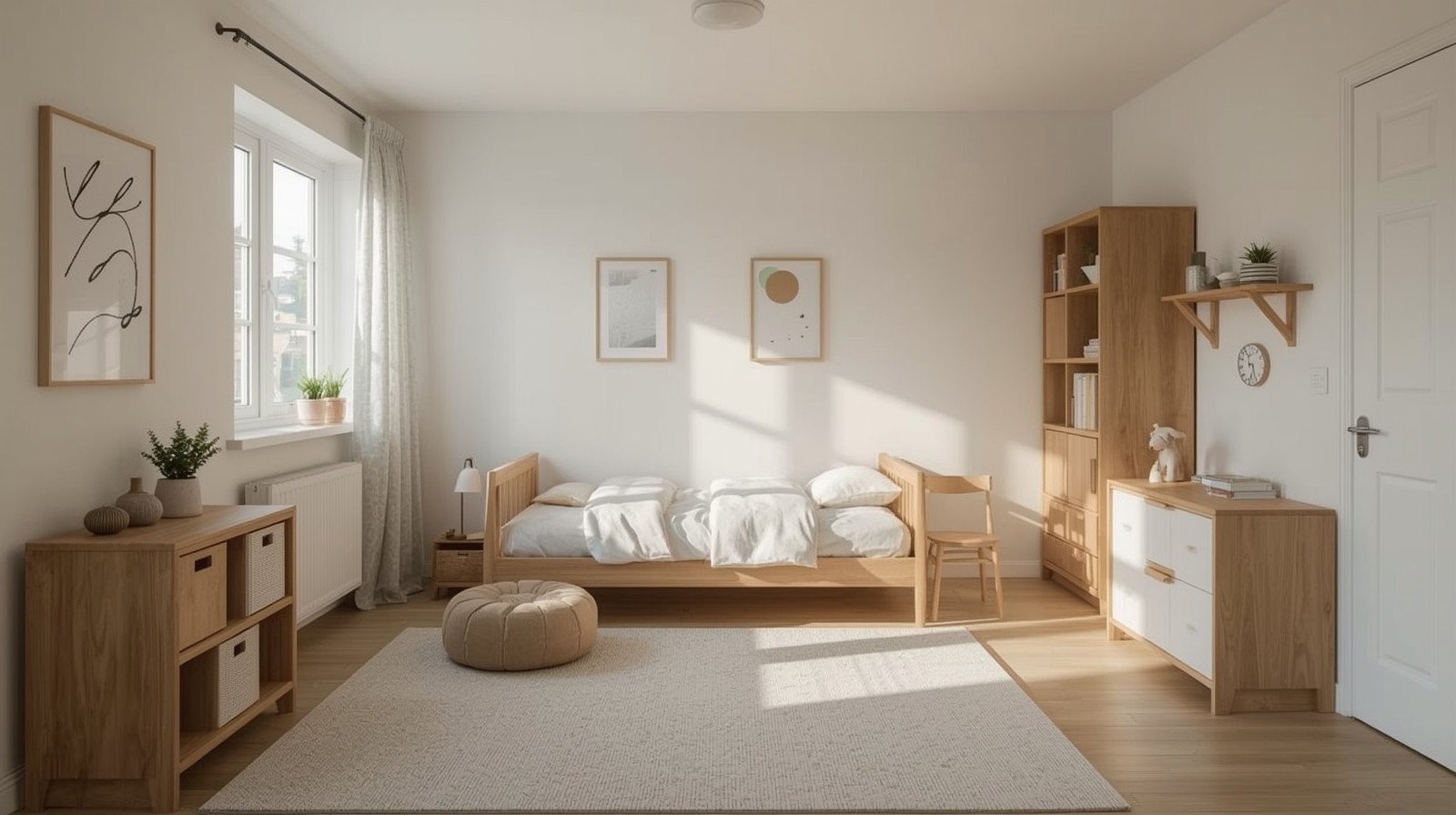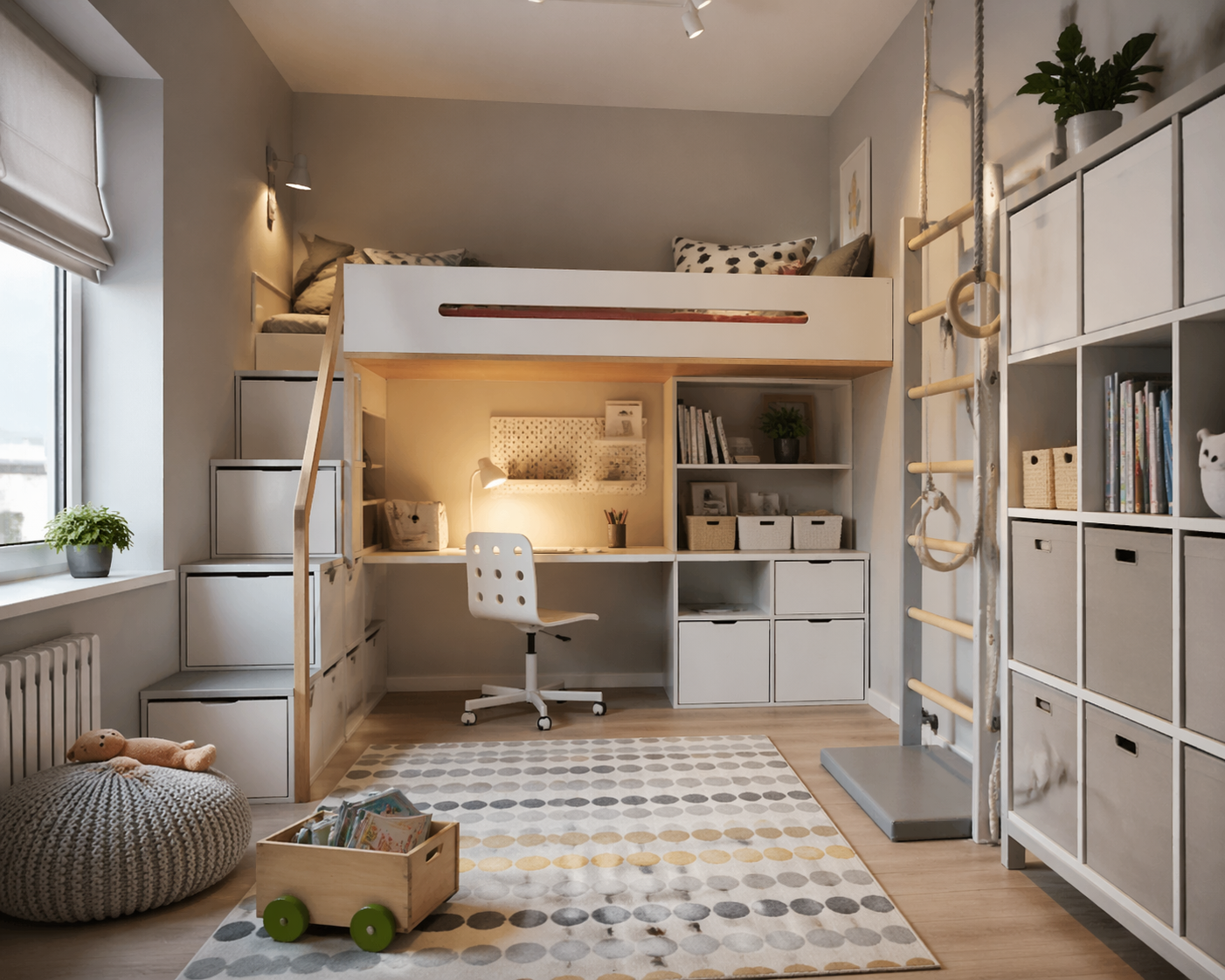

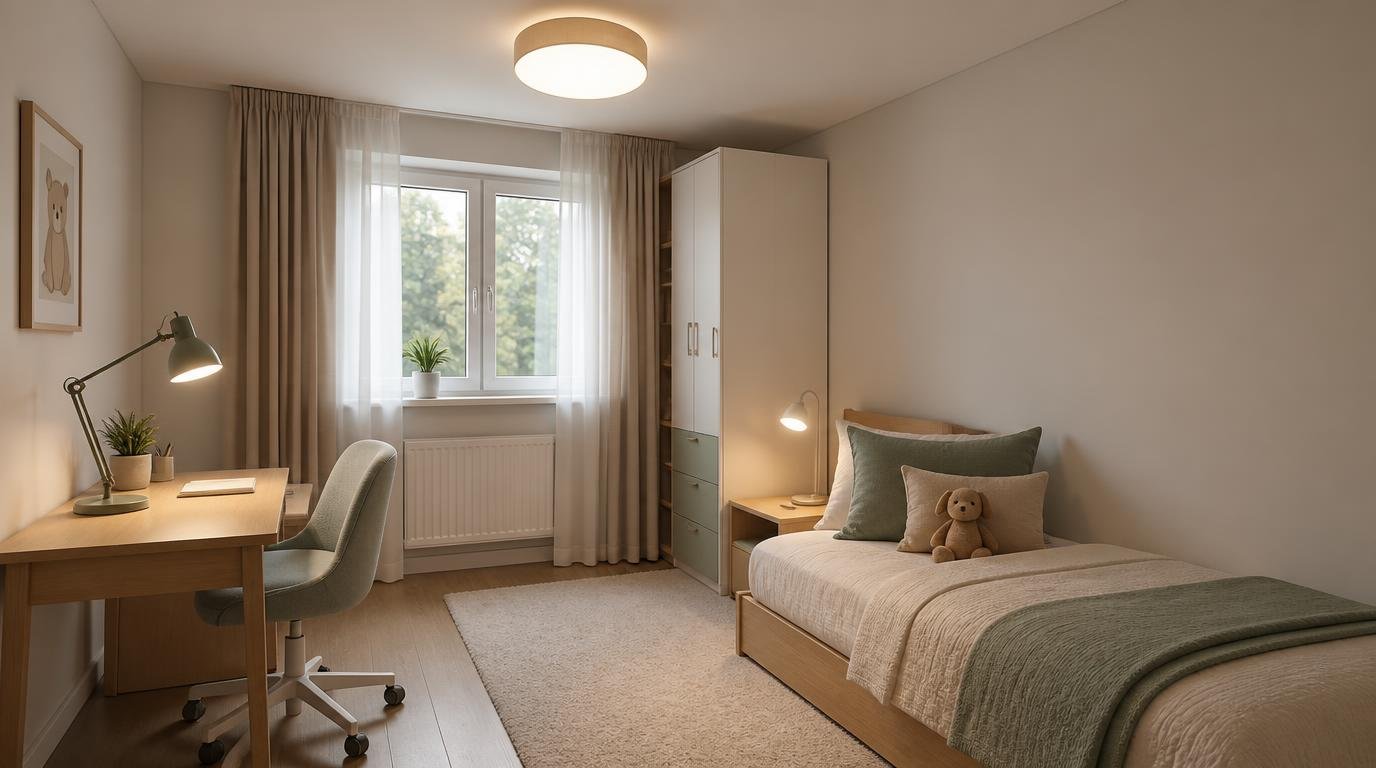
A small kids’ room can feel dark and cramped even when it has enough natural light. The problem is often not the size of the room but the way lighting is arranged.
One ceiling light may be enough to illuminate the room, but it rarely creates the right atmosphere for reading, playing, doing homework, and getting ready for bed.
The good news is that you do not need a major renovation to improve the lighting in a small kids’ room. A few carefully chosen light sources can make the room feel more comfortable, functional, and visually open.
In this guide, we’ll look at practical kids’ room lighting ideas, from compact ceiling fixtures and wall lights to reading lamps and soft night lights.
Why Lighting Matters in a Small Kids’ Room
In a compact room, every design decision has a visible effect. Poor lighting can make corners look darker, emphasize shadows, and make the room feel smaller.
Good lighting does the opposite.
Instead of relying on one strong light source, consider using several smaller sources for different purposes:
- General lighting for the whole room
- Task lighting for reading and homework
- Bedside lighting for quiet activities
- Accent lighting for atmosphere
- Night lighting for nighttime movement
This approach also makes the room more flexible. Bright lighting can be used during play or homework, while softer lighting can create a calmer environment in the evening.
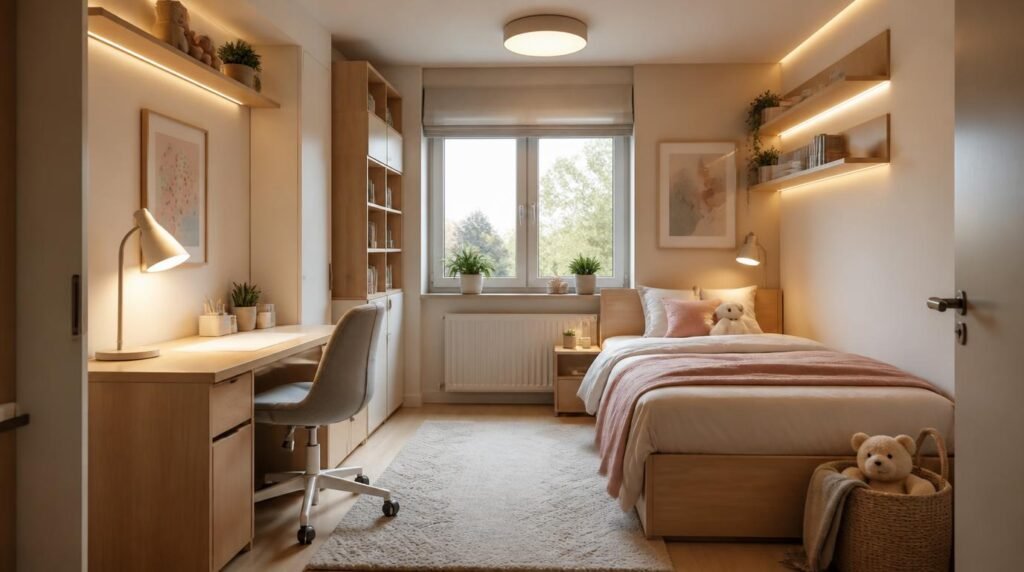
1. Choose a Low-Profile Ceiling Light
The ceiling fixture is usually the main source of light in a child’s bedroom, but it does not need to be large or elaborate.
For a small room, a flush-mount or low-profile ceiling light is often a practical choice. It takes up very little visual space and does not interfere with furniture placement.
Look for:
- A compact design
- Even light distribution
- A diffuser that reduces glare
- A dimmable option if possible
- A style that can work as the child gets older
A simple white or neutral fixture can also blend into the ceiling instead of becoming another visually dominant element.
2. Add a Reading Light Beside the Bed
If your child likes reading before bedtime, a dedicated reading light can be much more useful than turning on the main ceiling fixture.
A small bedside lamp works well when there is enough room for a nightstand. If the bedside area is already tight, consider a wall-mounted reading light instead.
Wall-mounted lights have another advantage: they leave the surface below them available for books, a water bottle, or other essentials.
When choosing a reading light, look for an adjustable design that allows the light to be directed toward the book rather than directly toward the child’s eyes.
3. Use a Small Desk Lamp for Homework
Once a child starts doing homework, drawing, or crafts in the bedroom, a dedicated desk light becomes useful.
A desk lamp should illuminate the work surface without creating unnecessary glare.
Useful features include:
- Adjustable arm or shade
- Stable base
- Easy-to-use switch
- Multiple brightness settings
- Compact footprint
- LED lighting
A flexible lamp can also adapt as the desk setup changes over time.
For a particularly small desk, look for a slim lamp with a narrow base or a clamp-style design, provided the desk is suitable for it.
4. Consider Wall Lights Instead of Table Lamps
Table lamps are useful, but they take up valuable surface space.
In a very small kids’ room, wall lighting can solve this problem.
A compact wall sconce beside the bed, reading chair, or desk can provide focused illumination without occupying a nightstand or desk.
This can be particularly helpful when several functions need to fit into one small room.
Before installing a wall light, consider:
- Where the electrical outlet is located
- Whether the light will be within a child’s reach
- How the switch will be accessed
- Whether the fixture has exposed hot surfaces
- Whether the installation needs professional electrical work
For rental homes, plug-in wall lights can offer a less permanent alternative.
5. Add a Soft Night Light
A night light serves a completely different purpose from a ceiling fixture.
Its job is not to illuminate the entire bedroom. Instead, it provides just enough light for a child to see the immediate surroundings without turning on the main light.
Good locations include:
- Near the bedroom door
- Beside the bed
- Along a wall
- Near the path to the bathroom
A soft, low-level light is generally more appropriate for nighttime than a bright overhead fixture.
For younger children, simple designs can also make the room feel more familiar and comforting without adding another large decorative object.
6. Try Under-Shelf or Under-Bed Lighting
Small decorative lights can create visual interest without taking up floor space.
For example, a subtle LED strip can be installed under a suitable shelf or another fixed surface to create a soft glow.
This works particularly well when the room has dark corners.
The goal is not to make the entire room brighter. Instead, small areas of indirect light can help eliminate the feeling that everything is illuminated from one point in the middle of the ceiling.
For children’s rooms, choose products with protected wiring and install them where children cannot easily pull, chew, or tamper with the components.
7. Use Lighting to Highlight Artwork
Lighting does not have to be purely functional.
A small picture light or directional wall light can highlight:
- Children’s artwork
- Framed illustrations
- A gallery wall
- A favorite poster
- Decorative objects
This is a simple way to add personality without adding more furniture.
In a small room, one carefully lit feature can have more visual impact than filling every wall with decorations.
8. Choose Warm Lighting for the Evening
The color of the light can significantly affect how a room feels.
For a bedroom, warmer light generally creates a softer and more relaxed atmosphere than very cool white light.
A practical approach is to use:
During the day: brighter general lighting for playing, dressing, and activities.
During homework: focused task lighting at the desk.
Before bed: softer bedside or accent lighting.
During the night: a very low-level night light if needed.
This allows the same room to support different activities without changing the furniture arrangement.
9. Make Shared Kids’ Rooms Easier to Light
Lighting becomes more complicated when two children share one bedroom.
The main problem is that both children may not want the same amount of light at the same time.
For example, one child may want to read while the other is ready to sleep.
Instead of relying on one central light, give each child an individual light source.
Possible combinations include:
| Room setup | Useful lighting |
|---|---|
| Two beds | Individual reading lights |
| Shared desk | One adjustable desk lamp |
| Bunk beds | Separate low-level reading lights |
| Small shared room | Ceiling light + individual bedside lights |
| Older children | Individual task lights with independent controls |
Independent lighting gives each child more control without requiring additional floor space.
10. Pick Fixtures That Can Grow With the Child
Children’s tastes change quickly.
A fixture that looks perfect for a five-year-old may feel too childish a few years later.
Instead of choosing every light around a specific theme, consider using a neutral functional fixture and adding personality through smaller, replaceable elements.
For example:
- Neutral ceiling light
- Simple reading lamp
- Replaceable lampshade
- Decorative night light
- Removable accent lighting
This approach can reduce the need to replace the entire lighting setup when the room changes from a young child’s bedroom into a school-age room or teen space.
11. Avoid Making the Room Too Bright
More light is not automatically better.
A single very bright ceiling fixture can create strong contrast between the center of the room and darker corners.
A better approach is to distribute light between several sources.
For example:
Ceiling light + desk lamp + bedside light
can be more flexible than:
One extremely bright ceiling light
The first setup allows you to use only the light you need for each activity.
12. Think About Safety Before Buying
Children’s rooms require a little more attention to fixture placement than adult bedrooms.
Before buying a light, consider:
- Can the child easily reach it?
- Could it be knocked over?
- Are cords secured?
- Does the fixture become hot?
- Is it positioned away from active play areas?
- Could it be pulled from a wall or shelf?
- Is it suitable for the child’s age?
Avoid placing easily reachable cords where they could become a hazard. Hanging fixtures should also be positioned carefully, particularly around bunk beds and active play areas.
Always follow the manufacturer’s installation and safety instructions.
Best Lighting Combinations for Different Kids’ Rooms
You don’t need every type of light listed above.
The right combination depends on how the room is used.
For a toddler’s bedroom
Try:
- Low-profile ceiling light
- Soft night light
- Small bedside light for parents
For a school-age child
Try:
- Ceiling light
- Adjustable desk lamp
- Bedside reading light
- Optional night light
For a shared bedroom
Try:
- Central ceiling light
- Individual reading lights
- Shared desk lamp
- Small night light
For a small teen bedroom
Try:
- Minimal ceiling fixture
- Adjustable desk lamp
- Wall-mounted reading light
- Optional decorative accent light
Common Kids’ Room Lighting Mistakes
Using only one ceiling light
This often leaves corners dark and gives you very little control over the atmosphere.
Choosing a lamp that is too large
A large lamp can overwhelm a small desk or bedside table.
Ignoring the desk area
A child who regularly reads, draws, or studies needs useful task lighting rather than relying entirely on the ceiling fixture.
Prioritizing appearance over function
A fun-shaped lamp can look great, but it still needs to provide appropriate light for its intended purpose.
Leaving cords unsecured
In a child’s room, cable placement matters just as much as the appearance of the fixture.
Choosing something the child will quickly outgrow
A neutral base with replaceable decorative elements can be more practical than a strongly themed lighting setup.
How to Plan Lighting for a Small Kids’ Room
Before buying anything, walk through the room and identify where different activities happen.
Ask:
- Where does the child sleep?
- Where do they read?
- Where do they do homework or draw?
- Where do they get dressed?
- Where are the darkest corners?
- Where are the existing electrical outlets?
- Which lights need to be accessible to the child?
Then choose lighting based on those activities rather than buying fixtures first.
A small bedroom usually does not need many lights. It needs the right lights in the right places.
Final Thoughts
The best lighting for a small kids’ room is not necessarily the brightest or most decorative.
A practical setup combines different types of lighting so the room can change throughout the day. A compact ceiling fixture provides general illumination, a desk lamp supports homework and creative activities, a bedside light makes reading easier, and a soft night light can provide gentle illumination after dark.
By choosing compact fixtures and placing them according to how the room is actually used, you can create a kids’ bedroom that feels more comfortable without taking up additional floor space.