
A small entryway does not always have enough room for a full-size bench. In a narrow hallway, even a few extra inches of furniture depth can make the entrance feel cramped and interfere with the path from the front door.
But having somewhere to sit while putting on or taking off shoes can make a small entryway much more practical.
The key is choosing a bench based on the actual dimensions of your space rather than simply choosing the smallest-looking option.
A good small entryway bench should provide useful seating, fit comfortably against the wall, and leave enough room for people to move around it.
In this guide, we’ll look at the best types of entryway benches for small spaces, what dimensions to consider, and which features are actually worth paying for.
Why a Bench Can Work in a Small Entryway
At first, a bench might seem like unnecessary furniture in a small hallway.
However, a compact bench can solve several practical problems at once.
It can provide:
- A place to sit while putting on shoes
- A convenient spot for a child to sit
- A small amount of shoe storage
- A temporary place to put a bag
- A visual anchor for an otherwise empty wall
The important part is keeping the footprint controlled.
A bench that is too deep can make a narrow entrance harder to use, regardless of how attractive it looks.
What Size Bench Is Best for a Small Entryway?
Depth is usually the most important measurement.
For a compact hallway, a shallow bench is generally more practical than a standard deep bench.
As a starting point, look at benches around 10–14 inches deep when floor space is limited. The exact maximum depends on the width of your hallway and how much walking clearance you need. Current small-space guides commonly emphasize measuring the available passage before buying rather than relying on appearance alone.
For width, a bench around 30–40 inches can provide useful seating without dominating a small wall.
Seat height is another consideration. Around 17–19 inches is a practical range for an adult-sized bench.
But measurements should always be checked against the manufacturer’s specifications before purchasing.
Best Types of Entryway Benches for Small Spaces
Not every small entryway needs the same type of bench.
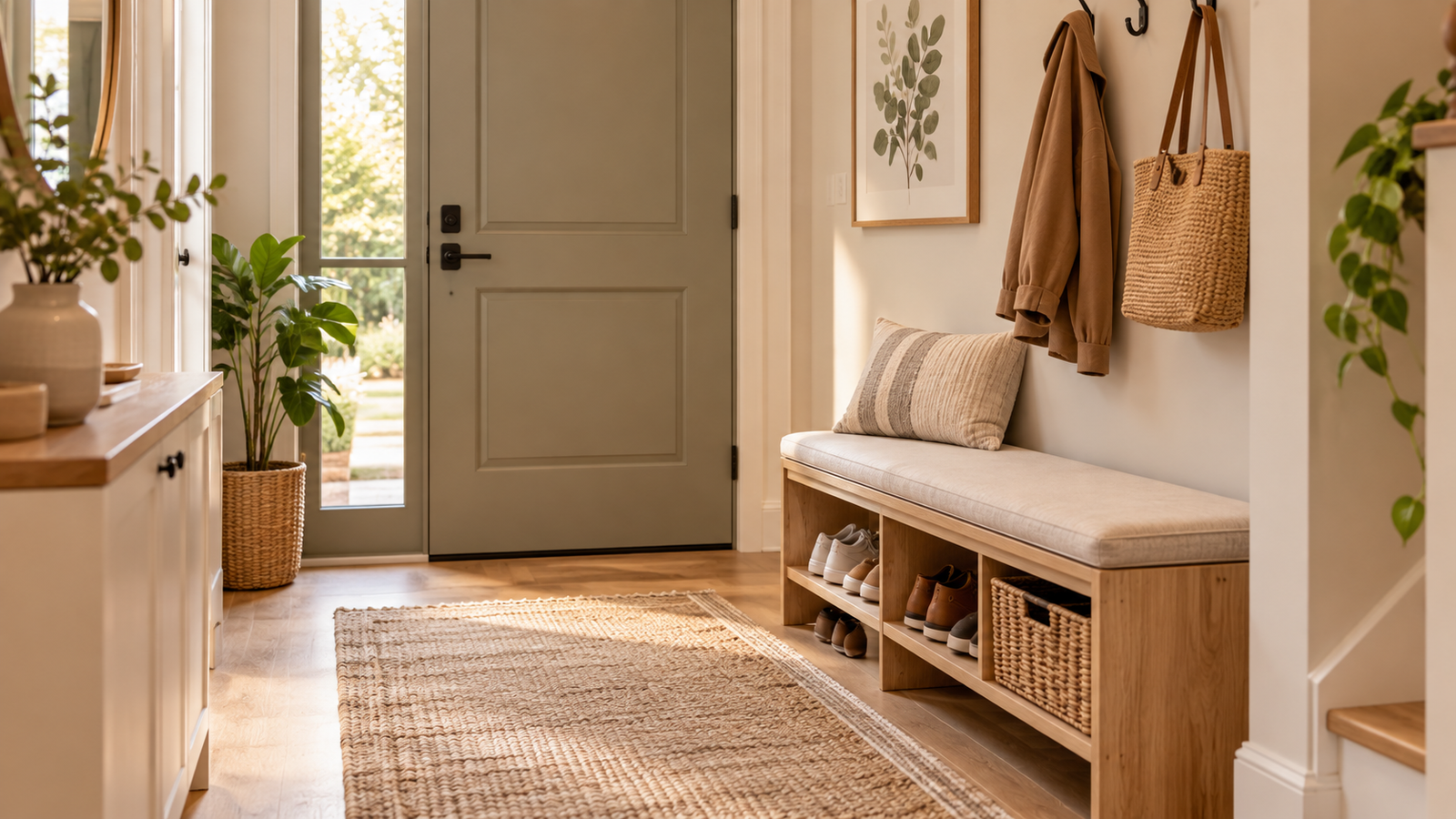
1. Slim Shoe Storage Bench
This is one of the most practical options for apartments.
The bench provides a place to sit, while the space underneath can hold everyday shoes.
Open shelves are particularly convenient because frequently worn shoes can be accessed immediately.
Best for:
Small apartments where seating and shoe storage are both needed.
2. Narrow Upholstered Bench
If you already have enough shoe storage, a simple upholstered bench may be a better choice.
It provides comfortable seating without adding another storage compartment.
Look for a streamlined design rather than a bulky padded frame.
Best for:
Entryways that already have separate shoe storage.
3. Small Wooden Bench
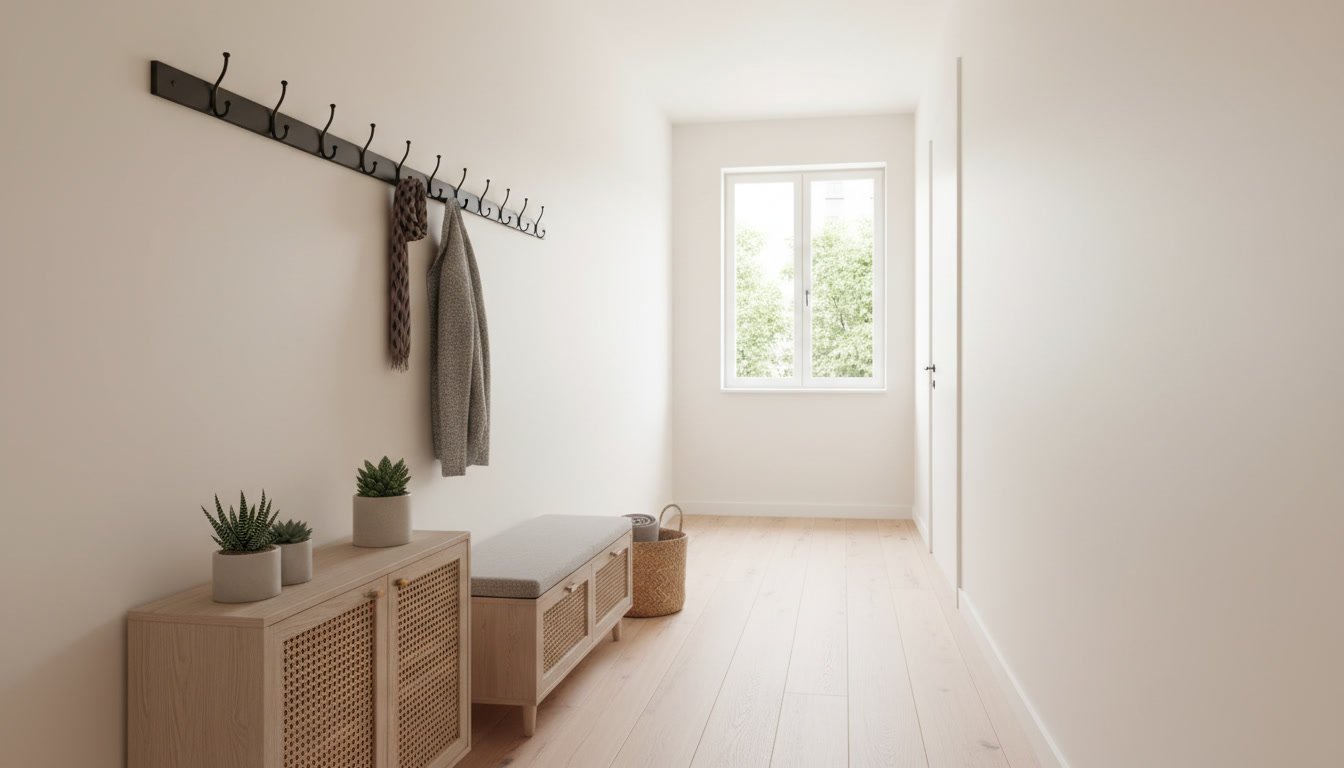
A simple wooden bench can make a small entryway feel lighter and less visually crowded.
It also tends to be easier to clean than heavily upholstered furniture.
Choose a design with relatively thin legs or an open base if you want to maintain a sense of visual space underneath.
Best for:
Minimalist and Scandinavian-style interiors.
4. Lift-Top Storage Bench
A lift-top bench hides shoes, bags, seasonal accessories, or other small items underneath the seat.
The advantage is visual cleanliness.
The disadvantage is that you need to open the seat whenever you want something inside.
That makes this type better for items you don’t need several times a day.
Best for:
Hiding occasional-use items in a small apartment.
5. Wall-Mounted Bench
A floating bench can be useful when floor space is extremely limited.
Because the floor beneath remains open, the entryway can feel less crowded and the area underneath can be easier to clean.
However, installation needs to be appropriate for the wall structure and the manufacturer’s requirements.
Best for:
Very narrow entryways where a conventional bench would interfere with the walking path.
6. Small Stool Instead of a Bench
Sometimes the best solution isn’t a bench at all.
A compact stool takes up less wall space and can be moved when necessary.
It can also work well in an entryway that needs to remain flexible.
Best for:
Extremely small entrances where a fixed bench would be too large.
Entryway Bench Types Compared
| Bench type | Space needed | Storage | Comfort | Best for |
|---|---|---|---|---|
| Slim shoe bench | Low | Excellent | Good | Shoes + seating |
| Upholstered bench | Low–medium | None | Excellent | Comfortable seating |
| Wooden bench | Low | Optional | Good | Minimal interiors |
| Lift-top bench | Medium | Excellent | Good | Hidden storage |
| Wall-mounted bench | Very low | Limited | Good | Extremely narrow halls |
| Small stool | Very low | None | Fair | Tiny entrances |
Measure Your Entryway Before Buying
Don’t choose a bench based on the product photo alone.
Before ordering, measure:
1. Available wall width
Measure the actual section of wall where the bench will sit.
2. Available depth
Measure from the wall toward the walking path.
This is particularly important in narrow hallways.
3. Door swing
Open the front door fully and check whether the bench would interfere with it.
Also check nearby closet or bathroom doors.
4. Walking clearance
Imagine someone carrying groceries, a backpack, or a large package through the entrance.
The walkway should still feel comfortable when the bench is in place.
5. Seat height
Consider who will actually use the bench.
A bench for adults may not be ideal if the primary user is a young child.
Open Storage or Hidden Storage?
If you choose a bench with storage, the next question is whether the storage should be open or closed.
Open storage
Open shelves are convenient for everyday shoes.
You can see what is there immediately, and there is no door or lid to open.
The downside is that everything remains visible.
Closed storage
Closed compartments create a cleaner appearance.
They work particularly well when the entryway is also part of a living room or another visible area.
The downside is that access can be slower.
Lift-top storage
A lift-top gives you a large hidden compartment under the seat.
It is useful for accessories and less frequently used items, but it may become inconvenient if you use the storage several times every day.
How to Make a Small Bench Look Less Bulky
Even a correctly sized bench can visually dominate a small entryway.
A few design choices can help.
Choose a light visual footprint
Legs that allow you to see the floor underneath can make the furniture appear less heavy.
Avoid unnecessary bulk
Thick arms, oversized cushions, and large side panels can make a compact bench look much larger.
Match the bench to the room
A neutral wood or simple upholstered design is less visually demanding than a highly decorative piece.
Don’t overload the seat
A bench should remain usable.
Avoid turning it into a permanent storage surface for bags, jackets, mail, and miscellaneous objects.
You may also like: Small Entryway Storage Ideas for Apartments
What to Put Under an Entryway Bench
If the bench has open space underneath, you don’t necessarily need to fill every inch.
A few useful options include:
- Everyday shoes
- A small shoe tray
- One or two baskets
- Slippers
- Reusable shopping bags
Avoid filling the entire area with random containers.
The goal is to make the bench more useful without creating another clutter zone.
What If Your Entryway Is Too Narrow for a Bench?
This is an important situation.
If a normal bench would significantly reduce the walking path, don’t force one into the room simply because the entryway looks better with seating.
Consider alternatives such as:
- A compact stool
- A fold-down wall seat
- A very shallow perch
- A nearby chair that can be moved when needed
A fold-down seat can be particularly useful in extremely narrow spaces because it can remain against the wall when not being used.
The right solution depends on the available wall structure and installation requirements.
Entryway Bench Ideas for Different Spaces
Small apartment entrance
Choose a slim shoe-storage bench with open shelves.
This combines two functions without requiring separate furniture.
Narrow hallway
Choose the shallowest practical bench and prioritize walking clearance.
Avoid deep upholstered furniture.
Studio apartment
A compact bench can help visually define the entrance without creating a separate room.
Choose a simple design that works with the adjacent living area.
Family entryway
Look for a slightly wider bench with durable, easy-to-clean materials.
If several people use the entrance every day, accessible shoe storage can be more useful than hidden compartments.
Rental apartment
A freestanding bench is usually the simplest option.
If considering a wall-mounted model, check the lease and make sure the installation method is appropriate.
Common Mistakes When Buying an Entryway Bench
Buying by width instead of depth
A bench can technically fit along the wall while still sticking too far into the hallway.
Forgetting the door swing
Always test the door before deciding where furniture will go.
Choosing a bench that is too deep
Extra depth rarely makes a small entryway more functional.
It usually just reduces the walking area.
Buying storage you don’t actually need
If you already have a shoe cabinet, another storage compartment may simply create unnecessary bulk.
Filling every available space
A small entryway often looks better when some floor and wall space remains visually open.
What to Look for When Shopping
Before buying an entryway bench, check these specifications:
- Overall width
- Overall depth
- Seat height
- Weight capacity
- Storage dimensions
- Material
- Assembly requirements
- Cleaning requirements
- Wall-mounting requirements, if applicable
- Return policy
Don’t rely only on the product title.
A bench described as “slim” can still be too deep for your particular hallway.
FAQ
What is the best bench for a very small entryway?
A shallow shoe-storage bench is a strong option when you need both seating and shoe storage. If the hallway is extremely narrow, consider a stool or wall-mounted alternative instead.
How deep should an entryway bench be?
For a small entryway, starting around 10–14 inches deep is reasonable, but the correct depth depends on the available walking space. Always measure the hallway before purchasing.
Is a storage bench better than a regular bench?
It depends on what your entryway needs. A storage bench is useful when you need to keep shoes or accessories nearby. If you already have adequate storage, a simple bench may be less bulky.
Can you put a bench in a narrow hallway?
Yes, but only if it leaves enough usable walking space and doesn’t interfere with doors. In very narrow hallways, a compact stool or wall-mounted seat may be more practical.
Are upholstered benches good for entryways?
They can be comfortable, but the material should be practical for an area exposed to outdoor dirt and moisture. Easy-to-clean upholstery is preferable to delicate fabrics.
What can I store under an entryway bench?
Common choices include everyday shoes, slippers, small baskets, and reusable shopping bags. Avoid turning the space underneath into an unstructured dumping area.
Final Thoughts
The best entryway bench for a small space is not necessarily the smallest one you can find.
It is the one that fits the room without interfering with the way you use it.
Measure the available width and depth, check the door swing, consider the walking path, and decide whether you actually need storage. Once those practical requirements are clear, choosing the right style becomes much easier.
For most small apartments, a slim bench with simple shoe storage offers a useful combination of seating and organization without requiring much additional floor space.