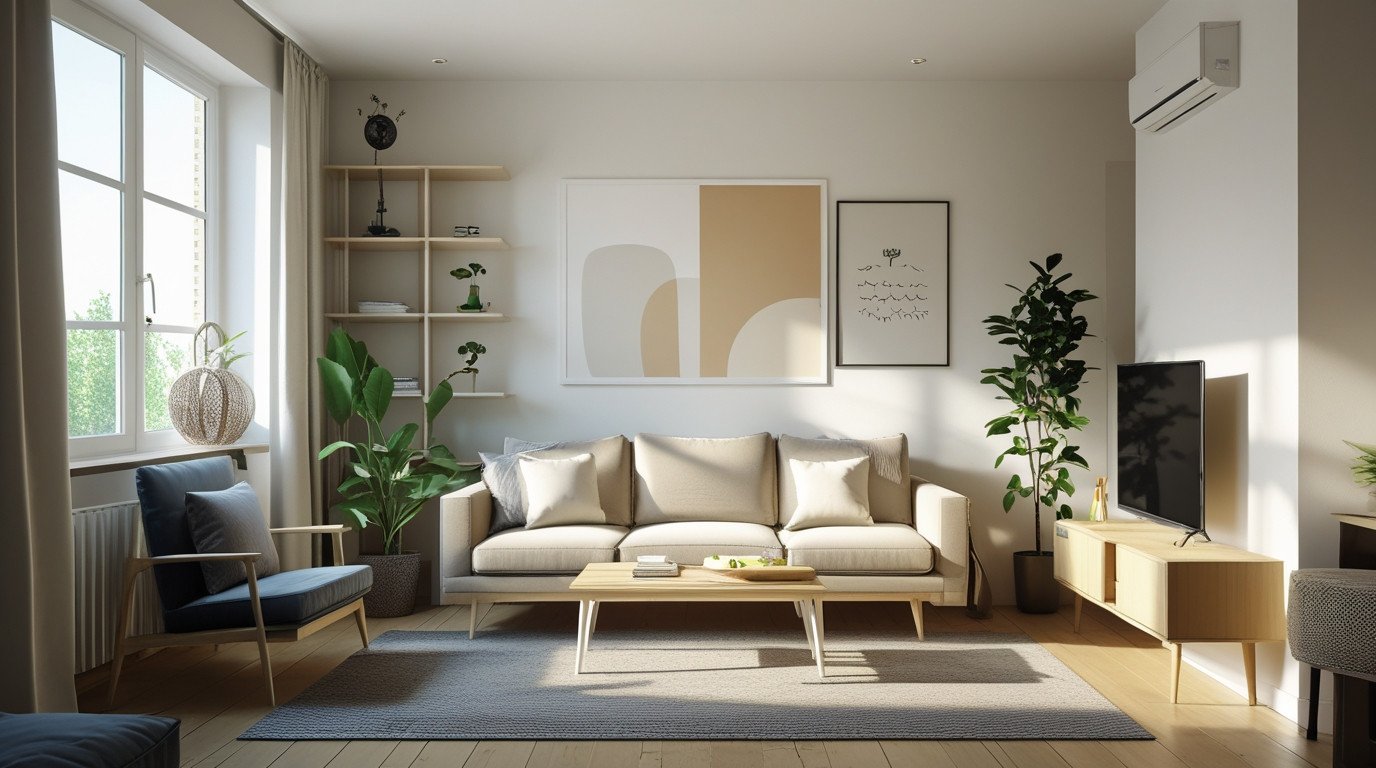

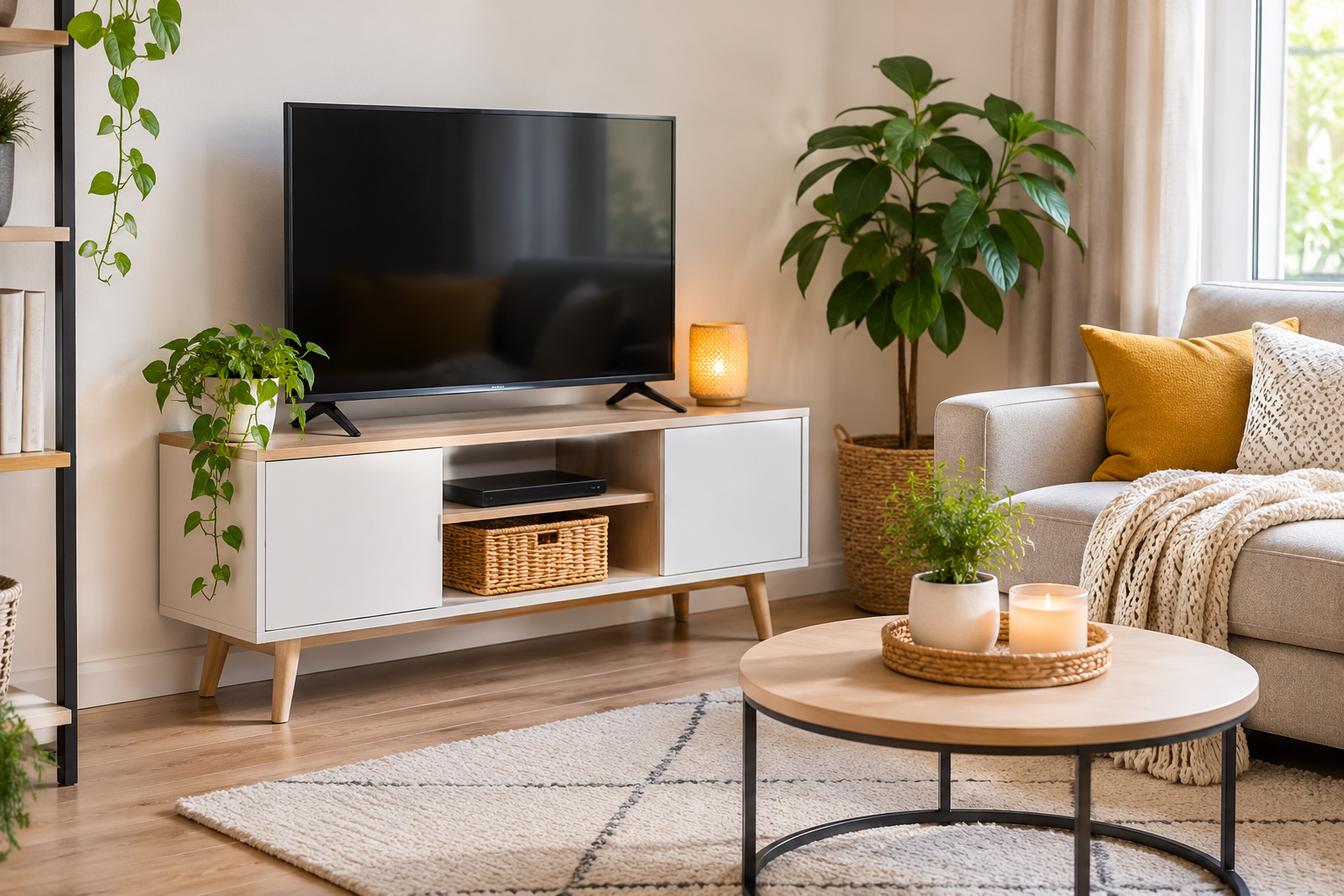
A TV stand can take up more space than expected in a small living room. Large entertainment units, deep cabinets, and bulky furniture can make an already compact space feel crowded.
The right TV stand should provide enough room for your television and essential electronics without dominating the entire room. Fortunately, there are several compact designs that combine practical storage, a smaller footprint, and a clean appearance.
Whether you live in a studio apartment, a small condo, or a compact home, choosing the right TV stand can help make your living room more functional.
1. Narrow TV Stands for Limited Floor Space
A narrow TV stand is a practical option when there is little room between the sofa and the opposite wall.
Unlike traditional entertainment centers, these designs have a smaller depth and take up less floor space. They can fit comfortably against a wall without making the room feel crowded.
When choosing a narrow TV stand, consider:
- The depth of the furniture.
- The width of the television.
- Whether the stand provides enough stability.
- Available space for streaming devices and other electronics.
A slim design is particularly useful in narrow living rooms where every inch of floor space matters.
2. Floating TV Consoles
Floating TV consoles are mounted directly onto the wall, leaving the floor underneath open.
This creates a lighter visual appearance and makes cleaning easier. It can also help a small living room feel less cluttered because the furniture does not occupy visible floor space.
Many floating consoles include enclosed compartments for media devices, cables, and small accessories.
Before choosing one, check the wall construction, mounting requirements, and maximum supported weight. The console must be securely installed according to the manufacturer’s instructions.
3. TV Stands with Built-In Storage
A TV stand with built-in storage can serve more than one purpose.
Instead of using separate cabinets for electronics, remote controls, gaming accessories, and small household items, you can keep frequently used belongings in one organized location.
Useful features include:
- Drawers for smaller accessories.
- Closed cabinets to hide visual clutter.
- Open shelves for devices that require ventilation.
- Cable management openings.
- Adjustable shelves for different equipment sizes.
For small apartments, a combination of open and closed storage is often more practical than a completely open shelving unit.
4. Corner TV Stands
A corner TV stand can make use of an area that might otherwise remain empty.
This layout works particularly well in rooms where the main walls are already occupied by windows, doors, or other furniture.
Corner units are available in compact triangular and angled designs, as well as larger models with additional storage.
Before purchasing one, measure the available corner space and consider the viewing angle from your sofa. The television should remain comfortable to watch without forcing you to turn your head constantly.
5. Open-Shelf TV Stands
Open-shelf TV stands offer a simple solution for people who prefer lightweight furniture.
Their open construction makes them visually less bulky than large cabinets. They can also provide convenient access to media players, gaming consoles, and other electronics.
However, open shelving requires some organization. Visible cables and miscellaneous items can quickly make a small living room look untidy.
Use storage baskets for smaller accessories and keep electronic equipment arranged neatly.
Also make sure that devices have sufficient ventilation and that cables are secured safely.
6. TV Stands with Sliding Doors
Traditional cabinet doors need space to open outward. In a narrow living room, this can interfere with nearby furniture or walking paths.
Sliding doors solve this problem by moving sideways rather than extending into the room.
They are particularly useful when a TV stand sits close to a sofa, coffee table, or walkway.
Look for smooth door tracks, practical interior shelving, and enough clearance for electronic devices.
7. Minimalist TV Stands with Slim Legs
A TV stand with slim legs and a simple frame can make a small living room feel more open.
Because more of the floor remains visible underneath the furniture, the room may appear less crowded than it would with a solid cabinet extending all the way to the floor.
These designs work well in modern, Scandinavian, and minimalist interiors.
They are best suited to households that do not need extensive enclosed storage.
How to Choose the Right TV Stand for a Small Living Room
Before buying a TV stand, consider the actual dimensions and layout of your room.
Measure the Available Space
Measure the wall where you plan to place the TV stand. Also account for nearby doors, windows, radiators, and walking paths.
Do not choose furniture based only on its appearance in product photographs. A unit that looks compact online may be too deep or too wide for your room.
Check TV Compatibility
The stand should be wide and stable enough for your television.
Check the manufacturer’s specifications for supported screen sizes, maximum weight, and the placement of the TV’s feet.
If you plan to mount the television on the wall, make sure the console still provides enough room for your other equipment.
Consider Your Storage Needs
Think about what you actually need to store.
If you only have a streaming device and a few remote controls, a narrow floating console may be sufficient.
If you own a gaming console, speakers, and several accessories, a unit with a combination of shelves and cabinets may be more practical.
Pay Attention to Cable Management
Cables can create visual clutter, particularly in small rooms.
Look for built-in cable openings and enough space behind the stand for plugs and connections.
Avoid tightly enclosing electronic devices that require ventilation.
Choose Furniture That Matches Your Layout
A good TV stand should fit naturally into the existing furniture arrangement.
Leave enough room for comfortable movement between the sofa, coffee table, and television area.
The goal is not simply to fit the largest possible storage unit into the room. It is to create a balanced layout that remains comfortable to use.
You mat also like: Space-Saving Living Room Layout Ideas for Compact Apartments
Common Mistakes to Avoid
Even a compact TV stand can create problems if it is not chosen carefully.
Avoid these common mistakes:
- Buying furniture that is too deep: Excessive depth reduces available floor space and can make walkways uncomfortable.
- Ignoring television dimensions: A stand that is too narrow may not provide adequate support for the TV.
- Choosing storage you do not need: Oversized cabinets can make a small living room feel unnecessarily crowded.
- Forgetting ventilation: Electronic devices need sufficient airflow to operate safely.
- Ignoring cable management: Loose cables can make even an attractive setup look disorganized.
- Blocking access to windows or outlets: Always consider the surrounding room before positioning furniture.
Final Thoughts
The best TV stand for a small living room is one that provides the storage and support you need without taking up unnecessary space.
Narrow consoles, floating units, corner designs, and minimalist stands can all work well depending on your room layout and storage requirements.
Before making a purchase, measure your available space, check television compatibility, and consider how much storage you genuinely need.
A carefully chosen TV stand can help create a more organized and functional living room without overwhelming a compact space.